

The fastest paths to lower-priced tickets are fan club presales, official venue deals, box office purchases, and carefully monitored resale closer to the event date. Before you buy anywhere, confirm the full price up front: federal rules now require sellers to show the total cost, including mandatory fees, before you check out. Some marketplaces offer guaranteed, straightforward options for searching affordable listings across concerts, sports, and theatre.
TL;DR:
- Joining artist fan clubs and venue newsletters often provides early presale codes that offer lower prices before the general sale.
- Federal rules mandate that ticket sellers display the full price, including all mandatory fees, before purchase to prevent misleading pricing.
- Resale prices tend to decrease in the final weeks or days for lower-demand events, making patience a key strategy for savings.
- Verified-ticket guarantees on resale marketplaces help protect buyers from fraud and ensure tickets scan properly at entry.
- Budget-conscious buyers should consider off-peak times, upper-level seats, and smaller venues for more affordable options.
Table of Contents
- Where to find discounted and presale tickets
- How to check the true total cost before you buy
- Timing and resale strategies that lower price
- How to avoid scams and verify tickets
- Budgeting for the whole event and cheaper alternatives
- What counts as an accessible ticket and which types exist
- How to find lower-priced seating on a ticket platform
- Fee rules and consumer protections that affect ticket pricing
- How to ask for a lower price or special pricing when buying
- How to communicate your budget and preferences to a seller
- What group and multi-ticket pricing typically looks like
- Why we built a straightforward way to search affordable tickets
- Try Capital City Tickets for your next event
- Sources
- FAQ
Where to find discounted and presale tickets
Early access usually beats waiting for the general on-sale. Artist fan clubs, venue email lists, and official presales open a window before the public rush drives prices up, and that window is often your best shot at face value or close to it.
A few channels consistently pay off for budget-minded fans:
- Join artist fan clubs and venue newsletters to get presale codes before tickets hit the open market.
- Check credit card and membership perks, including Amex Experiences, Chase or Capital One offers, phone carrier promotions, AAA, and student or military discounts.
- Buy at the box office when possible, since in-person purchases sometimes skip certain online convenience fees described in The Week's saving guide.
- Use price-alert tools and aggregators to compare primary and resale listings side by side instead of checking one site at a time.
- When buying resale, stick to marketplaces that offer a verified-ticket guarantee rather than informal listings with no buyer protection.
Smaller venues and regional tours tend to have more of this inventory available at reasonable prices, which makes them a good testing ground if you are new to presale hunting; venues like the Unveiled New York nightclub & event venue often offer appealing local deals for early buyers. A show like the one at Cheyenne Civic Center illustrates how a smaller-market listing can carry a simpler, more transparent price than a major arena date.
How to check the true total cost before you buy
Sticker shock at checkout is common, and it is exactly what federal regulators moved to stop. The FTC's Rule on Unfair or Deceptive Fees requires ticket sellers to display the total price, including mandatory fees, up front and before asking for payment, which closes the door on bait-and-switch pricing that lures buyers in with a low headline number. The Federal Register's published rule specifically targets drip pricing and misleading descriptions of what a fee covers or whether it is refundable.
The FTC's fee-transparency rule requires sellers to disclose the total price of a ticket, including all mandatory fees, before you pay, which means any listing that hides charges until the final screen is not following the standard.
Run through this checklist before entering payment details:
- Confirm the price shown at the start matches the total charged at checkout.
- Separate mandatory fees (service, facility) from optional add-ons (insurance, premium delivery).
- Watch for vague labels like "processing fee" with no description of what it covers.
- Screenshot the listed price in case you need to dispute a discrepancy later.
- If a seller reveals mandatory fees only at the final step, choose a different seller or report the practice.
A venue page like Herbst Theatre's anniversary concert listing shows how a clearly itemized price lets you compare an online purchase against a box office option without guessing at hidden costs.
Timing and resale strategies that lower price
Resale prices often soften as an event approaches, but how much depends heavily on demand. For a mid-sized show or a tour that is not selling out, day-of and final-two-week price drops happen often enough to be worth watching. AARP's reporting on concert savings notes that resale analysis has found day-of prices running well below those from months earlier for many shows, though high-demand stadium tours routinely buck that pattern and hold or climb in price.
A few practical habits help you time a purchase:
- Set price alerts on resale apps so you see drops without constantly refreshing a page.
- Avoid emotional, same-day buying for a hyped stadium tour where scarcity, not timing, drives the price.
- Use presales to lower your scam risk, but know that some presales still carry dynamic pricing that moves with demand.
- Compare a smaller-venue acoustic show against a stadium date for the same artist. The smaller show is far more likely to soften in price closer to the date.
Patience pays off more reliably for a club show than for a once-in-a-decade arena run.
How to avoid scams and verify tickets
A low price means nothing if the ticket never scans at the door. Verification matters as much as the hunt for a deal.
- Never accept a screenshot as proof of purchase. The FTC's consumer guidance warns that screenshots are easy to duplicate and are a common tool in ticket fraud.
- Insist on an official digital transfer or a platform-generated QR code instead.
- Buy through marketplaces that offer a verified-ticket guarantee rather than social media posts or classified ads with no recourse, a point echoed in SlashGear's buying advice.
- Confirm the seller's identity, the delivery method, and the refund or dispute policy before sending payment.
Pro Tip: Screenshot the seller's refund policy before you pay, not after a problem shows up.
If you do get scammed, report it at ReportFraud.ftc.gov and contact the selling platform right away so they can flag the listing.
Budgeting for the whole event and cheaper alternatives
The ticket price is rarely the whole bill. Parking, rideshare fares, concessions, and merchandise can add up to a meaningful chunk of your night out, so it helps to pencil those in before you commit to a seat.
- Parking near a downtown venue often runs higher than a lot a few blocks away.
- Rideshare surge pricing during peak event hours can rival the cost of a cheap ticket.
- Concessions and merch add up fast if you are not watching the total.
Admission prices for movies, theaters, and concerts have trended upward in recent years, according to BLS consumer price data, which helps explain why so many fans are actively hunting for budget tactics instead of just paying list price.
Cheaper alternatives exist if the ticket price alone is the obstacle: nosebleed seats, weeknight shows, community or civic venues, and smaller regional tours all tend to run less than a weekend arena date. If you are weighing a trip to another city for a show, add travel and lodging to the ticket price before comparing it against a local option.
What counts as an accessible ticket and which types exist
In everyday ticket shopping, "accessible" tickets usually means tickets priced or structured so more fans can realistically afford to attend, not just the cheapest seat in the house, but a workable mix of price, location, and timing. That can take a few forms depending on the event and venue.
Budget-friendly inventory commonly shows up as:
- Day-of or last-minute releases that venues or promoters price lower to fill seats.
- Weekday or matinee performances priced below weekend peak-demand slots.
- Upper-level or side-view seating that costs less than center-floor or lower-bowl tickets.
- Bundled or season-ticket pricing that lowers the per-event cost for sports and theatre.
- Promo-code or member pricing offered through a platform's own deals.
Theatre often has more of this flexibility than arena concerts, since a show like Neil Berg's 110 Years of Broadway can offer a range of price points across a single venue, letting a budget-conscious fan pick a seat that fits what they want to spend rather than settling for whatever is left.
How to find lower-priced seating on a ticket platform
Most ticket sites let you filter by price before you ever look at a seating chart, and that filter is the fastest way to see what is realistically available within your budget. Start there instead of scrolling through every listing manually.
A practical search approach looks like this:
- Sort listings by price, low to high, as your first move on any event page.
- Use the venue seating map to compare upper-level or side sections against the advertised lowest price.
- Enter a promo code at checkout if the platform supports one, since it can shift what looked like the cheapest seat into a better value.
- Check date flexibility. A Tuesday show at Packard Music Hall can carry a different price than a Saturday date for a similar act.
- Compare a few seating tiers side by side rather than anchoring on the first price you see.
Filtering by city, venue, and date on top of price narrows a long list fast, which matters when a popular tour has dozens of regional stops and wildly different price ranges from one city to the next.
Fee rules and consumer protections that affect ticket pricing
The biggest legal protection working in a budget buyer's favor right now is the federal rule on fee transparency. The FTC's rule requires ticket sellers to show the full price, mandatory fees included, before asking for payment, and the Federal Register's text spells out that misrepresenting a fee's purpose or refundability is prohibited.
That matters for affordability because a ticket that looks cheap at first glance can turn out to be more expensive than a competing listing once fees are added. The rule forces an apples-to-apples comparison instead of letting a lower headline price win your click and then pad the bill at checkout.

Consumer protection also extends to how you report a problem. If a seller does not disclose fees properly or a ticket turns out to be fraudulent, FTC consumer guidance points buyers toward reporting the issue rather than absorbing the loss quietly. Knowing these protections exist gives you leverage to walk away from a listing that will not show its full price, which is often the clearest early sign of a seller worth skipping.
How to ask for a lower price or special pricing when buying
Sellers and venues are not always advertising every discount they offer, so a direct question can turn up savings a standard search misses. Before finalizing a purchase, it is worth checking a few extra angles.
- Ask the venue box office directly whether a promo code, student rate, or group rate applies to your date.
- Check whether the platform has a deals or discounts page separate from the standard listings.
- Look for bundle pricing if you are buying multiple tickets or attending more than one show at the same venue.
- Reach out to the seller's customer service line if a listed price seems inconsistent with similar seats nearby.
A show like The Office! A Musical Parody at a regional performing arts center is a good example of where a quick question about matinee or weekday pricing can turn up a lower option than the first price shown.
How to communicate your budget and preferences to a seller
Getting the price you want often comes down to being specific about what you need before you commit. Vague searching leads to settling for whatever shows up first.
When you are narrowing down a purchase, it helps to be clear about a few things:
- State your maximum budget upfront if you are calling a box office or messaging a seller.
- Specify whether you are flexible on date, since a weeknight show can be meaningfully cheaper than a weekend one.
- Ask whether a listed price includes fees or whether more will be added at checkout.
- Note any seating preference, since an upper-level seat is often available at a lower price than a comparable seat closer to the stage.
Being direct about these points saves time and avoids the frustration of finding a great price only to discover it does not match what you actually need.
What group and multi-ticket pricing typically looks like
Buying for a group changes the math, and it is worth understanding how pricing shifts when more than one ticket is involved. Some venues and platforms offer a lower per-seat rate for larger groups, while others simply charge the same rate multiplied by the number of tickets.
A few patterns show up often across concerts, sports, and theatre:
- Group rates are more common for theatre and sports than for high-demand concert tours.
- Buying tickets together, in one transaction, sometimes unlocks a bundled discount not shown on individual listings.
- Seats purchased as a block are usually located together, which matters if you are coordinating a group outing.
- Some venues cap group discounts at a set number of tickets, so it is worth checking the threshold before assuming a rate applies.
A listing like UK Opera Theatre's production at Singletary Center shows the kind of multi-seat availability where checking group pricing before buying individual seats can make a real difference in total cost.
Why we built a straightforward way to search affordable tickets
Capital City Tickets has spent more than 20 years helping fans find reasonably priced tickets to concerts, sports, and theatre across the country. The platform's 100% guarantee on ticket authenticity and delivery gives budget-conscious buyers a safety net while they shop by price, venue, and date. Promo codes, clear filtering, and instant digital delivery keep the search simple instead of overwhelming.
— Capital City Tickets
Try Capital City Tickets for your next event
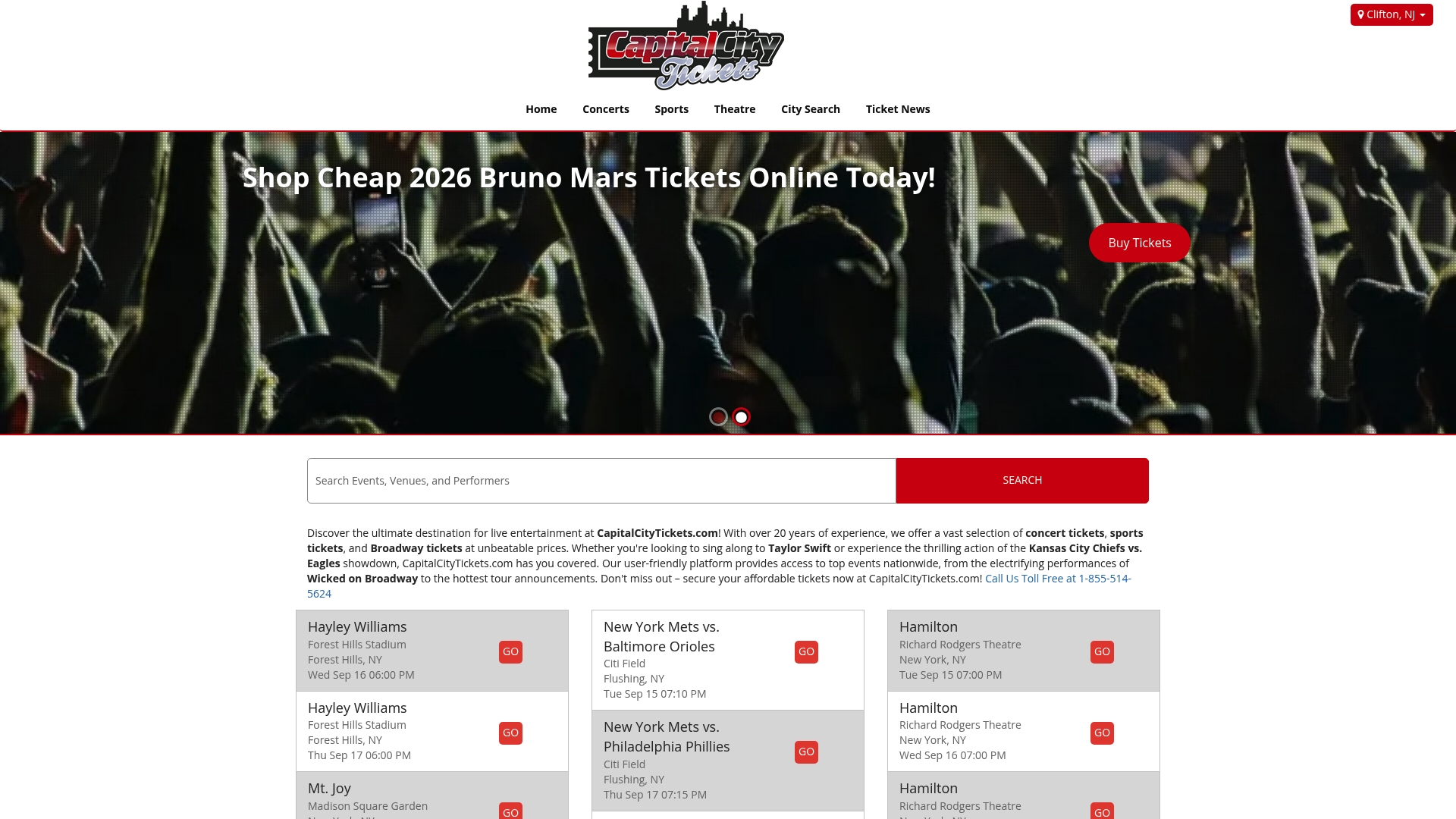
If you have made it this far, you already know the drill: compare total prices, watch for presales, and buy from a seller that stands behind the purchase. Capital City Tickets builds all three into one search. Promo codes apply at checkout, category filters let you narrow by price, venue, and date in a few clicks, and tickets arrive by instant digital download so you are not waiting on the mail before a show. Every purchase carries a 100% guarantee on authenticity and delivery, which matters as much as the price tag itself.
- Search concerts nationwide with price and date filters built in.
- Browse sports tickets for games across major leagues and college matchups.
- Check theatre tickets for touring productions and regional performing arts centers.
- Apply a promo code at checkout and get your tickets by instant download.
Start your search at Capital City Tickets and find a seat that fits your budget for your next concert, game, or show.
Sources
- The Rule on Unfair or Deceptive Fees: Frequently Asked Questions | Federal Trade Commission
- Trade Regulation Rule on Unfair or Deceptive Fees | Federal Register
- How to Find Summer Concert Tickets for Less | AARP
- BLS data series: Admission to movies, theaters, and concerts
FAQ
What makes a ticket price "accessible" for budget-conscious fans?
An accessible ticket is one priced or positioned so more fans can realistically afford it, whether through presale access, off-peak timing, upper-level seating, or promo pricing. It is less about a single discount type and more about matching price, seating, and timing to what you can spend.
How do I know if a ticket's listed price includes all fees?
Under the FTC's fee-transparency rule, sellers must show the total price, including mandatory fees, before you pay. If a checkout screen adds charges beyond what was first shown, that seller is not following the standard and you should compare against another listing.
Is it safer to buy resale tickets close to the event date?
Resale prices often soften in the final two weeks or on the day of the event for many shows, based on AARP's reporting on concert pricing, though high-demand stadium tours frequently hold their price or climb instead. Waiting works better for shows that are not selling out than for major arena tours.
What should I do if I think I bought a fake ticket?
Report the issue to ReportFraud.ftc.gov and contact the selling platform immediately so they can investigate and attempt a refund. Avoid any seller who asks you to accept a screenshot instead of an official digital transfer or QR code, since FTC consumer guidance flags screenshots as a common scam tool.
Does Capital City Tickets guarantee the tickets I buy?
Yes, Capital City Tickets offers a 100% guarantee on ticket authenticity and delivery across its concert, sports, and theatre listings. Tickets are typically delivered by instant digital download, and promo codes can be applied at checkout to lower the total price.
Recommended
- Ahab The Ticket Whaler Presents Safe Ticket Whaling Tickets at Webster Theater – Hartford, CT
- Neil Berg's 110 Years of Broadway Tickets at Kravis Center - Dreyfoos Concert Hall – West Palm Beach, FL
- 40th Anniversary Concert Tickets at Herbst Theatre – San Francisco, CA
- Audra McDonald Tickets at Marian Anderson Hall at The Kimmel Center – Philadelphia, PA