
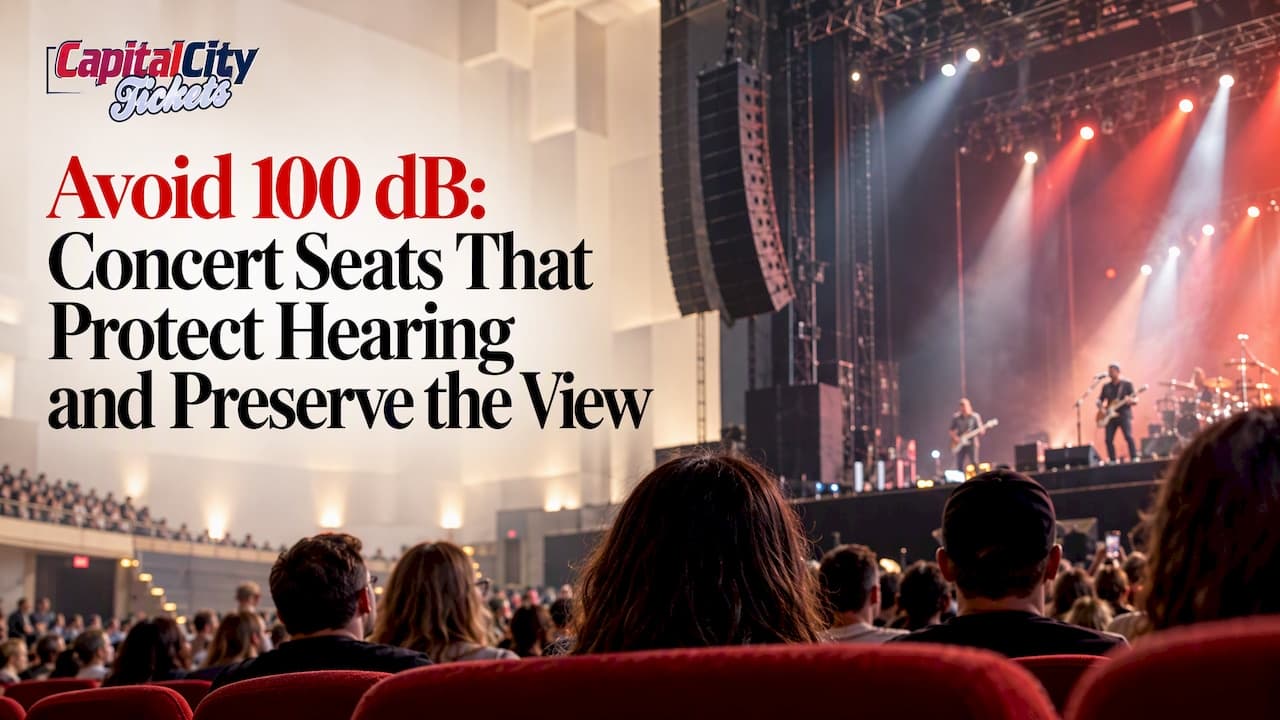
For the best balance of sight and sound, aim for lower-center sections; for full immersion and energy, pick the pit or front floor; for steadier acoustics and safer listening, choose mid-center rows or the mezzanine; and for budget trips without losing the full stage picture, the upper-back tier works well. Volume matters too, so keep hearing safety in mind no matter which zone you pick. The checklist below walks you through how to match these zones to what you actually want from the night.
TL;DR:
- The best seats for sound clarity are often mid-center arcs rather than front-row or sides, due to speaker placement and reflected sound effects.
- Choosing lower-center seats offers a balance of good sightlines, steady audio, and reasonable volume levels for most performances.
- Attendees should consider venue-specific details like speaker locations, overhangs, and if seats are on raised platforms before purchasing.
- Resale tickets may be cheaper close to the event but limit your options; verify authenticity, fees, and transfer methods before buying.
- Maintaining volume below 100 dB during the concert is crucial for hearing safety, with quieter zones and earplugs recommended for loud shows.
Table of Contents
- What the common seating zones mean on a venue map
- How do you weigh a great view against great sound?
- Pros and cons of each seat type
- A simple checklist for picking your seat
- Smart timing and buying tactics for better seats
- What hearing-safety research says about seat choice
- How crowd density changes what a seat actually feels like
- Accessibility seating and what to check before you book
- Why two decades of ticket listings taught us to trust the checklist over the hype
- Find seats that match your priorities on Capital City Tickets
- FAQ
- Sources
What the common seating zones mean on a venue map
Ticket listings throw around terms that do not always match what you picture, so it helps to know what each zone actually delivers before you buy.
- Floor or pit: the area closest to the stage, often general admission (GA) standing room, prized for energy and proximity but unpredictable for sightlines once a crowd fills in.
- Lower level or lower bowl: the first ring of assigned seating, usually with a clear rake upward from the stage and a strong mix of view and sound.
- Mezzanine or first elevated tier: set above the lower level, often the sweet spot for seeing the full stage layout without standing-crowd obstruction.
- Upper deck or upper bowl: the farthest assigned seating, cheaper and wide-angle but more distant from both the performers and the main speaker arrays.
- Boxes or VIP sections: semi-private areas, often along the sides or rear, that trade some direct sound exposure for comfort and a clear sightline.
A ticket stub's "section," "row," and "seat" numbers tell you exactly where you land within these zones, and most venues number sections outward from center stage, with lower numbers typically closer to the action. Floor and pit areas are frequently GA, meaning entry order determines your spot, while every other zone is usually assigned. A football stadium concert stretches these zones across a much larger footprint than a theater, where the mezzanine might be only a few rows back from the orchestra level, so always check whether you are picturing an arena, amphitheater, or theater layout before assuming what a "good seat" looks like.
How do you weigh a great view against great sound?
Being close to the stage does not automatically mean better sound. Speaker placement, frequency imbalance, and reflected sound off walls and ceilings all shape what you actually hear, and seats directly in front of a side-fill speaker can feel louder but muddier than seats set back a bit further.
Mid-center arcs often deliver steadier sound than front-row seats. Acoustics research on seat-by-seat variation shows that frequency balance and listener preference shift seat by seat within a hall, and a mid-center arc frequently measures more consistent than the very front rows or far sides. That means the seat with the clearest vocals is not always the one closest to the performer.
Before buying, run through a few quick checks:
- Can you see the main PA speaker stacks, or will they block your sightline?
- Is your section tucked under a balcony overhang, which can dull high frequencies?
- Are you seated directly beside a side-fill speaker rather than facing the main array?
Genre matters here too. Acoustic or classical performances reward mid-center or mezzanine seats where frequency balance stays even, while high-energy rock or pop shows often make front-floor or pit seats worth the trade-off in audio clarity, since the atmosphere is part of the point.
Pros and cons of each seat type
- Pit or floor GA: best for immersion, crowd energy, and photos, but sightlines depend entirely on your spot in the queue and how tall the people around you are. Arrive early, and expect to stand for the full show.
- Front row: unbeatable closeness but often the worst seat for sound, since you sit below stage level and close to monitor speakers. A hack here is choosing an off-center front seat to avoid the direct glare of a main speaker stack.
- Lower-center: the most balanced option for most shows, combining a clear sightline with manageable volume and distance from major speaker arrays.
- Side or corner seats: often cheaper, with a partial angle on the stage; fine for casual fans but frustrating if the performer favors one side of the stage.
- Mezzanine: a strong pick when audio fidelity matters more than proximity, offering a wide view and steadier frequency balance.
- Upper deck: the most affordable way to see the whole production, including lighting and stage design, though vocals and instruments can sound thinner at distance.
- Boxes or VIP: comfortable and visually clear, sometimes with lounge access, but sound quality varies widely depending on how close the box sits to a speaker hang or how enclosed the space is.
A simple checklist for picking your seat
- Identify your top priority. Decide whether you care most about view, audio quality, immersion, comfort, or price before you look at a single seating chart.
- Translate that priority into a zone. View and comfort point toward lower-center or mezzanine; immersion points toward pit or front floor; audio fidelity points toward mid-center arcs; budget points toward upper deck.
- Confirm venue-specific details. Look for where the main speaker stacks hang, check fan-submitted view-from-seat photos, and note whether your row sits on a raised platform or flat floor.
Before you buy, ask the seller or venue three things: is this GA or assigned seating, are there any obstructed-view notes on this section, and how will the ticket be delivered or scanned at entry.
Pro Tip: When torn between front-floor energy and mezzanine clarity, look for lower-center rows a few rows back from the stage edge. You get a clean sightline, more even volume, and less risk of standing right next to a speaker.
Smart timing and buying tactics for better seats
Seat selection is usually best during the initial onsale, when full inventory is available, while resale listings after that point often reflect scalped markups or last-minute drops from fans who can no longer attend. Waiting until close to the event can sometimes mean lower prices on remaining inventory, but it also narrows your choice of section.
- Check official venue seat maps and search fan-posted view-from-seat photos on social media before committing to a section.
- On resale listings, confirm the transfer method (mobile transfer versus PDF) and check the seller's rating history.
- Favor marketplaces with a purchase guarantee, since ticket authenticity issues are one of the most common complaints in live event sales.
- Compare the final price including fees, not just the listed ticket price, since service charges can shift which section is actually the better deal.
What hearing-safety research says about seat choice
WHO recommends limiting amplified venue sound to no more than 100 dB(A) equivalent continuous level over any 15-minute period to reduce the risk of hearing injury.
That guidance comes from the CDC's MMWR report on safe listening at venues, which also found that many surveyed attendees said they would wear hearing protection if it were offered to them, a sign that volume exposure is a bigger concern for concertgoers than ticket buying habits might suggest. The AAO-HNS position statement on noise-induced hearing loss recommends venues keep average levels below that same 100 dB(A) threshold, monitor sound at multiple points in the room, and provide quiet zones at 70 dB or below.
For loud shows, sitting farther back, bringing high-fidelity earplugs, and taking a break in a quieter area when one is available all reduce your exposure without ruining the night. If you are unsure what a venue's sound policy looks like, it is reasonable to contact them directly before the show.
How crowd density changes what a seat actually feels like
The zone on a map and the experience in the room are not the same thing once a crowd fills in. A GA floor ticket can put you shoulder to shoulder with strangers for hours, which amplifies the energy of a rock show but can make a seated jazz or acoustic performance feel cramped and distracting. Dense pit crowds also absorb sound, which changes the acoustic picture compared to an empty-hall measurement, since bodies soak up higher frequencies and shift the balance toward bass-heavy mush in tightly packed areas.

Assigned lower-level and mezzanine seats keep a fixed buffer around you regardless of how full the venue gets, which matters if you are sensitive to crowding or attending with kids. Side and corner seats tend to see lower foot traffic and easier access to aisles, a trade-off worth considering if comfort outweighs having a dead-center view. If you know a show tends to draw an intense, high-energy crowd, choosing a seat one tier up from the floor often preserves the atmosphere while giving you room to breathe.
Accessibility seating and what to check before you book
Most arenas, theaters, and amphitheaters offer designated accessible seating with companion seats nearby, typically bookable directly through the venue's box office or noted as a specific seating category on the ticket platform. These sections are usually placed to avoid stairs and provide clear sightlines, though their exact location varies by venue, so it is worth confirming placement against a seating chart rather than assuming it matches a standard section in the same row range.

If you use a wheelchair or have mobility, vision, or hearing needs, call the venue ahead of time to confirm entry routes, companion seat availability, and whether assistive listening devices are provided. Some venues also offer sensory-friendly accommodations or designated quiet areas, which can be worth asking about if you are picking a seat partly for hearing-safety reasons. Booking accessible seating early matters just as much as booking any other premium zone, since these sections are limited and tend to sell out alongside the rest of the venue's best inventory.
Why two decades of ticket listings taught us to trust the checklist over the hype
Over 20 years of helping fans find seats, we have seen that the "best" seat almost always depends on what someone actually wants from the night, not a single universal answer.
— Capital City Tickets
Find seats that match your priorities on Capital City Tickets
Once you know whether you are chasing a front-row rush or a steady mid-center mix, filters can help you act on that decision. Search by venue, seating map, and price range, then consider instant-download options when you find a match.
- Filter listings by section, row, and price to compare lower-center against mezzanine options side by side.
- Check seating maps and event details before buying, right from the listing page.
- Many marketplaces offer guarantees on ticket authenticity and delivery.
Browse concert tickets now and apply the checklist to your next show.
This article is general information, not a substitute for advice from a qualified doctor. Consult a qualified healthcare professional about your own circumstances before acting on anything here.
FAQ
Is it better to sit high or low at a concert?
Lower sections generally give a closer, more detailed view and stronger bass response, while higher sections offer a wider perspective on staging and lighting at a lower price. Choose based on whether you value proximity and detail or a full visual picture and budget savings.
Is it better to sit on the sides or at the back in a concert?
Side seats often give a clearer angle on the stage than far-back center seats but can suffer if a performer favors the opposite side, while back-center seats usually keep a balanced, if distant, view of the whole stage. If hearing safety is a priority, a back-center seat tends to sit farther from the main speaker arrays.
Is it better to be standing or seated at a concert?
Standing in a pit or GA floor area usually means more energy and closer proximity to performers, but it also means less predictable sightlines and more time on your feet. Seated sections trade some of that immersion for comfort, a guaranteed sightline, and often steadier sound.
Where is the best spot to be at a concert?
For most shows, a lower-center section a few rows back from the stage edge balances sightlines, sound, and comfort better than the front row or the very back. Acoustics research backs this up, since mid-center seating often shows more consistent frequency balance than extreme front or side positions.
Sources
- Safe listening at venues and events with amplified music — United States, 2022 (MMWR)
- Mitigation of noise-induced hearing loss at music venues — American Academy of Otolaryngology–Head and Neck Surgery
- Subjective evaluation of acoustical characteristics in each seat of a concert hall