
The best seat depends on what you want: for pitch-level detail, sit behind home plate; for player interaction, take the baselines; for budget and energy, head to the outfield bleachers. Stadium geometry varies enough that the same seat type can play differently from park to park, so check the shade pattern and seating map before you buy.
TL;DR:
- Premium seats behind home plate offer the best pitch and swing visibility but are often more expensive and face netting obstruction.
- Seats near the baselines provide close-to-the-action experiences, with third base side offering better shade during afternoon games.
- Elevated upper deck low rows behind home plate give a full-field view at a lower price point, ideal for tracking the ball and defensive shifts.
- Outfield bleachers and party decks prioritize atmosphere and home run chances over sightline precision, with the lowest ticket costs.
- Seats close to concourses or restrooms are more practical for families and group outings, but proximity to busy entrances can lead to more foot traffic.
Table of Contents
- Best Seats for Baseball by What You Actually Want to See
- Matching Your Seat to Budget and Mood
- How Sun, Shade, and Stadium Shape Change the Best Seat
- How to Buy Smarter and Get More Out of Your Seat
- What Actually Makes a Stadium Seat Worth Buying
- Why Proximity to Restrooms, Concessions, and Merchandise Matters
- Accessibility Seating for Fans With Disabilities
- How Seat Location Changes the Sound of the Game
- Ticket Pricing by Seat Type and When Prices Move
- How I Pick My Seat Every Time
- Find Your Seat Through Capital City Tickets
- Sources
- FAQ
Best Seats for Baseball by What You Actually Want to See
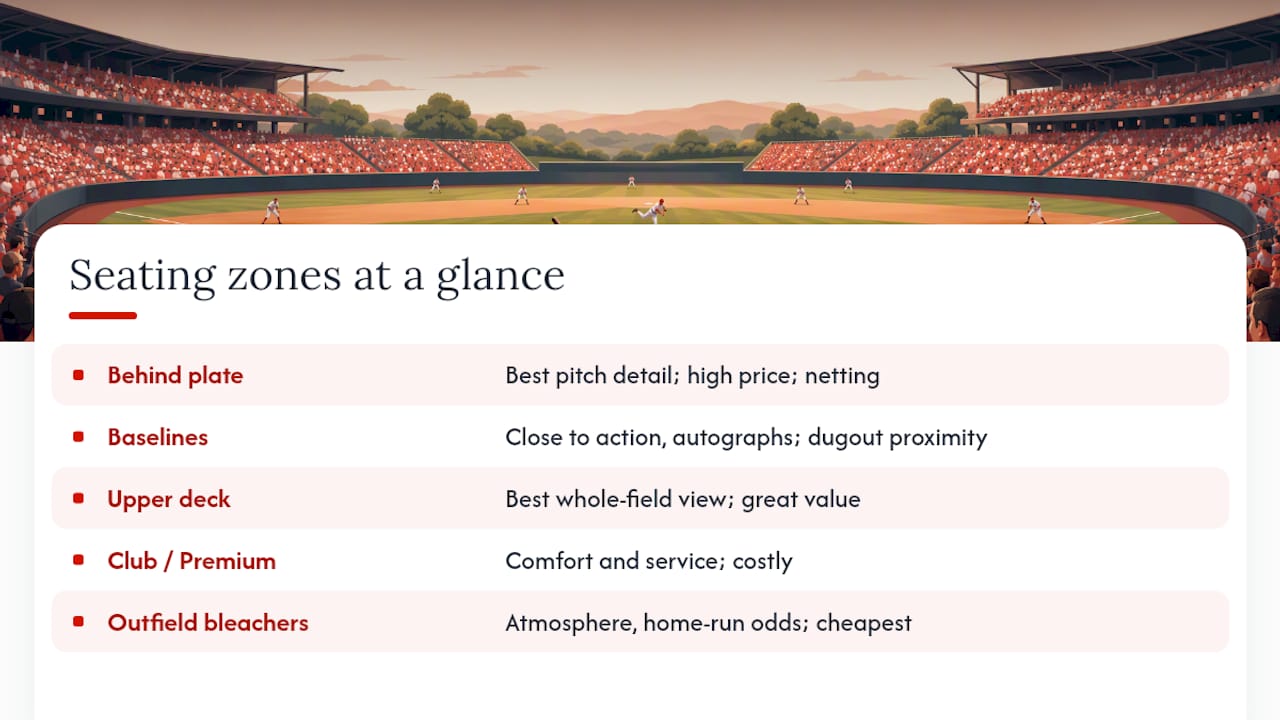
There's no single "best seats for baseball" answer, because fans want different things out of a game. Someone chasing a foul ball has different priorities than someone bringing a first-timer to their first game. Here's how the main seating zones stack up.
Behind home plate puts you in line with the pitcher's release point and the catcher's target, so you see location and movement better than anywhere else in the park. Fan guides routinely call this the "scout seat" advantage because you're watching the game the way a scout would, reading swings and defensive shifts from a centered angle rather than a skewed one. The catch: the protective netting can blur foul balls near the plate, and these rows carry the highest price tags in the building. Rows 5 through 15 behind the plate tend to balance sightline and net interference better than the very front rows, where the mesh sits closer to your eye line.
Down the baselines, especially first and third row seats near the dugouts, put you close enough to hear the crack of the bat and catch pregame chatter, autographs, and the occasional tossed ball. Third base side seats often draw a slightly better view of a right-handed pitcher's delivery; first base side puts you closer to the away team's dugout at most parks.
Upper deck low rows behind home plate are the best value pick for seeing the whole field, since the elevation lets you track the ball off the bat, watch defensive positioning, and follow the full flight of a fly ball, something impossible from field level.
Club and premium seating earns its price on comfort, not just view. Padded seats, in-seat wait service, and climate-controlled lounges make sense for a night game in July or a first date at the ballpark.
Outfield bleachers trade sightline precision for atmosphere and home run odds, plus the lowest ticket prices in the house.
Matching Your Seat to Budget and Mood
Price and vibe matter as much as sightline, and the trick is figuring out which one you're optimizing for on a given night.
- Budget hunters: upper-level centered sections behind home plate deliver a full-field view for a fraction of lower-bowl prices, and weekday games typically see softer pricing than weekend matchups.
- Families: aisle seats cut down on the mid-inning shuffle for bathroom and snack runs, and club-level concourses tend to have shorter lines and cleaner facilities than general seating.
- Date night: padded club seats or low upper-deck rows behind the plate strike a good balance between comfort and cost, without the premium attached to field-level club seats.
- Group outings: outfield terraces, standing rail sections, and party decks trade some sightline quality for a social, stand-and-talk atmosphere that suits a birthday group or office outing better than assigned rows.
The pattern holds across most parks: the closer you get to home plate at field level, the more you pay for precision. Move up and center, and you buy back most of that view for a lot less money.
How Sun, Shade, and Stadium Shape Change the Best Seat
A seat that's perfect for a night game can be miserable at a 1:05 PM start if it faces direct sun for three hours. As a general rule, the third base side shades earlier in the day at many parks, which makes it the safer bet for afternoon games unless you enjoy squinting through six innings. Rows tucked under the upper deck overhang stay shaded all game regardless of time, which matters more in July than in April.
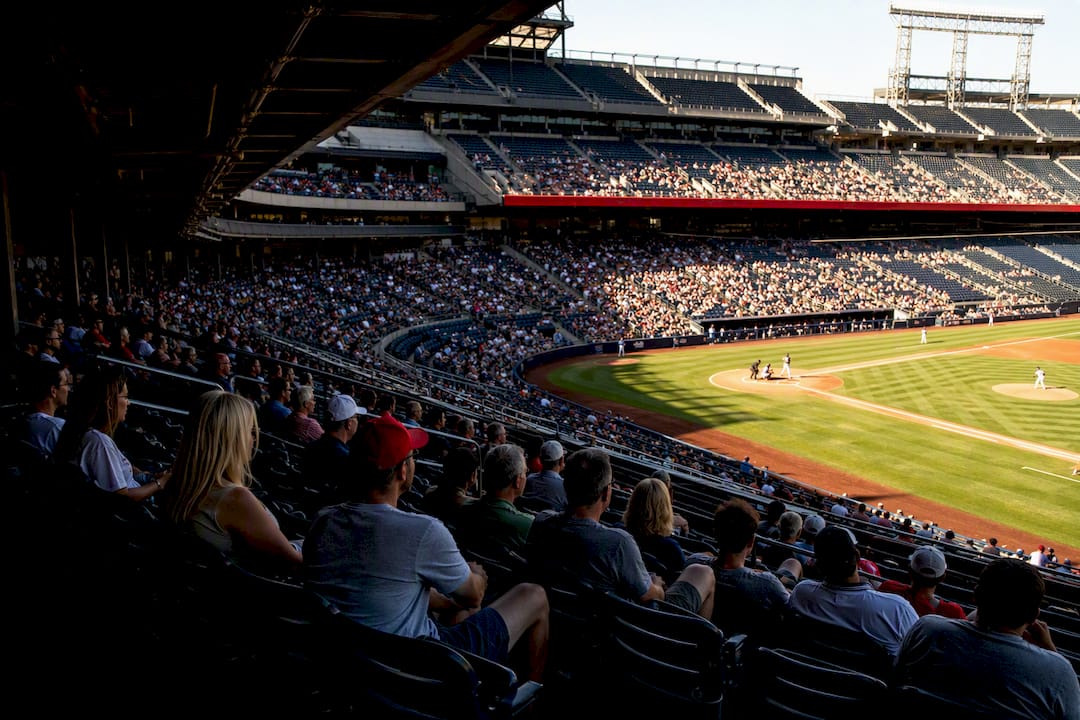
Sightline geometry matters just as much as sun exposure. A centered, elevated seat behind home plate reads the whole diamond in one glance; an extreme corner seat down the line, even at field level, can leave you watching the play unfold at an angle where the pitcher's release and the batter's swing arrive almost simultaneously instead of in sequence.
Every park has its own quirks: scoreboard placement that blocks upper-deck sightlines in certain sections, bullpens that eat into outfield seating, overhangs that cut off pop-up visibility from the front rows below them. Some parks post named "sweet spot" sections, like specific glass rows or shaded upper pods at Petco Park, that locals recommend over the general listing. Before buying, pull up fan-uploaded seat photos for the exact section and row. They catch obstructions a seating chart never shows.
How to Buy Smarter and Get More Out of Your Seat
Picking the right seat type is only half the job. Getting the specific section and row right is what turns a good seat into a great one.
- Filter by section and row, not just price band. Two seats in the same price tier can sit on opposite sides of a support pole or an overhang lip, so check the actual row before you check out.
- Pick aisle or cross-aisle seats if you know you'll be making frequent concession or bathroom runs, or if you want a fast exit before the ninth-inning traffic jam.
- Aim for lower-bowl seats along the foul lines if you're hunting a foul ball, and know that the left half of left field tends to see more home run landings in many parks, though this varies enough by stadium that it's worth checking a park-specific home run chart first.
- Bring the right gear. A cushion or portable seat pays off on hard bleacher benches during a three-hour game, though some parks restrict bulky frames, so check the venue's bag and seating policy first.
- Watch resale timing. Early buyers get first pick of the best rows, but midweek games often see softer resale pricing on seats that were snapped up at full price for weekend dates.
Pro Tip: If a listing doesn't specify the row, ask before you buy. A "Section 120" seat in row 3 and the same section in row 28 are two completely different experiences, even though they're priced in the same tier.
What Actually Makes a Stadium Seat Worth Buying
Comfortable baseball seats aren't just about where you sit. What you sit on matters too, especially for a doubleheader or a marathon extra-innings game on hard aluminum bleachers. Testing on portable stadium seats has generally focused on three things: how the seat holds up over a full game, how easy it is to carry in and out of the gate, and how securely it hooks onto bleacher benches without sliding.
Reviews that put seats through multi-hour, real-world testing on bleachers have flagged the Picnic Time Portable Ventura as a standout for comfort and portability, while separate testing highlighted compact, weather-resistant padded seats with secure attachment straps as smart picks for outdoor bleacher sections.
When shopping for your own, prioritize:
- Padding thickness (thin foam wears thin fast over nine innings)
- Secure hook or strap attachment for bleacher benches
- Packable weight if you're walking from a distant parking lot
- Width sized for your build, since narrow frames get uncomfortable fast for bigger fans
Lightweight foldable seats suit fans who carry gear a long way to the gate; padded wide-frame models suit anyone planning to sit through a cold night game in October.
Why Proximity to Restrooms, Concessions, and Merchandise Matters
The best view in the house loses some shine if you're sprinting up three ramps every time you need a bathroom or a beer. Seats near a concourse tunnel or cross-aisle put restrooms and concession stands within a short walk, which matters most in family sections and any seat you plan to hold for a full nine innings.
Club-level seating usually wins here by design: shorter lines, cleaner facilities, and dedicated food stands that don't serve the entire lower bowl. General admission and upper-deck seating, on the other hand, often means a longer walk and a longer line, especially during peak innings like the seventh-inning stretch when everyone moves at once.
If you're buying for a group with kids, look for sections flagged as near a family zone or play area on the stadium map. These tend to cluster near wider concourses with more concession variety and shorter merchandise lines. If you're the type who wants to grab a jersey before first pitch and be back in your seat before the anthem ends, a seat near the main team store beats a scenic outfield perch every time.
One tradeoff worth knowing: seats closest to the busiest concourse entrances also see the most foot traffic during innings, which can mean people passing in front of your row more often. If you'd rather stay put and watch every pitch uninterrupted, a seat slightly further from the main tunnels, but still within a reasonable walk, splits the difference.
Accessibility Seating for Fans With Disabilities
Every MLB stadium sets aside wheelchair-accessible and companion seating throughout the seating bowl, not just in one isolated section, so accessible seats are typically available at multiple price points and view types, including near home plate, along the baselines, and in outfield sections.
These seats usually offer clear sightlines free of rail or post obstruction, plus wider spacing and companion seating built in beside the accessible spot. Ramp access, accessible restrooms, and closer parking or drop-off zones are typically clustered near these sections as well.
Availability for accessible seating is usually handled through the box office or the ticket platform's accessible seating filter rather than the general seating map, so it's worth calling ahead or checking the venue's official accessibility page if you have specific needs, like a seat that accommodates a service animal or a companion who needs to stay close during the game. Booking early matters more here than in general seating, since accessible sections are smaller in total count and fill up fast for high-demand games like rivalry weekends or postseason matchups.
How Seat Location Changes the Sound of the Game
Crowd noise doesn't hit every seat the same way, and it's one of the most overlooked factors in picking where to sit. Lower-bowl seats near home plate and the infield sit closest to the loudest, most reactive part of the crowd, so you feel every gasp on a close call at the plate and every roar on a two-strike foul tip.
Outfield bleacher sections, especially in parks with a raucous fan base in left or center field, generate their own wall of sound during big moments, chants, and rally cues that rarely reach the same volume in the quieter upper deck. If you want a game that feels loud and communal, bleachers usually deliver more of that shared-roar energy than a hushed club section.
Upper deck seating, by contrast, tends to feel more subdued acoustically. Sound travels up and dissipates, so you'll hear the crack of the bat and the PA announcer clearly, but the crowd roar around you is thinner. Club and premium sections, insulated by glass or positioned away from the rowdiest general admission zones, are the quietest seats in most parks, which suits fans who want to actually hold a conversation during play rather than shout over it.
Ticket Pricing by Seat Type and When Prices Move
Ticket prices for baseball games swing hard depending on section, opponent, day of the week, and how close to game day you're buying. Seats directly behind home plate and in the first few rows along the baselines sit at the top of the pricing scale in every park, reflecting both the sightline and the scarcity of those rows. Club and premium seating with amenities like padded chairs and in-seat service commands a similar premium, often justified by comfort rather than pure view.
Upper deck seating, particularly the centered low rows behind home plate, typically prices well below field level for a view that many fans consider nearly as good for tracking the whole field. Outfield bleachers and general admission sections sit at the bottom of the pricing scale in most parks, making them the default choice for budget-conscious fans and large groups.
Availability tends to loosen up midweek and against lower-profile opponents, and tightens fast for weekend games, rivalry matchups, and any contest with playoff implications. Watching resale listings a few days out, rather than buying the moment tickets go on sale, can turn up better rows at lower prices for games that aren't selling out.
How I Pick My Seat Every Time
If I have to choose one seat type across every stadium, it's the low rows in the upper level behind home plate. You get the full field, a fair price, and enough elevation to actually see the defense shift before the pitch. My rule of thumb when scanning any seating chart: check the row number against the overhang line first, then worry about the price.
— The.
Find Your Seat Through Capital City Tickets
Once you know which seat type fits your priorities, the next step is finding an actual listing that matches it, and that's where filtering by section and row pays off. Capital City Tickets sells sports tickets nationwide alongside concerts and theater, backs every purchase with a 100% guarantee on authenticity and delivery, and lets you filter listings by event, venue, and section so you can zero in on the exact zone you just read about, whether that's low upper-deck rows behind the plate or a baseline seat for catching batting practice tosses.
Browse the current sports tickets listings, apply a promo code at checkout if one's available, and lock in your section before weekend demand pushes prices up.
Sources
Before buying, check the venue's official seating map, fan-uploaded seat-view photos, and tested stadium-seat reviews like those from Travel + Leisure and Your Best Digs.
- The 8 Best Stadium Seats of 2026, Tested and Reviewed
- The 14 Best Stadium Seats of 2026 - Reviews by Your Best Digs
- How to find the best seats at a ballpark | Thrillist
- Best seats for baseball: How to find your perfect viewing spot | Itinerant Fan
FAQ
Is it better to sit lower or higher at a baseball game?
Lower seats put you closer to the action and player details, while higher seats, especially centered low rows behind home plate, give you a better view of the whole field and defensive positioning at a lower price.
Is it better to sit behind home plate or in the outfield?
Behind home plate wins for pitch location and overall game detail, while outfield seats win on price, atmosphere, and your odds of catching a home run ball.
Where should you avoid sitting at a baseball game?
Avoid seats with obstructed views from support poles, seats directly behind foul-line netting posts, and unshaded seats for a long day game unless you're prepared for direct sun the entire time.
Is it better to sit on the first base or third base side?
Third base side seats often shade earlier during day games and can offer a slightly better angle on a right handed pitcher's delivery, while first base side seats typically sit closer to the visiting team's dugout.