
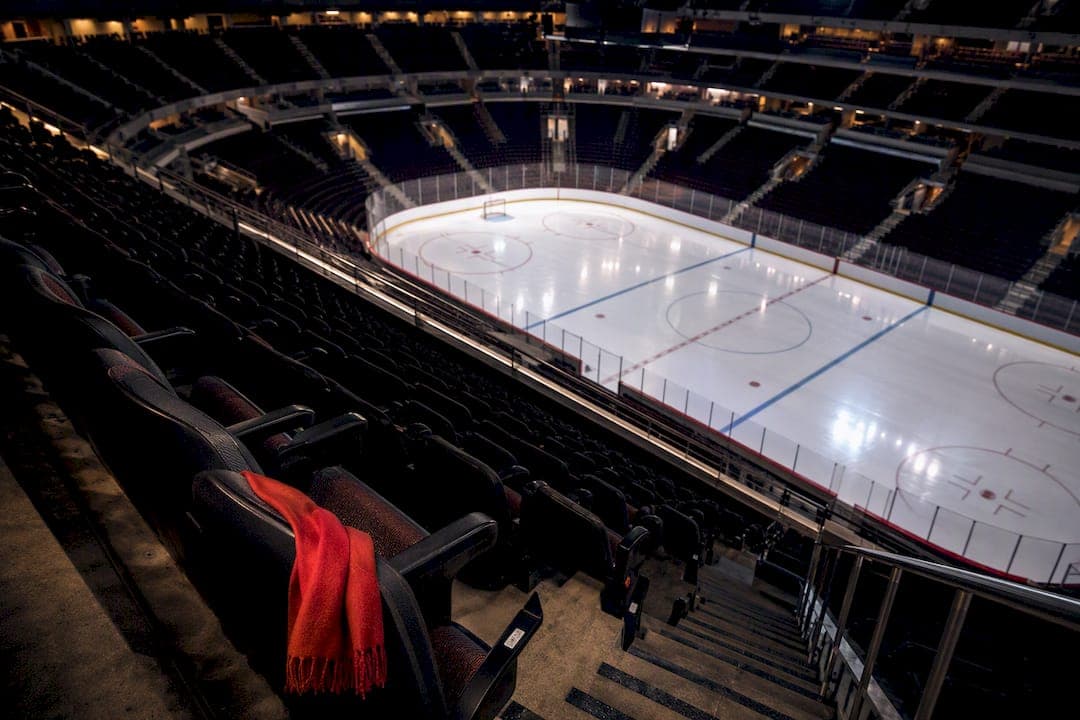
For the closest action, front row Glass Seats win every time. For the best balanced view of both ends, Lower Bowl Center Ice is the smart call. For value, the top rows of the upper bowl near center ice give you a clear, affordable read on the whole rink, and for pure atmosphere, standing room sections deliver the loudest, most social night for the least money.
TL;DR:
- The top rows of the upper bowl near center ice offer the best value for a full-rink view at a lower price than premium lower-level seats.
- Glass seats provide close proximity and excellent photo opportunities but can have obstructed views due to netting and are the most expensive options.
- Seats in the upper bowl near the center line often feel closer to the ice than older arenas and are ideal for budget-conscious fans wanting a full view of the game.
- Corner and behind-the-goal seats deliver intense close-up action but may suffer from filtered views and distance from the opposite net.
- Confirm specific arena layouts and obstructions, such as overhangs or scoreboard placement, before purchasing to ensure your preferred viewing experience.
Table of Contents
- A Quick Ranked Shortlist of Hockey Seat Zones
- How Hockey Arenas Are Laid Out
- Breaking Down Every Major Seat Type
- How to Choose and Buy Your Seats
- What Two Decades of Ticketing Taught Us About Hockey Seats
- Ready to Grab Your Seats?
- Where to Verify Arena-Specific Seat Maps
- Sources
- FAQ
A Quick Ranked Shortlist of Hockey Seat Zones
If you just want the short version before you shop, here's how the major zones stack up against each other.
- Glass Seats: best for closest action and photos, typically the highest price tier, huge proximity payoff but netting and boards can crowd your view of the far end.
- Lower bowl center ice: best for families and first-timers, a mid-to-high price band, gives you a balanced tactical view of both ends but sits below full glass-level pricing.
- Corner sections and behind the goal: best for fans who love end-to-end intensity, moderate pricing, exciting close-up chaos near the net but the opposite end feels far away and netting adds a visual filter.
- Above the glass, loge, and club-side seats: best for fans who want a clean, elevated tactical view, mid-range pricing, with fewer obstructions than lower rows but less physical proximity.
- Club level and suites: best for special occasions, premium pricing, strong on comfort and amenities like private restrooms and food service, weaker on raw proximity to the ice.
- Upper bowl center ice (nosebleeds): best for budget-minded fans who still want a full-rink view, the lowest price among center-ice options, but you'll lean on the scoreboard to track fast plays.
- Standing room only: best for social fans on a tight budget, the cheapest ticket in the building, but sightlines shift depending on where you stand and crowds can block your view.
How Hockey Arenas Are Laid Out
Most arenas stack seating into three broad tiers: the lower bowl closest to the ice, a middle band of loge or club seats, and the upper bowl at the top. Center-ice sections sit at the midpoint of each tier, directly across from the halfway line, which is why they're prized for watching plays develop across the whole rink.

Protective netting hangs above the boards at both ends to catch high shots and pucks that fly into the crowd. It barely affects seats along the sides, but from directly behind the goal, the netting becomes a visible layer between you and the net, particularly during scrambles right in front of it. Other obstructions worth checking before you buy include press box overhangs in some arenas, center-hung scoreboards that can block a sliver of the upper bowl, and standing sections that put moving fans between you and the glass.
Breaking Down Every Major Seat Type
Glass seats put you right behind the boards, close enough to hear skates cutting into the ice and see warmups up close. Many NHL teams pair glass seats with lounge access and other perks, as Florida Panthers and Columbus Blue Jackets ticket pages both show. The tradeoff is the netting and boards can partially block your read on the far end of the ice, and this is the most expensive seat type in the building. If proximity and photos matter more than seeing the whole rink clearly, this is your seat.

Lower bowl center ice seats sit at the midpoint of the rink, low enough to feel the speed of the game but wide enough to see both nets. According to a detailed seat guide for Climate Pledge Arena, the top rows of the lower bowl are often the best value for sightlines, giving a clear, slightly elevated view without paying the full glass premium. These rows are a strong pick for families who want a balanced, easy-to-follow game without the top-tier price tag.
Corner sections and seats behind the goal put you close to one end's action, which makes for a fun, chaotic view when the puck is scrambling in front of that net. The same Climate Pledge Arena guide notes that end seats give an intense, up-and-down perspective, but the opposite end feels distant and most of your view is filtered through protective netting. Rows further back from the glass in these sections reduce the netting's visual impact somewhat, since you're viewing it at a less direct angle.
Above-the-glass, loge, and club-side seats trade a bit of proximity for a cleaner sightline. Sitting higher gives you a better angle to see plays develop before they reach the boards, which matters if you actually want to follow strategy rather than just react to the puck. These sections often come with wider seats, shorter concession lines, and easier access, small comforts that add up over a three-hour game.
Upper bowl center ice, often dismissed as nosebleeds, is one of the better value plays in the building when you sit near the halfway line. Modern arena design has narrowed the gap between upper and lower bowl experiences. NHL's writeup on Little Caesars Arena points out that steeper seating bowls, similar to those at Bell Centre, can make upper-level seats feel closer to the ice than older arenas ever allowed. You'll rely more on the scoreboard to track the puck during fast breaks, and the atmosphere here tends to be loud and communal since it's often the most affordable center-ice option.
Club level and suite seating are built for comfort first. Private restrooms, in-seat food service, and lounge access are the draw, not necessarily a better view than glass or top lower-bowl seats. These sections make sense for special occasions or when comfort matters more than catching every detail of end-to-end play.
- Best for photos and proximity: Glass Seats, front row behind the boards.
- Best for balanced tactical viewing: Lower Bowl Center Ice, especially the top ten rows.
- Best for value per dollar: Upper Bowl Center Ice, near the halfway line.
- Best for comfort and perks: Club level and suite seating.
How to Choose and Buy Your Seats
Picking the right seat comes down to matching your priority to the zone, then confirming the details before you check out.
- Decide your single main goal: proximity, full-rink view, budget, or atmosphere.
- Set a price range you're comfortable with before you start browsing sections.
- Pick a zone using the breakdown above, then narrow to a row range (front rows of glass, top ten rows of lower bowl, or center sections of the upper bowl).
- Pull up seat-view photos for that exact section and row before buying, since elevation and angle vary even within a zone.
- Confirm any obstruction or accessibility notes with the seller or box office, especially near netting, scoreboards, or overhangs.
Row labels vary by arena. Some use "A" as the front row, others use "AA" or "BB" for premium levels, so check the seating chart legend rather than assuming.
Pro Tip: If you want the best balance of price and view, look for center-ice seats in the upper bowl or the top rows of the lower bowl rather than paying full price for the glass.
What Two Decades of Ticketing Taught Us About Hockey Seats
The most common mistake we see is fans assuming "row A" means the same thing in every section. It doesn't, so always check the arena's actual seat map before buying. Arrive early enough to catch warmups if you're near the glass, and confirm elevation on the seat photo.
— Capital City Tickets
Ready to Grab Your Seats?
You can search for sports tickets by section and row to line up with the seat zones above.
- Search sports tickets by venue, date, and section on the Sports Tickets page.
- Promo code options may be available at checkout for savings.
- Check seat-specific event pages, like this Harlem Globetrotters listing, to see how section and row details are presented before you buy.
Where to Verify Arena-Specific Seat Maps
Before locking in a section, cross-check it against the venue's own seat guide and any official team ticket pages, along with independent puck-tracking analysis from sources like Manny's Variety Picks for how different zones affect your ability to follow the play.
FAQ
Is it better to sit higher or lower at a hockey game?
Neither is universally better, it depends on your goal. Lower seats near the glass give you proximity and speed, while higher seats near center ice give you a fuller, easier-to-follow view of both ends.
Where's the best place to sit at an ice hockey game?
For most fans, the top rows of the lower bowl or a seat in the upper bowl near center ice offer the best balance of view and price. If proximity matters most, front-row glass seats behind the boards are the top pick.
Is it good to sit behind the bench at a hockey game?
Behind the bench gives you a close look at line changes and coach and player interactions you won't see from anywhere else in the arena. It's a great pick if you're curious about bench dynamics rather than pure end-to-end action.
Are glass seats at a hockey game worth it?
Glass seats are worth it if proximity, photos, and warmup access are your priority, since they put you directly behind the boards. Keep in mind the protective netting and boards can limit your view of the far end, and glass seats usually carry the highest price in the arena, as shown on official team ticket pages for teams like the Columbus Blue Jackets.