

Buy now if your dates are fixed or the show is limited-run, star-driven, or newly opened. Wait if you're local or flexible, because day-of tools like TKTS, digital lotteries, and rush lines routinely knock 20 to 50% off face price. The right call depends entirely on how much freedom you have, not on some universal "sweet spot" date.
TL;DR:
- Buying tickets immediately after a show's release date is essential for limited-run, star-driven, or new productions that tend to sell out within days.
- Midweek performances in January, February, and early September generally offer the best chance for discounted tickets and better seat availability.
- Last-minute discounts are most reliably found at TKTS booths, digital lotteries, rush tickets, and resale platforms with verified tickets, especially when planning ahead or traveling as a group.
- Buying early at the official vendor is safest to avoid fakes, but for established shows, waiting 2 to 6 weeks before a performance can often secure better deals.
- Fixed travel dates require booking tickets immediately after flights and hotels are reserved, as good seats sell out quickly and prices tend to be highest closer to the performance date.
Table of Contents
- Best Time to Buy Broadway Tickets for Your Show Type
- Which Days and Months Have Cheaper Broadway Tickets?
- Last-Minute Ways to Score Cheap Broadway Tickets
- How to Buy Broadway Tickets Safely Without Overpaying
- A Simple Booking Checklist by Timeline
- Why Our Ticket Timing Advice Holds Up
- What the Timing Debate Gets Wrong
- Ready to Book? How Capital City Tickets Fits In
- Where to Verify Broadway Ticket Policies
- Sources
- FAQ
Best Time to Buy Broadway Tickets for Your Show Type
The math changes depending on what you're seeing and how locked in your calendar already is.
For anything with a ticking clock, buy the moment tickets go on sale. New productions, limited engagements, and shows built around a famous name (a movie star doing an eight-week run, a reunion cast) sell out their best seats within days. Waiting even two weeks can mean the difference between orchestra center and the back of the mezzanine, or no seats at all.
Long-running, stable hits behave differently. These shows have been selling tickets for months or years, and their inventory replenishes constantly. For these, 2 to 6 weeks out is usually plenty of lead time, though you should buy earlier if your visit lands on a weekend or holiday period.
If you live in or near New York City and have zero attachment to a specific date, you have the most leverage. Waiting 1 to 2 weeks, or even gambling on day-of options, works fine when you're targeting a midweek slot and don't need a particular show.
Visitors with fixed travel dates are the exception to almost every rule here. Industry timing guides consistently advise buying the moment your flight and hotel are booked. A Broadway ticket for a set date behaves like a table at a hard-to-book restaurant: the good slots go first, and waiting only shrinks your options.
- Months ahead: New shows, limited runs, star casting. Buy on release day.
- 2 to 6 weeks ahead: Established, long-running shows. Earlier for weekends and holidays.
- 1 to 2 weeks ahead: Flexible locals targeting midweek performances.
- Immediately after booking travel: Anyone with fixed dates, regardless of show.
Which Days and Months Have Cheaper Broadway Tickets?
Broadway pricing follows demand the same way airline seats do, and demand has a rhythm you can plan around.
Midweek evenings, particularly Tuesday and Wednesday, tend to draw smaller crowds than Friday and Saturday nights. Wednesday matinees are often the softest performance of the week for demand, which usually translates to better seat selection and lower prices for the same show. If price matters more to you than day of the week, build your itinerary around a Tuesday or Wednesday show first.
Seasonally, January, February, and early September are the calendar's quiet stretches. Tourist volume drops after the holidays and before the fall rush, and Broadway Week and similar citywide promotions tend to cluster in these windows, offering discounted or two-for-one deals across a wide swath of shows.
The flip side matters just as much. Holiday weeks (late December especially) and peak summer months bring the highest prices and the least availability. If you're buying during those windows, book earlier than you normally would and expect to pay closer to full price.
- Best for value: Tuesday/Wednesday evenings, Wednesday matinees.
- Best months: January, February, early September.
- Worst for bargains: Late December, July, August, and any major holiday week.
Last-Minute Ways to Score Cheap Broadway Tickets
If you missed the early-bird window or simply prefer to gamble on the day, several channels exist specifically for this, and they can be combined for better odds.
- TKTS booths. TDF's TKTS booths sell day-of tickets, and next-day tickets for some matinees, at discounts that regularly reach up to 50%. The Times Square location is the famous one, but the Lincoln Center booth is indoors, less crowded, and worth the extra few blocks.
- Digital lotteries. Most major shows run their own lottery, entered online the day before or the morning of a performance. Odds vary widely by show and are rarely published, so enter every lottery your party qualifies for rather than betting on one.
- Rush and standing room only. Rush tickets are typically sold at the box office starting when it opens, priced anywhere from $25 to $60. SRO seats appear only when a show is otherwise sold out, and both usually come with fixed, non-negotiable seat assignments.
- Cancellation lines and last-minute resale. Prices can drop sharply in the final hour before curtain as box offices release unsold house seats, but they can also spike if a hit show sells its last few seats to resale buyers. Confirm barcode authenticity before handing over cash for anything bought outside an official channel.
Pro Tip: If you're traveling as a group, split your strategy. Send some people to enter every digital lottery available while others head straight to the box office for rush. Running both approaches at once usually lands at least part of your group a deeply discounted seat, even when either tactic alone would have failed.
How to Buy Broadway Tickets Safely Without Overpaying
Cheap doesn't matter if the tickets turn out fake. Stick to channels that guarantee what you're actually buying.
The safest bet is the show's official vendor, usually linked directly from the production's own site or from Playbill's listings, which point to platforms like Telecharge or Ticketmaster depending on the theater. These guarantee authenticity because they're the primary source.
The box office itself, when open, skips platform service fees entirely, which commonly run $10 to $15 per ticket on top of face value. Calling ahead can also surface seats that never make it to the online inventory.
If you go the resale route, use only platforms with verified tickets and clear buyer protections, and always total the full cost, face price plus fees, before comparing it to a box-office price. Treat unknown sellers, missing barcode verification, wire-transfer payment requests, or suspiciously cheap tickets to a sold-out hit as immediate red flags.
- Buy from the production's official vendor whenever possible.
- Check box-office hours and rush policy before you rely on it.
- Compare total out-the-door cost, not just the advertised price.
- Walk away from any seller who won't verify the barcode.
A Simple Booking Checklist by Timeline
Match your actions to how much lead time you actually have.
- Months out: Set price alerts for your target show, buy official inventory immediately if it's a limited run or star vehicle, and confirm your seat location on the theater's seating chart before paying.
- Weeks out: Compare the official vendor's price against listings on Capital City Tickets' theatre tickets page and any authorized promo codes, and shift to a midweek date if the price gap matters to you.
- Day of: Check TKTS lines or the TKTS app first, enter every digital lottery your show offers, get to the box office early for rush, and verify barcode authenticity on any resale ticket before handing over payment.
Why Our Ticket Timing Advice Holds Up
Some ticket platforms have spent many years helping fans navigate live event ticketing, including Broadway.
What the Timing Debate Gets Wrong
Most advice on Broadway ticket timing treats it as one universal rule: buy early, always. That's backwards for a huge share of buyers. If you live in the city or have real flexibility on dates, chasing early-bird pricing often means overpaying for a seat you could have gotten cheaper at TKTS three days later.
The advice that actually holds up splits into two lanes, and readers need to know which lane they're in before they do anything else. Fixed dates and limited-run shows demand immediate action. Flexible locals should lean on the day-of system built for exactly this: TKTS, lotteries, rush. Confusing the two is where people either overpay out of anxiety or miss a show entirely by waiting too long.
What gets underrated is the parallel strategy for groups: some people chasing lotteries while others hit the box office. It's not glamorous advice, but it's the single tactic most likely to get a whole party into a hit show without paying full freight. Prioritize figuring out your flexibility first. Everything else follows from that.
— Capital City Tickets
Ready to Book? How Capital City Tickets Fits In
Once you know your window, the last step is comparing prices before you commit.
Whether you're locking in a limited-run hit months out or hunting a midweek deal a week before curtain, search Capital City Tickets' theatre tickets page for your show, check the seat map and price against what you found elsewhere, and complete your purchase there if it matches your budget and timing. The same platform also covers concert and sports tickets nationwide, so it's worth bookmarking beyond just your Broadway trip.
Where to Verify Broadway Ticket Policies
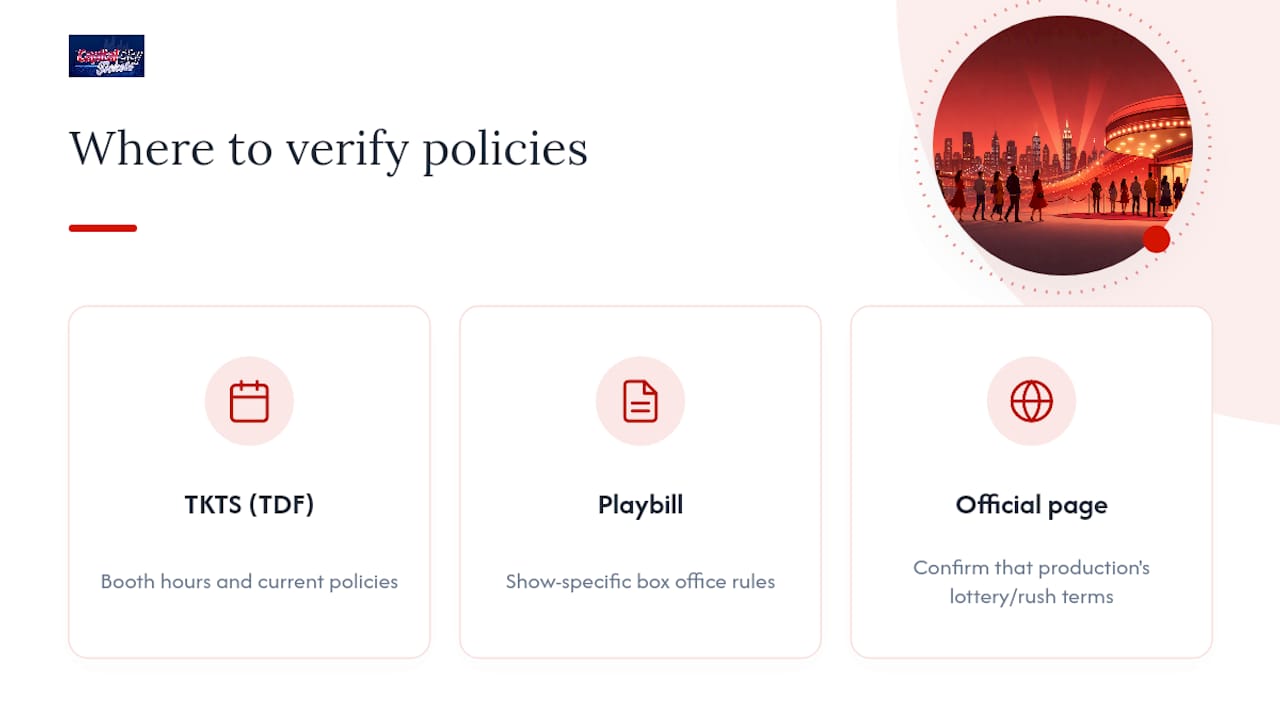
For booth hours and current policies, check TDF's TKTS overview directly. Playbill covers show-specific box office rules, and always confirm a production's own lottery or rush terms on its official page before you show up expecting a specific policy.
Sources
- Playbill's ultimate guide to Broadway ticket buying | Playbill
- TKTS overview | TDF
- Cheap Broadway tickets: The ultimate New York guide | Time Out
FAQ
Do Broadway ticket prices drop closer to the show date?
Sometimes, but it depends on the show. Long-running, stable productions often release discounted inventory through TKTS or their own lotteries as the date nears, while limited runs and star-driven shows typically get more expensive as seats disappear.
Is it cheaper to buy at the box office or online?
The box office skips the $10 to $15 per-ticket service fee that most online platforms charge, so it's often cheaper when the show still has available seats there. Online vendors win on convenience and inventory visibility, especially for sold-out or high-demand shows.
What's the most reliable way to buy Broadway tickets?
Buying through the show's official vendor, linked from the production's own site or from Playbill, guarantees authenticity. Capital City Tickets also backs every purchase with a 100% guarantee on ticket authenticity and delivery for added peace of mind.
How far in advance should I buy Broadway tickets?
For limited runs, new shows, or star casting, buy the day tickets release. For established long-running shows, 2 to 6 weeks ahead is usually enough, and flexible locals can often wait 1 to 2 weeks or try day-of options like TKTS and lotteries.