
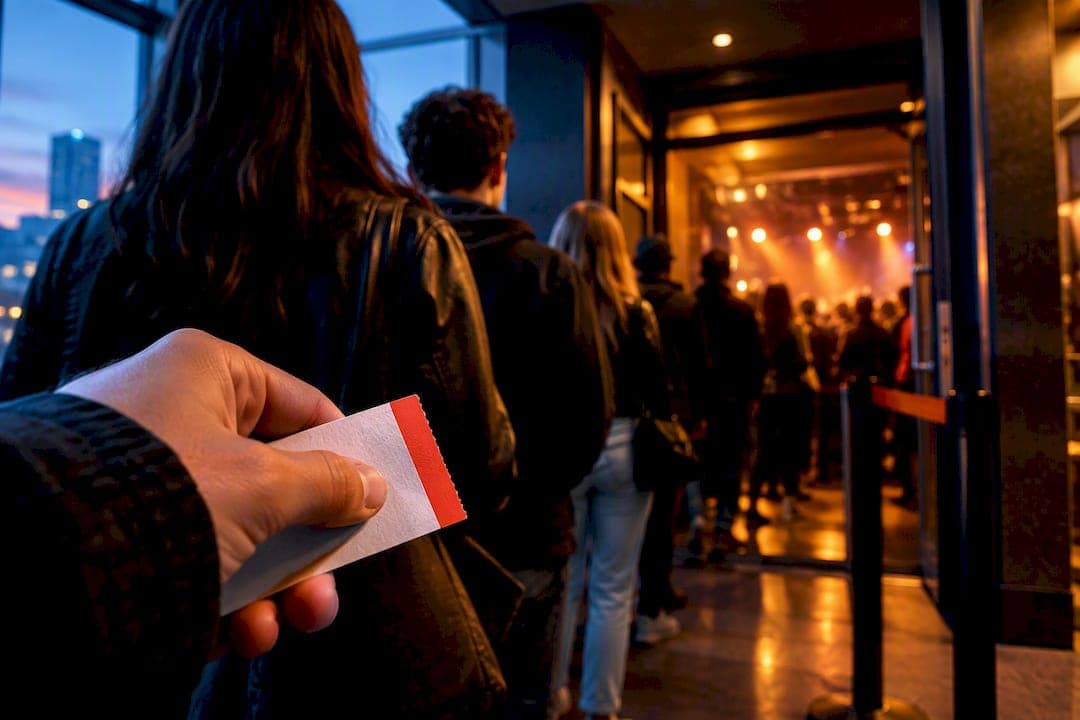
Buy early, within days of the on-sale date, for high-demand tours and one-off shows likely to sell out. For lower-demand or repeat events, watch prices and target the final day or two before showtime, since large-sample data show median prices bottom out either 90 or more days early or in the last 1 to 2 days, with a peak in between. The trade-off is simple: buy early for seat choice and certainty, wait for price if you can tolerate limited availability.
TL;DR:
- Supply and demand dynamics cause ticket prices to peak 14 to 29 days before an event, making that period the most expensive time to buy.
- Early purchases are safest for high-demand events, small venues, or limited-run tours, while lower-demand shows often drop in price closer to the date.
- Setting price alerts at 80 to 85% of the seven-day-out resale floor helps identify the best moment to buy, especially for non-sold-out shows.
- Last-minute discounts are rare for high-demand events but common for softer-demand shows, primarily occurring in the final 1 to 2 days before the show.
- The size of the venue and event type significantly influence optimal buying timing, with smaller and limited-market shows requiring earlier purchase.
Table of Contents
- When ticket prices actually rise and fall
- How event type and venue size change the timing rule
- Practical tactics for timing your purchase
- Red flags that mean you should buy now
- What fees and pricing rules mean for your final cost
- Two decades of watching this market play out
- When I buy early and when I let it ride
- Getting the timing right with the right seller
- Sources
- FAQ
When ticket prices actually rise and fall
Concert ticket prices don't move in a straight line. An analysis of over 300,000 validated ticket sales found two low points and one high point in the typical pricing timeline, and knowing where you stand in that curve tells you whether to click "buy" or keep waiting.
The pattern shows up consistently across genres. Prices tend to be lowest when tickets first go on sale, more than 90 days before an event, then climb as the date approaches, peaking in a window roughly 14 to 29 days out. After that peak, prices for many shows drift back down, often bottoming out again in the final 1 to 2 days before the event.
| Buying window | Typical price pattern | What's happening |
|---|---|---|
| 90+ days before | Near the low point of the curve | Early-bird buyers and presale access, less competition for seats |
| 14 to 29 days before | Peak pricing | Reseller psychology and shrinking inventory push prices up |
| 1 to 2 days before | Second low point (event dependent) | Sellers capitulate on unsold inventory, but only for shows with slack demand |
The mid-window peak forms largely because of seller behavior rather than buyer panic. Research on resale markets describes an endowment effect in which resellers anchor to what they originally paid or hoped to earn, and hold prices high until a deadline forces their hand. That deadline usually isn't the day of the show. It's often two to four weeks out, when the pool of remaining buyers thins and sellers start recalculating their odds of selling at all.
Data point: across the sample studied, the most reliable low-price windows were early (90+ days) and very late (1 to 2 days), while the middle of the buying window consistently ran higher. That's the opposite of what many buyers assume, since the instinct to "wait for a discount" often lands you right in the expensive middle instead of the cheap edges.
Day-of discounts are real but not universal. Coverage of resale data found that so-called fire sales are largely a myth for high-demand events, which tend to hold or even increase in price right up to showtime. Late discounts show up mainly on shows with softer demand, where sellers would rather recover some money than none.
A practical threshold worth using: one pricing guide suggests setting an alert to buy if the resale floor drops to 80 to 85% of the price seen seven days out by around 36 hours before the show. If prices haven't dropped that much by then, buy rather than keep waiting, because floors for non-sold-out shows tend to climb again once that window closes.
How event type and venue size change the timing rule
The price curve above is a median. Where your event actually falls on that curve depends heavily on how much demand exists relative to how many seats are available.
- Stadium tours and reunion shows: these draw the highest demand relative to supply, so early purchase, ideally within the first days of the on-sale, gives you the best shot at both price and seat selection.
- One-off festival dates or farewell tours: no second chance to catch the show elsewhere makes early buying the safer default, even at a premium.
- Regular-season sports and recurring club gigs: because the same act or league plays repeatedly, waiting closer to the date, or even skipping a pricier date for a cheaper one, can pay off.
- Lesser-known or opening acts: lower baseline demand means more inventory survives to the final days, often at a discount.
- Small-capacity venues: fewer seats sell out faster relative to demand, which pushes the safe buying window earlier even for acts that aren't headline-level famous, as with club shows like Sampa the Great at a small Washington, DC room.
- Hometown or single-region tour stops: when a tour skips most of the country and plays only a handful of cities, local demand spikes and buying early becomes the safer play, similar to a limited-run booking like Insomnium at a mid-size New York venue.
- Dynamic-pricing tours: some large tours now adjust prices in near real time based on demand, which can erase the mid-window peak entirely and replace it with a steady climb, so the "wait for a dip" strategy doesn't apply.
The general rule: the smaller the venue or the narrower the tour footprint, the earlier you should commit. The bigger the market and the more replaceable the date, the more room you have to watch and wait.
Practical tactics for timing your purchase
Once you know which side of the curve your event sits on, execution matters as much as strategy.
- Set a price alert with a specific target, not a vague "watch and see." Base it on the 80 to 85% threshold against the seven-day baseline price if the show isn't sold out.
- Check prices every few days rather than daily during the mid-window peak, since daily swings in that stretch are usually noise, not a trend.
- Escalate to buying once you're inside 72 hours if your alert hasn't triggered and the event has any real sellout risk.
- Compare multiple platforms side by side rather than trusting the first price you see, since face-value and resale markets can diverge significantly for the same seat.
- Stay flexible on section and date since prices for seats a few rows back, or for a different night on a multi-date run, often run well below the popular choices.
Weekday patterns matter too. Some analyses point to Saturdays and the late-winter to early-spring months as periods when median prices run lower, likely tied to lower overall buying volume during those stretches. That's a soft pattern rather than a rule, but it's worth checking if your event date has flexibility.
For last-minute buying specifically, a few habits reduce risk: confirm the venue's actual capacity and remaining inventory rather than assuming a sellout, check whether the seller offers instant delivery so you're not stuck waiting on a physical ticket, and always compare the total price rather than the sticker price before deciding a "deal" is real.

Pro Tip: If you're on the fence between buying now and waiting, buy the cheapest available ticket type today and set an alert for a better seat. You lock in entry either way, and you can always upgrade if prices drop.
Red flags that mean you should buy now
Waiting works well on paper, but certain situations make it a bad bet in practice. If any of the following apply, treat early purchase as the default rather than the exception.
- A tour with only one or two dates in your region, since there's no fallback show to catch later if this one sells out.
- A small-capacity venue, like a theater or club booking such as Ahab the Ticket Whaler at a Hartford theater, where limited seats sell out fast regardless of overall fame.
- Group seating needs, since finding four or more seats together gets harder every day inventory shrinks, even if single seats remain.
- VIP packages or bundled experiences, which typically sell in far smaller quantities than general admission and disappear early.
- Strong fan-club or presale demand, a signal that general public inventory will be thin by the time public sales open.
- A special anniversary or milestone show, like a one-time 40th anniversary concert, where the event itself won't repeat.
Before deciding to wait on any ticket, ask yourself: can I replace this seat later at a similar quality, and can I live with the outcome if the answer turns out to be no? If either answer worries you, buy now.
What fees and pricing rules mean for your final cost
The sticker price you see isn't always the price you pay, and that gap has drawn direct attention from regulators. A Congressional report on ticketing transparency has flagged drip pricing and certain resale practices as consumer harms, recommending that sellers disclose the full, all-in price upfront rather than adding fees at checkout.
The FTC's rule on unfair or deceptive fees reinforces that direction, requiring clearer disclosure of total fees so buyers can actually compare offers instead of getting surprised at the final screen. That shift matters for timing decisions, because a ticket that looks cheaper early might carry higher fees than one that looks pricier later.
What this changes for you: always compare the total price, including delivery and service fees, before judging whether waiting paid off.
Even with better disclosure rules, dynamic pricing and resale markets still cause real price swings that no amount of transparency eliminates. Fee clarity helps you compare offers accurately, but it doesn't flatten the underlying curve.

Two decades of watching this market play out
Twenty-plus years of selling tickets nationwide, backed by a 100% guarantee on ticket authenticity and delivery, gives a practical lens on the data above. The broad patterns hold, but the thresholds shift by genre, market size, and how a specific tour is routed.
Conversely, regional theater and comedy bookings, the kind found across a nationwide lineup spanning concerts, sports, and theater, often support a looser threshold because replacement dates or nearby venues soften the cost of waiting.
One recurring pattern: buyers chasing a hometown stop on a limited tour run almost always do better buying within the first week of on-sale, while buyers eyeing a recurring local act or a long-running residency show usually save more by watching for a week and buying near the end.
When I buy early and when I let it ride
My rule is simple: buy in the first days of an on-sale for anything with limited dates, small venues, or heavy presale buzz. Everything else gets watched, with a hard buy trigger around 72 hours if prices haven't moved.
I once held off on a club show that looked replaceable, and the price dropped right on schedule two days out. I've also missed a small theater booking by waiting a week, which taught me that the rule only works when you actually respect the exceptions.
Getting the timing right with the right seller
Knowing when to buy only pays off if the seller you buy from is reliable.
- Filter by city, venue, date, and category to find the exact show and seat you're targeting.
- Apply promo codes at checkout to bring the total price down further.
- Use instant download for last-minute purchases when you're buying inside the final 72 hours.
- Shop a diverse lineup covering concerts, sports, and theater tickets from one platform.
Whether you're locking in early seats for a limited tour stop or watching prices drop on a flexible date, browse concert tickets to see current availability and pricing today.
Sources
- Best Time to Buy Concert Tickets (2026 Data) — SeatData
- The Best Time to Buy Resale Concert Tickets, According to Data — Rolling Stone
- CRPT-119srpt17 — Congressional report on ticketing transparency (excerpts)
- Rule on Unfair or Deceptive Fees: Frequently Asked Questions — FTC
FAQ
Is it cheaper to buy concert tickets last minute?
Sometimes, but not always. Prices for lower-demand shows often drop in the final 1 to 2 days, while high-demand events tend to hold or rise in price right up to showtime, since day-of fire sales are largely a myth for popular events.
When do concert ticket prices typically drop?
Prices tend to be lowest at two points: when tickets first go on sale, more than 90 days before the event, and again in the final day or two before showtime for shows with softer demand. The stretch in between, roughly 14 to 29 days out, is usually the most expensive window to buy.
What is the cheapest day of the week to buy tickets?
Some data points to Saturdays and late-winter through early-spring months as periods with lower median prices, likely tied to lighter buying volume. This pattern is not consistent across every event, so treat it as a helpful tiebreaker rather than a firm rule.
How can I avoid scams when buying tickets close to the show?
Buy from sellers who disclose the full, all-in price upfront and offer a clear guarantee on delivery and authenticity, since regulatory guidance now requires clearer total-price disclosure to help buyers compare offers safely.
Should I buy early or wait for presale and fan club tickets?
If a tour has a strong presale or fan-club program, treat that as a signal that public inventory will be thin, and buy as early as your access allows. For shows without heavy presale demand, watching prices and buying later in the window is a reasonable strategy with less risk of missing out entirely.
Recommended
- Beethoven's Symphony No. 9 Tickets at Duke Family Performance Hall – Davidson, NC | Promo Code
- Scott Bradlee's Postmodern Jukebox Tickets at Troy Savings Bank Music Hall – Troy, NY
- Beautiful: The Carole King Musical Tickets at Lutcher Theater for the Performing Arts – Orange, TX | Promo Code
- The Push Stars Tickets at Paradise Rock Club Presented by Citizens – Boston, MA