
Expect to pay roughly a dozen to a few dozen dollars for a get-in seat and a moderate to somewhat higher amount for an average seat at most MLB games in 2026, with marquee matchups and premium seating pushing well past that. Prices swing hard by team, opponent, and day of the week, so the smartest first move is checking a team's official ticket page or a marketplace like Capital City Tickets for real-time, all-in pricing before you assume any number applies to your game.
TL;DR:
- Rivalry and weekend games generally have significantly higher prices, especially for premium seats, while midweek and non-rival matchups tend to be cheaper.
- Dynamic pricing based on demand affects ticket costs, with resale marketplaces often offering lower prices when specific sections sell out or prices spike.
- Early purchase, last-minute buying, or choosing less popular games can dramatically reduce the total cost, especially if you remain flexible on dates and seat locations.
- Verified discounts for students, military, and first responders provide reliable savings without resale markup, particularly on primary team sites.
- Total game-day expenses, including parking, food, and merchandise, commonly surpass ticket prices, so budgeting should account for these additional costs.
Table of Contents
- How Much Are MLB Tickets Right Now?
- What Factors Drive MLB Ticket Prices
- Where to Buy: Official Sites, Resale, and Pass Programs
- How to Get Cheaper MLB Tickets
- Fees and Consumer Protections to Check Before Buying
- Budgeting Beyond the Ticket: What a Game Day Really Costs
- How Long Does Buying MLB Tickets Actually Take?
- What Do MLB Ticket Prices Actually Include?
- Capital City Tickets' Take on MLB Pricing
- Find Your Seat Without the Guesswork
- Sources
- FAQ
How Much Are MLB Tickets Right Now?
League-wide, the numbers spread out more than most fans expect. Stadium Journey's 2026 study puts the league average minimum ticket price at $34.82, but that single figure hides a massive range between franchises.
On the high end, Statista's 2026 team pricing data shows the Chicago Cubs near the top of the league at close to $117 average, while the Miami Marlins sit near the bottom around $29. Stadium Journey's own numbers back this pattern up, listing the Los Angeles Dodgers averaging $76.57 a ticket against the Los Angeles Angels near $16.02.
A few things worth knowing before you shop:
- "Get-in price" means the cheapest single ticket available for that game, usually a nosebleed outfield or upper-deck seat.
- Average price and get-in price are two different numbers. A team can advertise a low get-in seat while its average sits much higher.
- Weekday games against non-rival opponents almost always sit closer to the get-in price than weekend series do.
What Factors Drive MLB Ticket Prices
Ticket prices are not fixed the way a movie ticket is. Many teams run dynamic pricing systems that adjust face value in real time based on demand, similar to how airlines price seats.
A few forces move the needle the most:
- Opponent quality: Rivalry series can significantly increase pricing.
- Seat location: Premium seats cost notably more than upper-deck seats for the same game.
- Day and time: Weeknight games, especially against lower-draw opponents, consistently price lower than Friday or Saturday night games.
- Calendar spot: Opening day, rivalry weekends, and closing home series of the season usually carry a price premium.
- Promotions: Special event nights can either spike demand (and price) or come bundled with discounted group packages.
Pro Tip: If you're flexible on which game you attend, pull up the full home schedule and sort mentally by opponent. A Tuesday game against a last-place team can cost a third of what the same seat costs on a Saturday against a division rival.
Where to Buy: Official Sites, Resale, and Pass Programs
Every MLB team sells tickets three main ways, and each comes with its own trade-offs.
- Primary team sites offer face value pricing, official discount programs, and guaranteed digital delivery straight from the team or MLB.com. Team pages like the Atlanta Braves' ticket portal list Value Packs and verified discount programs such as GOVX for military members, often the cleanest way to buy without markup.
- Resale marketplaces, including Capital City Tickets, become useful once a game is sold out on the primary site or when a specific section is unavailable through the team. Pricing here floats with real-time demand, which can work in your favor. A Syracuse found resale get-in prices as low as $53 for a game that had been selling much higher just days earlier.
- Ballpark Pass and monthly pass programs, like the one the Texas Rangers offer, let frequent attendees pay a flat monthly rate for repeated access, though the seating is often standing-room or upper-level on high-demand dates.
The simplest rule: use primary sites when you want official discounts or promo nights, and turn to resale when the game you want is sold out or priced unusually high through the team.
How to Get Cheaper MLB Tickets
Timing and flexibility do more to lower your total cost than any single hack.
- Buy early or buy very late. Season-opener tickets and tickets for rivalry weekends only get more expensive as the date approaches. Everything else tends to soften in price in the final 48 hours if the game isn't selling out.
- Target midweek, non-rival games. A Tuesday or Wednesday night game against a team with a losing record is consistently the cheapest ticket on any team's schedule.
- Check demographic discounts before you buy anything else. Verified student, military, and first-responder discounts, often confirmed through services like GOVX, are one of the most reliable ways to get a reduced face-value seat with zero resale markup.
- Look at bundles and group tickets. Family four-packs, group outings, and specialty theme nights frequently price lower per seat than buying the same number of single tickets.
- Compare channels and stay flexible on seat location. Check the team's own site against resale marketplaces, and consider shifting one section over or one row back, where prices often drop noticeably for a nearly identical view.
Pro Tip: Set a price alert or just check back twice a week in the two weeks before a game. Prices on dynamically priced tickets move both up and down, and patience sometimes beats urgency.
Fees and Consumer Protections to Check Before Buying
The FTC's Junk Fees Rule now requires ticket sellers to disclose the total, all-in price up front, including service charges, before you reach the final checkout screen. That rule followed years of consumer complaints and multiple lawsuits over hidden fees tacked onto baseball tickets late in the buying process.
Reporting on the rule's first year shows many major ticketing platforms have already adjusted checkout flows to show full pricing earlier, and some folded previously hidden fees directly into the advertised base rate.
Before you enter payment information, confirm:
- The total price shown includes all service and delivery fees, not just the base ticket cost.
- How the ticket will be delivered (mobile transfer, print-at-home, or physical mail) and when.
- The seller's refund or postponement policy if the game is rescheduled or canceled.
- Whether the seller offers any purchase guarantee covering authenticity and delivery.
Budgeting Beyond the Ticket: What a Game Day Really Costs
The ticket is rarely the biggest number on your game-day receipt. Statista's Fan Cost Index tracks what a family of four actually spends at a typical game, tickets, parking, concessions, and basic merchandise combined, and the Cubs post the highest Fan Cost Index in the league for 2026.
Beyond the ticket price, plan for:
- Parking, which can run anywhere from free at some smaller-market stadiums to $40 or more at premium downtown venues.
- Concessions, where a couple of beers, hot dogs, and a soda for a family can easily add up to $60 to $100.
- Merchandise and transit costs, which vary widely by city and stadium.
A family of four attending a mid-priced team's game should realistically budget well beyond the sticker price of four tickets once parking and food enter the picture.
How Long Does Buying MLB Tickets Actually Take?
Buying an MLB ticket today is fast, but the total time and cost depend heavily on which channel you use and how close to game day you're buying.
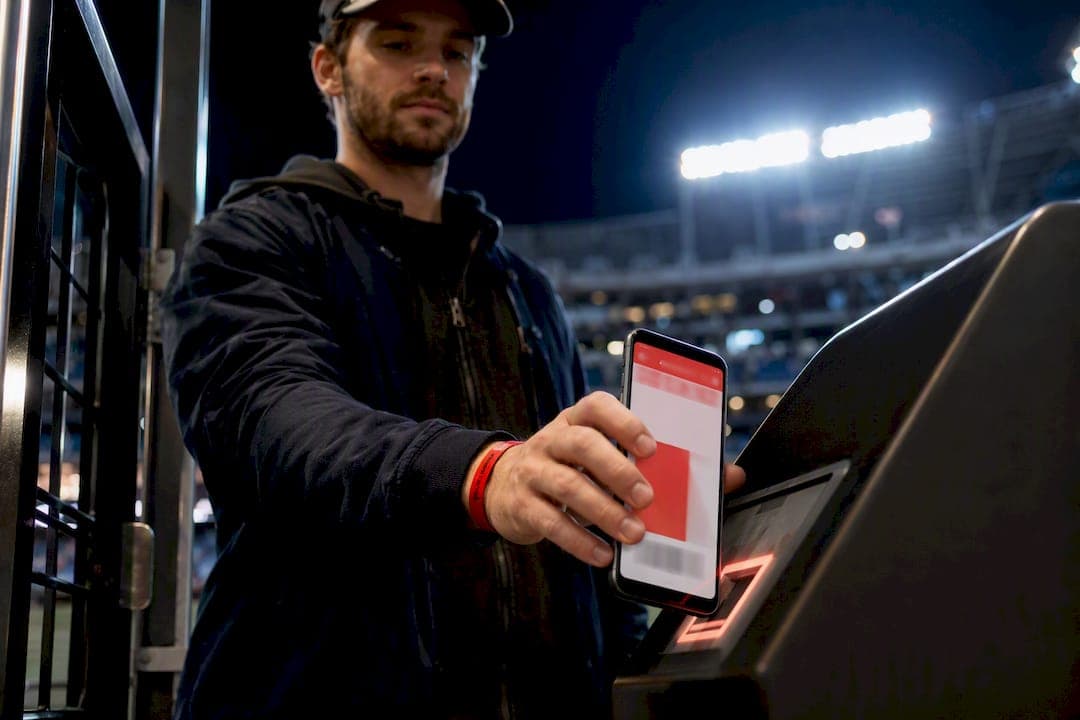
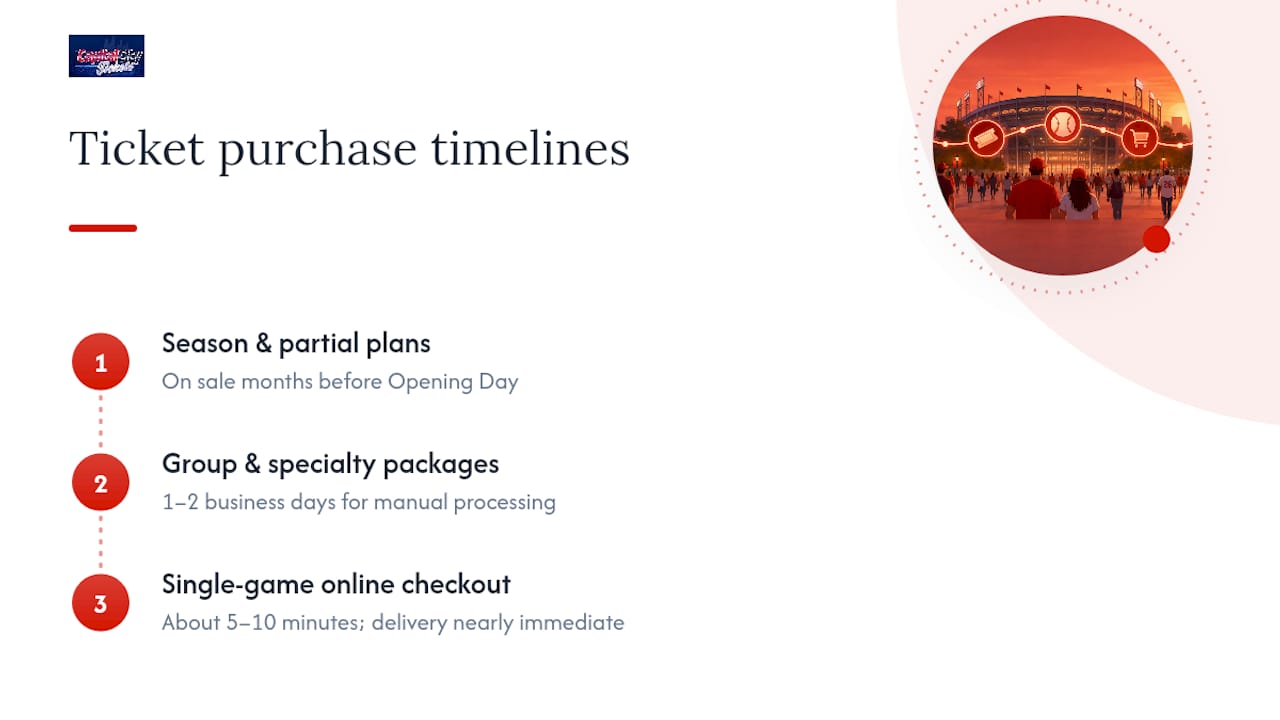
On a team's official site or a resale marketplace, the actual purchase process, from selecting seats to completing checkout, usually takes five to ten minutes for a straightforward single game. Most tickets are now delivered digitally, either as a mobile transfer through an app like MLB Ballpark or as an instant PDF download, which means delivery is nearly immediate once payment clears. That's a real shift from a decade ago, when physical tickets mailed to your home could take a week or more to arrive.
Where timing gets more complicated is with high-demand games. Season ticket packages or partial plans often go on sale months before opening day and can involve a waitlist, a deposit, and a follow-up payment schedule stretched across weeks. Group tickets and specialty packages purchased through a team's sales office sometimes take one to two business days to process because they require manual seat assignment rather than an automated checkout.
Total cost also shifts with timing. Buying weeks in advance for a popular series usually locks in a lower price before dynamic pricing climbs, while buying the day of a lightly attended weekday game can land you an even cheaper get-in seat, sometimes within minutes of first checking. If you're buying last-minute for a sold-out date, expect resale pricing and a slightly longer comparison process across multiple sites before you find a fair deal.
What Do MLB Ticket Prices Actually Include?
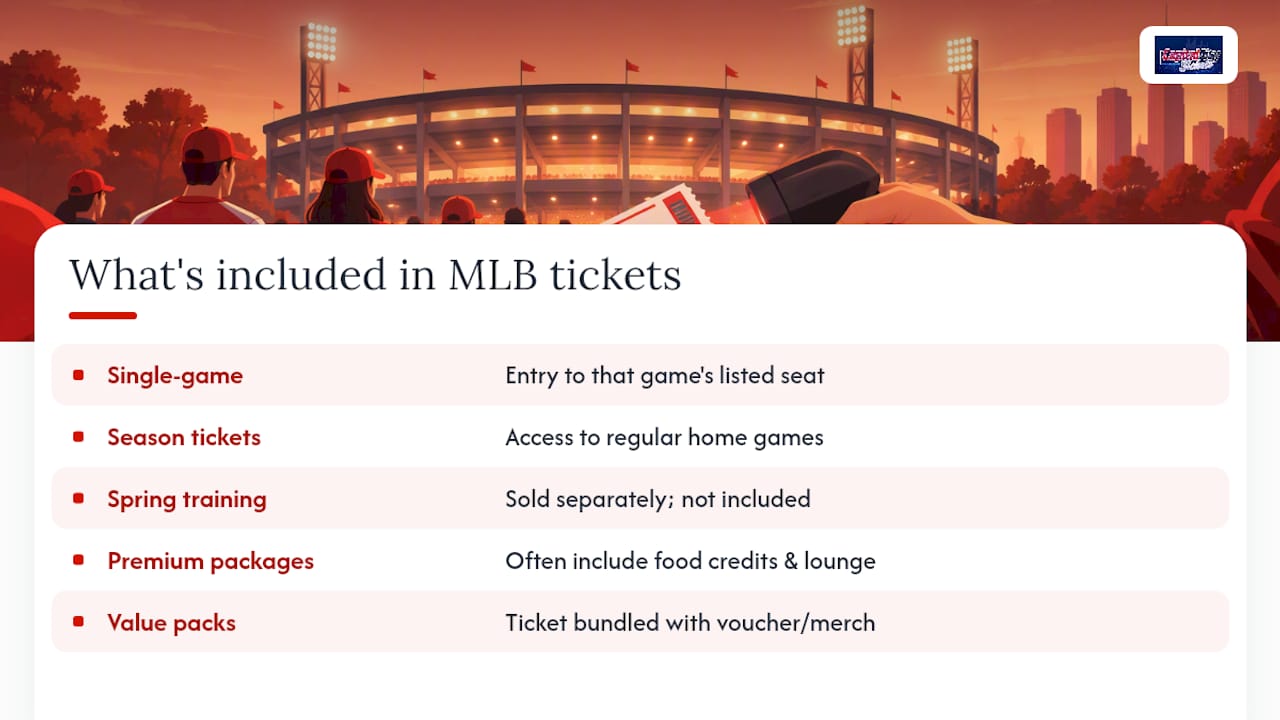
A standard single-game MLB ticket covers exactly one thing: entry to that specific regular-season game, in the seat or section listed on the ticket. It does not include parking, concessions, or access to any other game unless the listing specifically says otherwise.
Season ticket packages and partial-season plans work differently. Full season ticket holders typically get access to every regular-season home game, and many teams extend priority purchase windows or guaranteed access to postseason tickets if the team qualifies, though postseason seats are usually billed separately at a higher rate rather than bundled into the regular season price. Preseason or spring training access is almost never included in a regular-season ticket. Spring training tickets are sold separately, often through a different portion of a team's website, and pricing there tends to run lower than regular-season games.
Some premium packages do bundle extras. Club-level and suite tickets frequently include in-seat food and drink credits, dedicated entrances, or lounge access, which is part of why those seats carry such a steep premium over standard seating. Value Packs and specialty night packages, mentioned earlier through programs like the Braves' ticket specials, sometimes bundle a game ticket with a food voucher or merchandise item at a combined price lower than buying each piece separately. Always read the specific listing rather than assuming what's bundled, since inclusions vary game to game and team to team.
Capital City Tickets' Take on MLB Pricing
Ticket pricing in baseball has gotten more transparent over the past couple of years, but "more transparent" doesn't mean "simple." Dynamic pricing, resale float, and dozens of discount programs scattered across 30 team websites mean most fans still overpay simply because they didn't check enough places before clicking buy.
That's the gap Capital City Tickets exists to close. With over 20 years of experience in the live event ticketing space, the platform backs every purchase with a 100% guarantee on ticket authenticity and delivery, so fans aren't left guessing whether a listing is legitimate. Listings are pulled from verified sellers and displayed with transparent pricing, no surprise reveal at the final checkout screen.
Buy direct from the team when you want an official promo night or a demographic discount. Choose a marketplace listing when the primary site is sold out, priced high, or simply doesn't have the section you want.
— Capital City Tickets
Find Your Seat Without the Guesswork
Comparing team sites, resale platforms, and pass programs one by one eats uptime you could spend actually planning the trip. Capital City Tickets gives you one place to filter by city, venue, date, and price, backed by a 100% guarantee on ticket authenticity and delivery, so you're not stuck double-checking a listing's legitimacy before you commit.
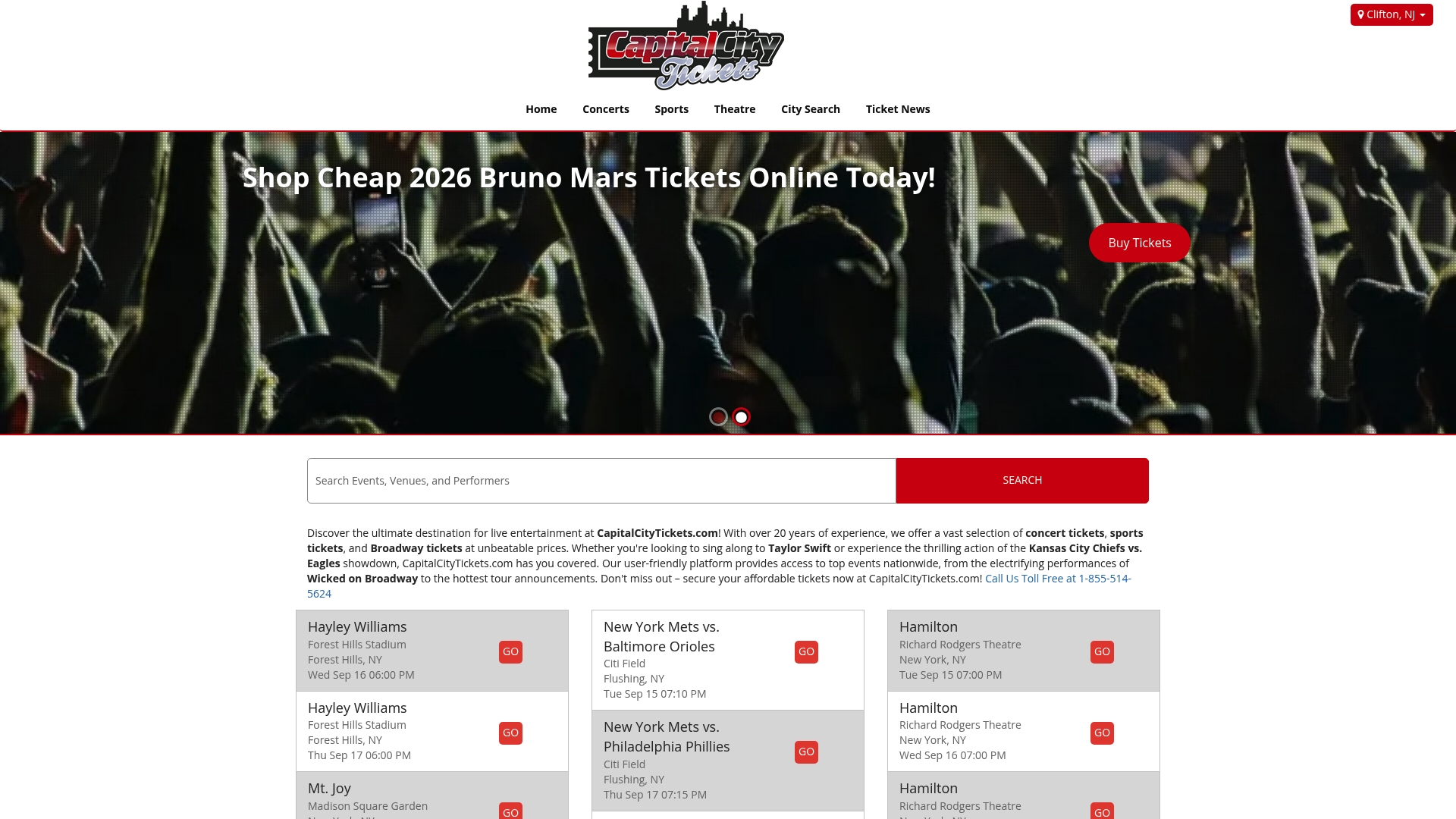
Whether you're chasing a rivalry weekend or just want a cheap weeknight seat, head to the sports tickets page to filter by team and date, apply a promo code at checkout, and get instant digital delivery on most listings. If baseball isn't the only thing on your calendar this season, the site also covers concerts and theater tickets nationwide, so it's worth bookmarking beyond opening day.
Sources
- Major League Baseball average ticket price in 2026 season, by team (in U.S. dollars) — Statista
- New Study Ranks MLB Teams By Ticket Prices for 2026 — Stadium Journey
FAQ
What team has the most expensive MLB tickets?
The Chicago Cubs post the highest average ticket price in the league, near $117 per ticket in Statista's 2026 data. The Los Angeles Dodgers also rank among the priciest, averaging $76.57 a ticket according to Stadium Journey.
What is the cheapest MLB team to see in person?
The Miami Marlins post one of the lowest average ticket prices in the league, around $29 per ticket. The Los Angeles Angels also rank near the bottom, averaging $16.02 a ticket per Stadium Journey's 2026 study.
How much is a New York Yankees ticket?
Yankees ticket prices vary heavily by opponent and section, with rivalry series against teams like the Red Sox or Mets pricing well above a typical weeknight game. Checking the team's official site or a marketplace like Capital City Tickets for the specific date gives you the most accurate current number rather than relying on a single average.
What's the most popular MLB team by fan support?
Fan support is difficult to rank with a single number, since it depends on attendance, merchandise sales, and media reach, none of which point to one clear winner. Teams with the largest metro markets and longest championship histories, like the Yankees, Dodgers, and Cubs, consistently draw the largest overall followings.
When is the best time to buy MLB tickets for the lowest price?
Weeknight games against non-rival opponents almost always price lower than weekend or rivalry games, and prices on non-sellout games often soften in the final 48 hours before first pitch. Comparing the team's primary site against resale listings closer to game day typically reveals the better deal.