
Resale tickets can be safe, but only when you buy through a verified marketplace that offers a buyer guarantee and an official transfer method. The risk isn't resale itself. It's paying a stranger through an unprotected channel with no recourse. Three moves cut your exposure to nearly zero: buy through a protected platform, pay with a credit card, and confirm the ticket actually transfers to your account before the event.
TL;DR:
- Resale tickets are safest when purchased through verified platforms that conduct database checks and use official transfer systems, but verification alone doesn't guarantee a flawless ticket.
- Major marketplaces prevent scams by withholding payment until buyers confirm receipt, yet inaccuracies in seat descriptions or delayed delivery still pose risks.
- Recognizing scams requires avoiding social media sellers, duplicate screenshots, lookalike websites, and phishing emails that seek login details or demand outside-platform payments.
- To buy resale tickets securely, always use official sources, prefer instant delivery listings, pay with credit cards or PayPal Goods & Services, and confirm the transfer lands in your account before completing the purchase.
- A proven seller, such as Capital City Tickets with over 20 years of guarantee-backed sales, offers the highest safety by backing every purchase with a full authenticity and delivery guarantee.
Table of Contents
- What "Verified Resale" Actually Means
- Are Resale Tickets Safe in Practice? Marketplaces vs. Real Risk
- Common Scams and Red Flags
- How to Buy Resale Tickets Safely: A Step-by-Step Checklist
- Payment and Delivery: What Actually Protects You
- If Your Tickets Are Invalid or Late: What to Do
- Why 20 Years of Guarantee-Backed Sales Matters Here
- When Resale Makes Sense, and When It Doesn't
- Buy Resale Tickets Without the Guesswork
- Where This Information Comes From
- Sources
- FAQ
What "Verified Resale" Actually Means
"Verified resale" gets thrown around loosely, but it has a specific meaning: the listing has been checked against the original issuer's records, or it moves through a sanctioned transfer flow instead of a screenshot or a PDF emailed from a stranger. That's the whole mechanism. It's a database check, not a guarantee that the seat you get matches the seat you were promised.
Verification generally relies on:
- Automated cross-checks against the venue or issuer's ticketing database
- Barcode or QR reissuance through the platform's own transfer system
- Seller account requirements (identity verification, sales history, or held payment until delivery)
The gap most buyers miss: verification is a technical process, not a human inspecting every listing. A ticket can pass automated checks and still come with an inflated fee, a wrong section, or a seller who's slow to release it. Verified means "not fake." It doesn't mean "flawless."
Are Resale Tickets Safe in Practice? Marketplaces vs. Real Risk
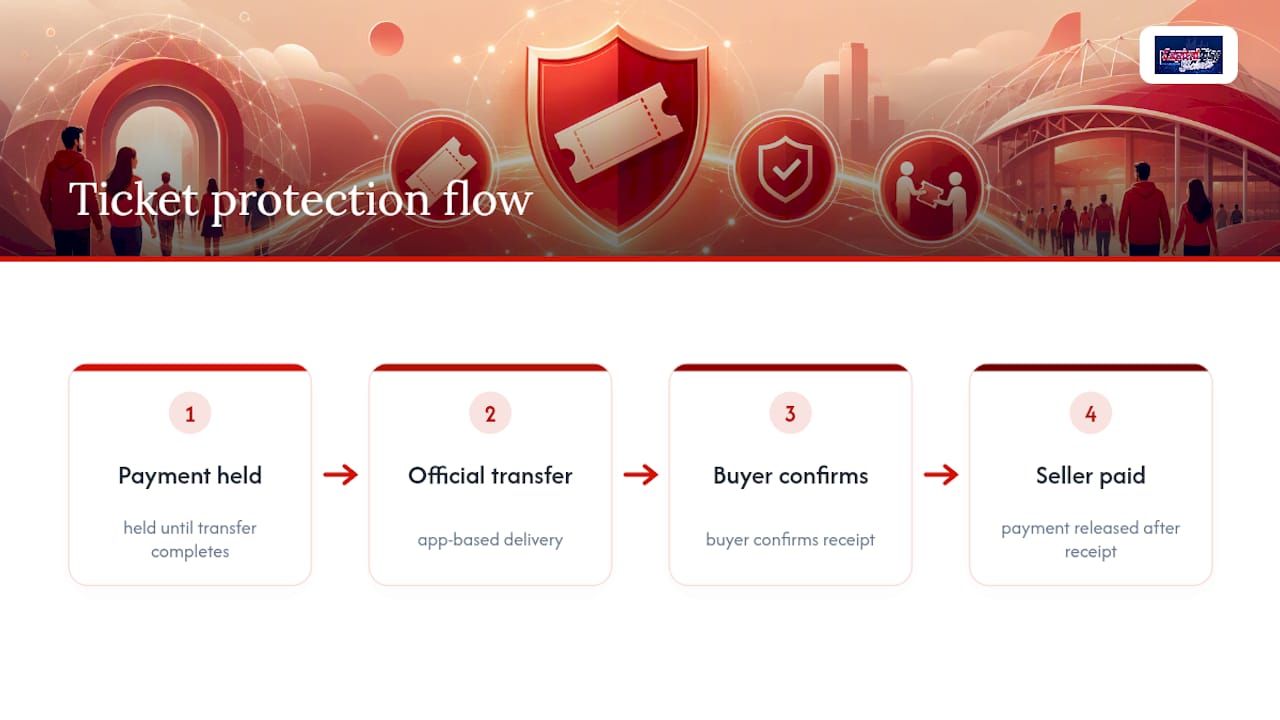
The core safeguards, buyer guarantees, held payments until transfer completes, and official app-based delivery, do the heavy lifting against outright fraud. Most established marketplaces won't let a seller collect payment before a buyer confirms receipt, which closes off the classic "paid and never got the ticket" scam.
What doesn't disappear: inaccurate seat descriptions, delivery that lands the morning of the show instead of a week out, and speculative listings, tickets a seller doesn't actually hold yet, banking on getting them before the event.
Industry reviews of major resale platforms note that legitimacy and marketplace risk are two different things. A platform can be entirely legitimate and still carry fee structures or delivery timelines that catch buyers off guard. Judge a listing by three things beyond the platform's badge: how the seller describes the transfer method, when delivery happens relative to the event, and whether the total price (fees included) is shown before you commit to buying.
Common Scams and Red Flags
Nearly every ticket scam fits one of four patterns, and each has a check that shuts it down fast, according to Alertix's analysis of resale fraud:
- Fake sellers in fan groups or social media comments. Red flag: a "seller" who slides into your DMs after you post looking for tickets. Check: never buy from someone who found you, not the other way around.
- Duplicated screenshot tickets. Red flag: a seller sends a photo of a barcode instead of transferring through the app. Check: demand a platform transfer, not an image.
- Lookalike resale sites. Red flag: a URL that's almost right, with an extra word or a swapped domain ending. Check: type the address yourself instead of clicking a link.
- Phishing messages that harvest logins. Red flag: an urgent email asking you to "verify your account" before a purchase completes. Check: log in directly through the official site, never through an emailed link.
A screenshot is never proof of ownership, and any request to pay outside the platform's checkout is the clearest signal something's wrong.
How to Buy Resale Tickets Safely: A Step-by-Step Checklist
Follow this order every time you buy a resale ticket, and you eliminate most of the risk before you ever enter a credit card number.
- Start at the official source. Go to the venue's site or a reputable marketplace directly. Type the URL yourself rather than clicking a link from a text, email, or social post.
- Favor in-hand or instant-delivery listings. A ticket marked as already in the seller's possession is safer than a speculative listing promising delivery closer to the event.
- Check the delivery timeline before buying. If a listing says tickets arrive "closer to the event date," ask why, and consider whether that timing works for your travel plans.
- Pay with a credit card or PayPal Goods & Services. Both give you a formal dispute process if something goes wrong. Never use a wire transfer, cash app, or PayPal Friends & Family. Those payments are functionally unrecoverable once sent.
- Confirm the transfer lands in your name. A legitimate resale ticket arrives through the platform's own transfer system and shows up under your account, not as an attachment. Platform-handled transfer is the single best proof you're holding a real ticket.
- Read the buyer-protection terms before checkout. Know what triggers a refund and how long you have to file a claim.
- Save every confirmation. Screenshot your order number, the seat details, and the total charge.
- Turn on multi-factor authentication for any account tied to your payment method or ticket wallet.
Pro Tip: Set a price and event alert through an official channel instead of scrambling on resale sites at the last minute. Removing the time pressure is often what keeps people from making a rushed, unsafe purchase.
Payment and Delivery: What Actually Protects You
The payment method you choose determines whether you have any recourse at all if a ticket never arrives or turns out to be fake.
- Credit cards and PayPal Goods & Services carry formal dispute processes. If the ticket doesn't show up or gets rejected at the gate, you have a documented path to your money back.
- Bank wires, cash apps, and PayPal Friends & Family offer none of that. Once the money moves, it's the seller's word against yours.
- Official app transfers and reissued barcodes confirm the ticket is tied to your account, not a photo someone else could also be selling.
- Held-payment or escrow models, where the marketplace doesn't release funds to the seller until transfer completes, close the gap between paying and receiving.
Before you buy, ask the seller or check the listing for exactly how delivery works. If the answer is vague, that's your signal to walk away.
If Your Tickets Are Invalid or Late: What to Do
Move fast and document everything the moment something looks wrong.
- Contact the platform first. Provide your order number, screenshots of the listing, and, if it happened at the venue, proof you were turned away at the gate.
- File a claim through the marketplace's buyer guarantee process before doing anything else. That's usually the fastest path to a refund.
- If the platform stalls, open a dispute with your credit card issuer. Card protections and platform guarantees aren't mutually exclusive. You can pursue both if the first stalls.
- Report the seller to the FTC's fraud complaint portal and check BBB guidance on buying from resellers for additional reporting steps.
Why 20 Years of Guarantee-Backed Sales Matters Here
Every safeguard covered above, verification, held payment, official transfer, only works if the seller behind the listing honors it. Capital City Tickets has spent over 20 years selling concert, sports, and theater tickets nationwide, and backs every purchase with a 100% guarantee on authenticity and delivery.
A buyer guarantee is only as good as the track record behind it. Two decades of processing live-event orders is what turns a promise on a page into something you can actually count on when a gate scanner is the final test.
That guarantee lines up directly with the checklist above: verified listings, protected checkout, and a transfer process built to get the right ticket into the right hands before showtime.
When Resale Makes Sense, and When It Doesn't
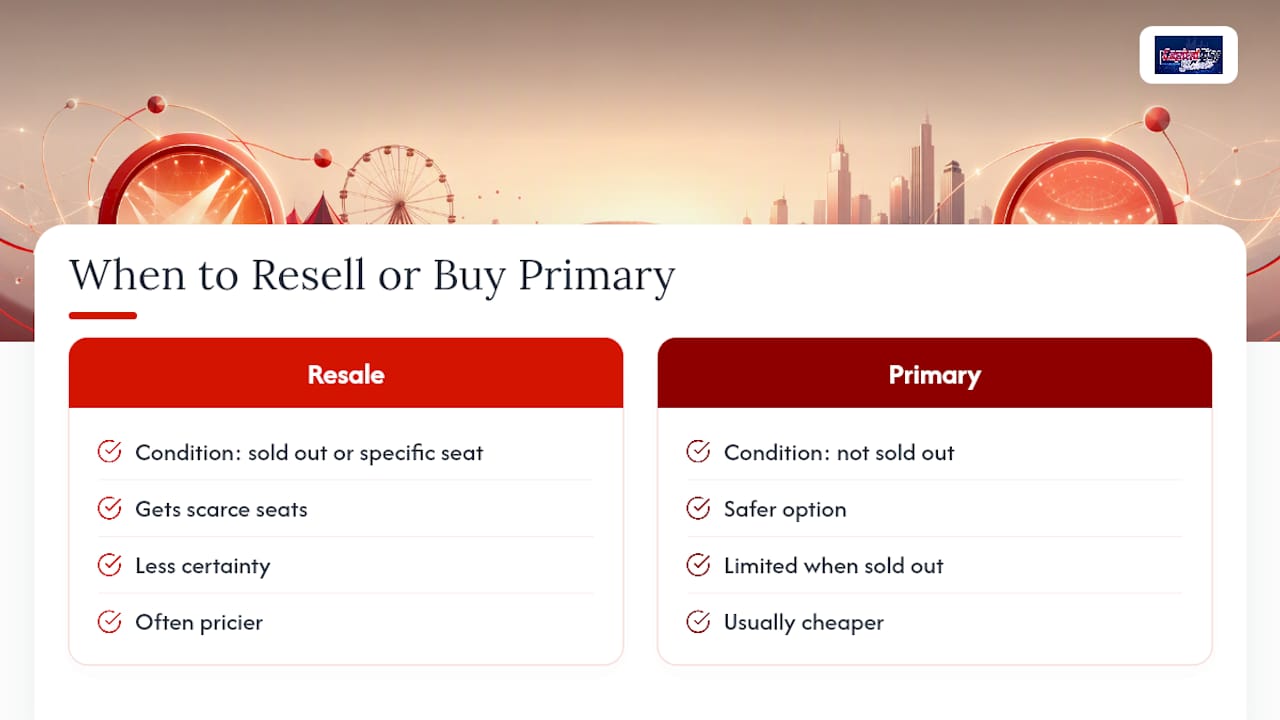
Resale earns its price when an event is sold out or you need a specific seat, but it costs you certainty and often money. If the show hasn't sold out yet, primary tickets are almost always the safer, cheaper route. Resale is a tool for scarcity, not a default habit.
Pro Tip: If you're weighing speed against safety, take the extra two minutes to confirm delivery terms. A slower, verified purchase beats a fast one you can't undo.
— Capital City Tickets
Buy Resale Tickets Without the Guesswork
Capital City Tickets built its entire model around the one thing resale buyers actually worry about: knowing the ticket in your cart is real before you pay for it. Every order carries a 100% guarantee on authenticity and delivery, backed by more than 20 years of selling tickets nationwide, so you're not relying on a stranger's word or a screenshot.
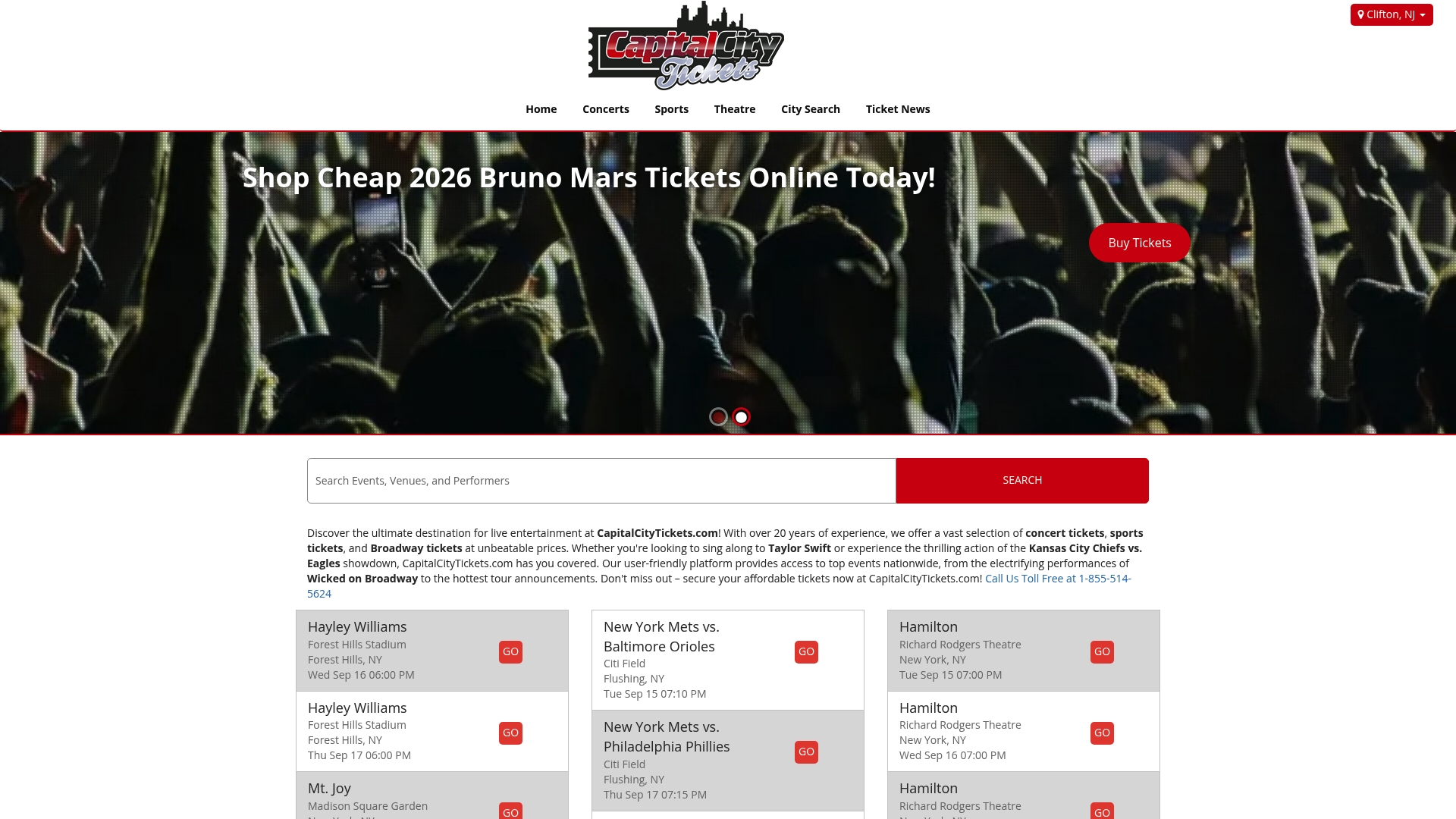
Browse concert tickets, check sports tickets for your team's next home game, or look through theatre tickets for touring shows near you. Searchable inventory, secure checkout, and a guarantee that backs up every seat, that's the whole pitch. Pick your event and see what's available before prices move.
Where This Information Comes From
For deeper reading on ticket safety: LegalClarity's breakdown of verified resale explains verification mechanics. Alertix's scam pattern report covers common fraud tactics. The BBB's reseller tips and the FTC complaint portal round out where to verify claims or report fraud.
Sources
- What does 'verified resale' mean for ticket buyers?
- FTC complaint portal
- What to know about buying tickets from an online reseller (BBB)
FAQ
Is Buying Resale Tickets Legit?
Yes, when you buy through a marketplace with buyer guarantees, verified listings, and official transfer methods. The risk comes from off-platform payments and unverified sellers, not from resale as a concept.
Which Ticket Resale Site Is the Safest?
The safest choice is any platform that verifies listings, holds payment until transfer completes, and offers a clear buyer guarantee. Capital City Tickets backs every order with a 100% guarantee on authenticity and delivery, built on more than 20 years of processing live-event sales.
How Do I Avoid Getting Scammed Buying Resale Tickets?
Pay with a credit card or PayPal Goods & Services, never a wire transfer or Friends & Family. Confirm the ticket transfers into your account through the platform itself, since a screenshot is never proof of ownership.
What Are the Biggest Risks With Ticket Resale?
The main risks are fake sellers, duplicated screenshot tickets, lookalike websites, and phishing messages designed to steal your login. Each one has a straightforward defense: buy on protected channels, type URLs yourself, and demand official transfer over any image-based ticket.
Can I Trust Resale Tickets Bought Through a Major Platform?
Generally yes, since major platforms verify listings and hold sellers to delivery standards. Trust the transaction more when the seller discloses the delivery method upfront and the total price, fees included, is shown before checkout.
Recommended
- Ahab The Ticket Whaler Presents Safe Ticket Whaling Tickets at Webster Theater – Hartford, CT
- 40th Anniversary Concert Tickets at Herbst Theatre – San Francisco, CA
- Neil Berg's 110 Years of Broadway Tickets at Kravis Center - Dreyfoos Concert Hall – West Palm Beach, FL
- Brand X Tickets at Shank Hall – Milwaukee, WI