

Standing-room-only (SRO) tickets are official tickets that grant access to designated standing areas rather than an assigned seat. Standing room only isn't automatically a sign that a show has sold out: many venues sell it as its own ticket category from the day tickets go on sale. Before buying, check the venue's own ticketing FAQ or a marketplace's ticket guarantee to confirm exactly what the ticket includes.
TL;DR:
- Standing room only tickets are often sold as a separate category from day one, not only when seats are fully booked, especially at large venues or festivals.
- These tickets typically grant access to designated standing zones that may include branding like party decks, berms, or terrace areas, rather than actual seats.
- It's crucial to verify the ticket type and guarantee when buying from any platform, as SRO listings can appear at different times and under various names like GA or party decks.
- Standing sections are designed for safety with marked boundaries, and fans should arrive early to secure a good spot, since positions fill on a first-come basis.
- SRO is a legitimate ticket option for fans seeking lower prices and more mobility but involves tradeoffs like no seat and dependence on arrival time for sightlines.
Table of Contents
- What standing room only means in practice
- Where venues actually sell standing room tickets
- How to buy standing room tickets and what to check first
- Safety rules and what actually happens during an SRO event
- Should you buy standing room tickets?
- How Capital City Tickets handles standing room listings
- What are your rights if you buy an SRO ticket?
- Can you get accessibility accommodations in a standing area?
- SRO versus reserved seating: which gives you more value?
- How long will you actually be standing?
- What most guides get wrong about standing room tickets
- Where to find discounted standing room and seated tickets
- Sources
- FAQ
What standing room only means in practice
Standing-room-only tickets grant entry to a general standing zone rather than a specific seat. That sounds simple, but the ticket world uses several overlapping terms, and knowing the difference keeps you from buying something you didn't expect.
- SRO: A ticket tied to a marked standing section, often with a capacity cap set by the venue.
- GA (general admission): Similar to SRO but usually describes an entire floor or field area with no seats at all, common at concerts.
- Reserved seating: A specific seat number and row, guaranteeing a fixed spot.
The line between SRO and GA blurs at many concerts, where "GA floor" tickets are really just standing room by another name. Some ticketing platforms still display a seat or row number on SRO inventory, even though there's no actual chair. That's typically a back-end quirk of how the venue's ticketing system tracks inventory, not a promise of a seat.
Venues also dress up standing sections with their own branding. Party decks, terraces, rail sections, and berm seating are all standing-admission products marketed under names that sound more appealing than "standing room." According to Wikipedia's entry on standing room only, venues sometimes allocate specific sections for SRO ticket holders from the moment sales open, which means the category can exist independently of whether the rest of the venue is full.
Where venues actually sell standing room tickets
Standing admission shows up most often at large stadiums, outdoor festivals, and family-oriented sporting events, where a fixed standing zone is easier to manage than adding more seats.
- AT&T Stadium sells party deck areas as a standing admission product for football games and major concerts, not just as overflow.
- Lincoln Financial Field occasionally opens standing sections for select events when seated inventory is limited.
- Howard J. Lamade Stadium, home of the Little League World Series, is known for its grassy berm seating where fans stand or sit on the slope rather than in fixed chairs.
Festivals and many outdoor concerts default to standing admission on the floor or lawn, while family events sometimes use berm-style areas to keep tickets affordable. Smaller concert venues frequently build their entire floor plan around standing room, a practice explored in industry coverage of small-venue live music, which notes that standing areas let organizers pack in more fans per square foot while keeping the atmosphere energetic.
Some larger arenas have scaled back traditional SRO over the years in favor of assigned seating throughout, citing safety and sightline complaints. At the same time, "safe standing" rail sections are gaining ground at soccer-style venues and some new stadium builds, a trend visible in the party deck and berm formats used across the stadiums planned for the 2026 World Cup host cities.
How to buy standing room tickets and what to check first
SRO tickets typically show up in three places: the venue or team's own box office, the official team or artist website, and third-party ticket marketplaces. Checking all three matters, because SRO inventory can appear on one platform before another, especially for high-demand shows.
- Confirm the ticket type before paying. Look for the words "SRO," "GA," "standing," or "party deck" in the listing description, not just a price.
- Check for a ticket guarantee. A reputable marketplace backs its listings with a guarantee covering authenticity and delivery.
- Match the barcode or QR code on digital delivery against the seller's description so there's no confusion at the gate.
- Review the seller's reputation and how long they've operated, especially for resale listings.
- Confirm the delivery timeframe. Instant downloads are common for last-minute buys, but some SRO tickets only release at will-call.
Pro Tip: Arrive at least 45 to 60 minutes before doors open if you want a decent sightline in a standing section, since spots fill on a first-come basis.
Before you finalize a purchase, double-check what's actually included, since some standing areas bundle food or drink access while others are simply a place to stand.
Safety rules and what actually happens during an SRO event
Standing sections exist inside real safety limits, not just marketing categories. Venues design SRO zones around fire-code and crowd-flow requirements, which is why you'll see painted lines, rails, or rope barriers marking exactly where standing is allowed.
- Aisles, stairwells, and walkways must stay clear at all times.
- Standing on seats or in front of reserved rows is prohibited at most venues.
- Patrons are expected to stay inside the marked standing zone, not drift into nearby seated sections.
Venues regulate standing areas specifically to prevent blocking exits and walkways, a safety principle confirmed by Wikipedia's overview of standing-room-only arrangements. Official venue safety notices, like those published for major touring shows, typically instruct patrons to keep aisles and walkways clear and prohibit standing on seats.
In practice, security staff will redirect anyone who steps outside the designated standing barrier, and trying to "upgrade" into an empty seated section is one of the most common reasons fans get moved. Obstructed sightlines from taller patrons or stage barriers are another frequent complaint, so picking your spot early matters more in SRO than in assigned seating.

Should you buy standing room tickets?
SRO isn't the right call for everyone, but it fits certain fans very well. The lower price point is the biggest draw, along with the energy of a standing crowd and the freedom to move around rather than stay pinned to one seat.
The tradeoffs are real too: no chair for a multi-hour show, sightlines that depend on how early you arrive, and less personal space during a packed set.
- Pros: Lower price, more mobility, closer proximity to the stage or field in some layouts.
- Cons: No seat for the duration, sightlines that depend on arrival time, more physical fatigue over a long event.
| Factor | Standing room only | Reserved seating |
|---|---|---|
| Typical cost | Lower | Higher |
| Guaranteed sightline | No | Yes |
| Physical comfort | Standing for hours | Fixed seat |
| Mobility during event | High | Low |
Run through a short checklist before you buy: can you comfortably stand for the length of the show, do you need any seating accommodation, and do amenities like drink rails or shade matter to you? If the answer leans toward comfort, reserved seating is the safer bet.
How Capital City Tickets handles standing room listings
Capital City Tickets has spent more than 20 years connecting fans with tickets to concerts, sports, and theater, and every listing, including standing room and general admission inventory, carries a 100% guarantee on authenticity and delivery. Listings are kept current in real time, so a standing room section that's about to sell out reflects accurately at checkout rather than showing stale availability.
Before you complete a purchase, run standard checks recommended for any marketplace: confirm the ticket type stated in the listing, verify the barcode or QR delivery method, and check whether a promo code applies to your order. That combination, a verified guarantee plus a quick manual check on your end, cuts down on the guesswork that standing room listings can otherwise carry.
What are your rights if you buy an SRO ticket?
Standing room tickets carry the same basic consumer protections as any other event ticket, but a few details are worth confirming before you pay. Refund policies vary by seller and by venue, so check the specific refund or exchange terms listed on the ticket page rather than assuming a blanket policy applies.
Reselling an SRO ticket is generally allowed unless the original seller marked it as non-transferable, which happens occasionally with will-call or ID-matched entry. If you're buying resale, confirm the ticket isn't restricted before you pay.
Entry guarantees matter more for SRO than for assigned seats, since there's no seat number to fall back on if something goes wrong at the gate. A reputable marketplace backs its SRO listings with the same authenticity and delivery guarantee it applies to reserved seating, which is worth confirming in writing before you complete checkout. If a ticket fails to scan or the event is canceled, that guarantee is what determines whether you get a refund or a replacement.
Always read the fine print on a listing page rather than assuming standard consumer return rules apply the way they would for a retail purchase. Ticket sales are typically final once the event has occurred, so any dispute needs to happen before or during the show, not after.
Can you get accessibility accommodations in a standing area?
Standing room sections aren't built for every fan, so most venues offer accessible viewing platforms or designated accessible standing areas as an alternative to the general standing crowd. These areas are typically separate from the main SRO zone and reserved for patrons with mobility needs and one companion.

If you need an accommodation, contact the venue's box office or accessibility line directly rather than assuming a standard SRO ticket includes one. Venues generally require advance notice or a specific ticket type to guarantee accessible standing or viewing space, especially for high-demand shows where the accessible area has limited capacity.
Companion seating, sightline platforms, and priority entry are the accommodations most commonly offered, but availability depends entirely on the individual venue's policy. Checking the venue's own accessibility page before buying is the most reliable way to confirm what's available for a specific event.
SRO versus reserved seating: which gives you more value?
The value comparison comes down to what you're actually paying for. Reserved seating guarantees a fixed spot and a known sightline for the entire show, which matters for a multi-hour theater performance or a seated concert where comfort is part of the experience.

Standing room trades that certainty for a lower price and more freedom to move, which works well for high-energy concerts, festivals, and games where being close to the action matters more than having a chair. A standing ticket bought near the stage can sometimes put you closer to the performance than a mid-tier reserved seat would, even at a lower price point.
The tradeoff shows up most in comfort over time. A two-hour standing set is manageable for most fans, but a three-plus hour event, or one with an older or less mobile crowd, tends to favor reserved seating for practical reasons. If you're weighing both options for the same show, consider how long you can comfortably stand before deciding purely on price.
How long will you actually be standing?
The standing room experience typically starts well before the show itself. Doors often open 60 to 90 minutes before the first act, and grabbing a decent spot usually means arriving early rather than walking in right as the show starts.
Once inside, you're generally standing for the full length of the event, whether that's a two-hour concert or a longer festival set with multiple acts. Unlike reserved seating, there's no built-in break unless you choose to step out of the standing zone, which usually means giving up your spot.
For events with long undercards or multiple opening acts, factor in the total time you'll be on your feet, not just the headliner's set length. Bringing comfortable shoes and planning bathroom or food breaks around set changes makes a longer standing block far more manageable.
What most guides get wrong about standing room tickets
Most advice on standing room tickets treats it as a consolation prize, something you settle for once the good seats are gone. That framing misses how deliberately venues like AT&T Stadium and Howard J. Lamade Stadium build standing sections as their own product, complete with amenities and pricing tiers.
The bigger blind spot is safety literacy. Fans focus on sightlines and comfort but rarely read the actual rules around standing zones, aisles, and barriers, which is exactly where most on-site conflicts with security happen. Knowing the boundary of your standing section matters as much as knowing where to stand within it.
If there's one thing worth prioritizing, it's verification before arrival: confirm the ticket type, the guarantee behind it, and the venue's specific standing policy. That single step solves more problems than any comfort tip or early-arrival trick ever will.
— Capital City Tickets
Where to find discounted standing room and seated tickets
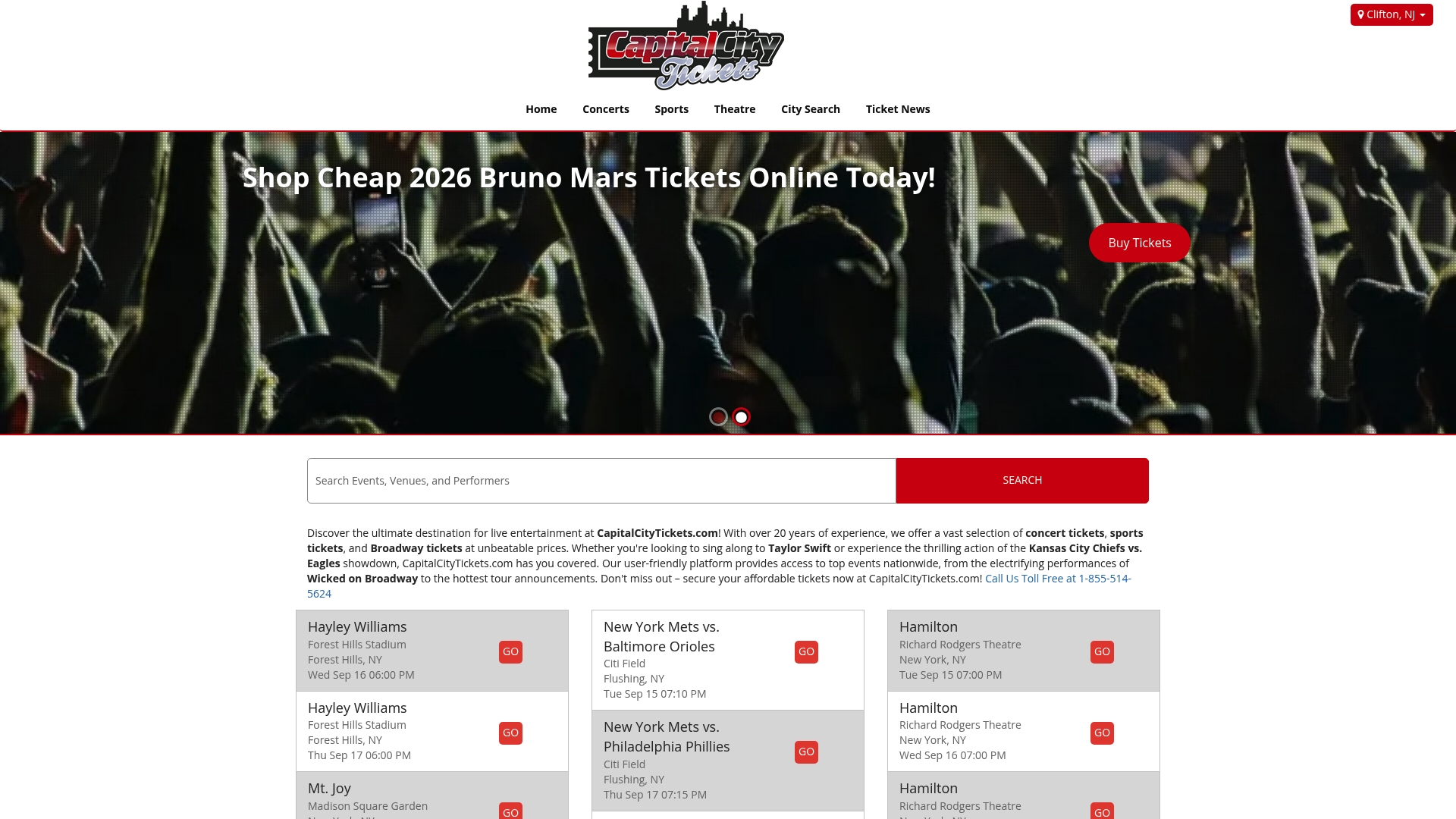
Capital City Tickets makes it easy to search concert tickets, sports tickets, and theatre tickets by city, venue, date, or category, so comparing a standing room listing against reserved seating takes a few clicks rather than several tabs.
- Filter any event by price to spot lower-cost standing or general admission sections fast.
- Some marketplaces accept promo codes at checkout to reduce the total cost.
- Reliable platforms often provide guarantees on ticket authenticity and delivery, including for standing room tickets.
If you're weighing a standing spot against an assigned seat for an upcoming show, browsing available concert tickets is the quickest way to see both options side by side before you decide.
Sources
- Standing-room only - Wikipedia
- Venue & Show Information - Optus Stadium (Ed Sheeran FAQs)
- STANDING ROOM ONLY definition | Cambridge English Dictionary
Always confirm current standing room policies on the specific venue's own ticketing FAQ before you buy.
FAQ
What does "standing room only" mean?
Standing room only means the ticket grants access to a designated standing area instead of an assigned seat. It can be its own official ticket category sold from the start, not just leftover space after seats sell out, according to Wikipedia's explanation of SRO.
Is standing room only worth it?
It depends on what you value most for that specific event. SRO tends to suit fans who want a lower price, more mobility, and an energetic crowd, while reserved seating suits anyone who needs guaranteed comfort or a fixed sightline for a longer show.
Is standing room only legit?
Yes, SRO is a legitimate, commonly sold ticket type at many stadiums, arenas, and festivals, not a sign of a scam or an invalid ticket. Buying through a marketplace with a ticket guarantee adds an extra layer of protection for authenticity and delivery.
Does SRO mean sold out?
Not necessarily. Standing room only can be sold as its own category from the moment tickets go on sale, separate from whether the venue's seated inventory is sold out, as noted in Wikipedia's overview of the term. That said, the phrase is also used informally to mean all seats are taken, per the Cambridge Dictionary's definition.