

Ticket insurance is usually worth buying only when the ticket is expensive, tied to nonrefundable travel, or irreplaceable to your plans, like a destination bachelorette weekend built around one concert. For a $45 local show with no travel attached, skip it and pocket the premium. For a $600 pair of playoff tickets bundled with flights and a hotel, the math tips toward buying, but only after you read the policy certificate for the exclusions that matter most.
TL;DR:
- Ticket insurance is only cost-effective for expensive tickets combined with nonrefundable travel or significant financial exposure, not for small, local events.
- Most policies cover sudden illness, family emergencies, transportation delays, jury duty, military orders, or home emergencies, but exclude change of mind, promoter cancellations, pre-existing conditions, and vague pandemic clauses.
- The insurance premium is a percentage of the total nonrefundable spending, so assess whether the potential loss, including travel and lodging, justifies the cost before buying.
- Filing a claim requires detailed documentation and is processed through the insurer, not the ticket platform, with strict deadlines often between 60 to 90 days after the event.
- Self-insurance or leveraging venue policies and reselling are often better options unless the total nonrefundable exposure is large and the covered reasons truly apply.
Table of Contents
- What Ticket Insurance Is and How It's Sold
- Typical Coverage and the Exclusions That Actually Matter
- What Ticket Insurance Costs and the Math That Decides It
- How Ticket Insurance Claims Actually Work
- Alternatives to Buying Ticket Insurance
- A Quick Checklist Before You Buy at Checkout
- Publisher Perspective: What Capital City Tickets Recommends
- Find Your Next Event Without the Guesswork on Coverage
- Policy Documents Worth Reading Before You Buy
- Sources
- FAQ
What Ticket Insurance Is and How It's Sold
Ticket insurance is an add on you're offered during checkout on many ticketing platforms, sitting right next to the seat map and the delivery method. It's a policy that reimburses some or all of what you paid for your ticket if you can't attend for a specific list of approved reasons. You're not buying a general "I changed my mind" refund. You're buying a narrow contract that pays out only when your situation matches one of the reasons written into the plan document.
Most of these products aren't underwritten by the ticket seller itself. The seller is a distribution channel, not the insurer. Allianz, for instance, sells an Event Ticket Protector plan through checkout partnerships on major platforms, and its version commonly reimburses up to 100 percent of the ticket price for reasons spelled out in the certificate, plus access to a 24/7 assistance line. Other insurers offer comparable products under different brand names, and coverage details shift depending on which one is actually backing the policy you clicked "add" on.
Coverage usually extends beyond the bare ticket price. Depending on the plan, you might also see reimbursement for:
- The face value of the ticket, including service fees and taxes
- Parking passes purchased in the same transaction
- Merchandise or VIP package add ons bundled into the original order
- Processing fees charged by the ticketing platform
Nearly every plan includes a free look period, typically around 15 days from purchase, during which you can cancel the insurance itself and get the premium back, as long as you haven't filed a claim and the event hasn't already happened. That window matters more than most buyers realize. If you bought insurance on impulse at checkout and want to reconsider once you've actually read the certificate, that's your chance.
Typical Coverage and the Exclusions That Actually Matter
Here's the gap between what people assume ticket insurance covers and what it actually covers: most buyers picture a blanket safety net. Real policies are a short, specific list.
Reasons that typically trigger a valid claim include (for example, as outlined in Sports Injuries | Megasports Arena, accident-related injuries):
- Sudden illness or injury to you or an immediate family member
- A documented family emergency, including death of a close relative
- Transportation delays or cancellations that prevent you from reaching the venue
- Jury duty summons that conflicts with the event date
- Military orders or deployment
- A sudden home emergency, like a fire or burst pipe, requiring your presence
That list looks generous until you check what's excluded. And the exclusions are where most of the real risk lives.
Insurance attorney Omar Ochoa notes that coverage is often narrower than buyers expect, and documentation requirements can make successful claims difficult even when the reason for missing the event seems obviously legitimate. Three exclusions cause the most disappointment:
- Change of mind. Deciding you no longer want to go, or that the seats aren't what you hoped, is not covered under any standard plan.
- Promoter or venue cancellation. If the show itself gets called off, that's usually the promoter's or ticketing platform's refund obligation, not the insurer's, since you didn't miss anything, the event never happened.
- Pre-existing conditions. A known health issue that flares up close to the event date can get denied unless the plan includes a stability period you met before buying.
- Pandemic-related closures. Language here is often vague on purpose. Many plans either exclude "epidemic" related cancellations outright or bury conditions so specific that a genuine COVID diagnosis still doesn't qualify.
The policy certificate is the only document that tells you which version of these rules applies to your purchase, and it's rarely the same across providers. Benefit limits, covered reasons, and even definitions of "immediate family" vary by state and by the specific plan you bought, which is exactly why skimming the checkout box without opening the certificate is how people end up filing a claim they were never going to win.
What Ticket Insurance Costs and the Math That Decides It
Ticket insurance is priced as a percentage of your total ticket purchase, and that percentage stays fairly steady whether you're buying nosebleed seats or floor tickets. That's the detail that makes the decision mathematical rather than emotional.
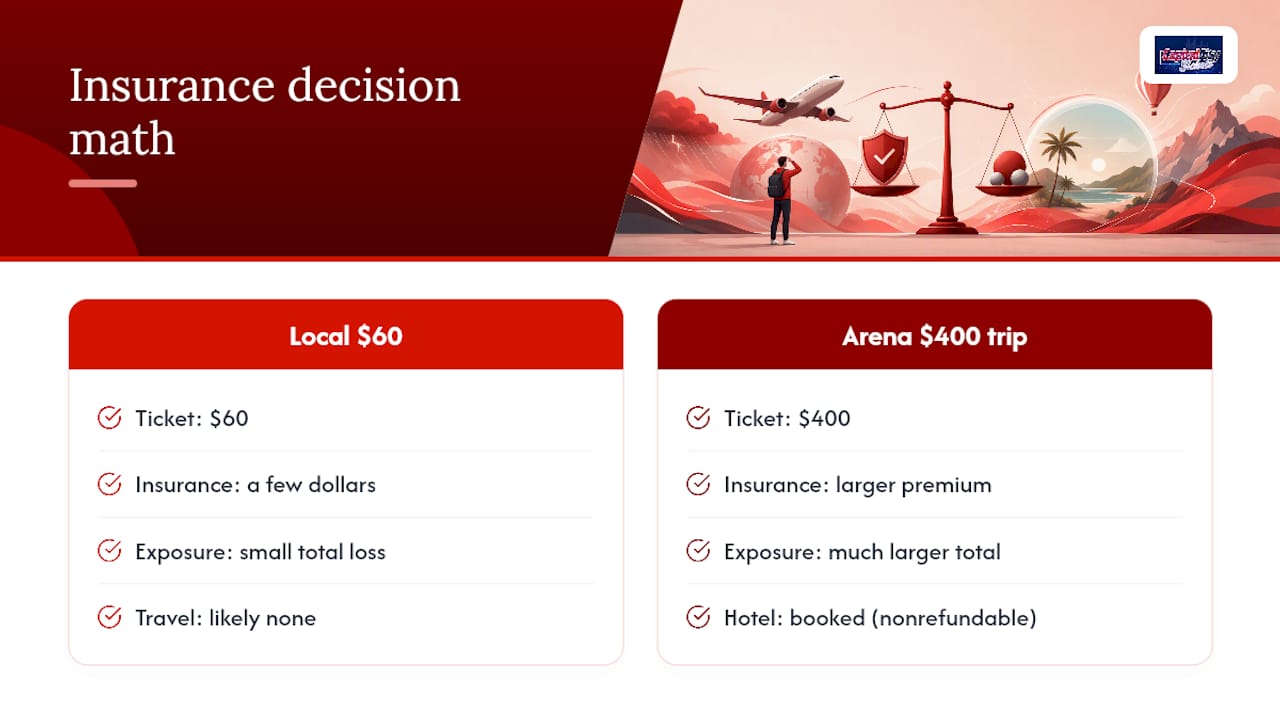
Run two examples side by side. A $60 ticket to a local comedy show might add a few dollars in insurance, a rounding error against your total spend. A $400 ticket to a touring artist's arena show, paired with a hotel booked for that weekend, turns the same percentage into real money, and it's now protecting a much bigger stack of nonrefundable costs sitting behind that one ticket.
That's the actual decision rule: compare the premium not to the ticket price alone, but to your total nonrefundable exposure. Add up the ticket, any flights or gas, the hotel, and lost wages if you'd have to take unpaid time off to attend. If that combined number is small, self-insuring, just eating the loss if something goes wrong, usually beats paying for a policy with narrow exclusions. If that combined number is large, the premium starts looking like cheap protection against a much bigger loss.
Pro Tip: Before adding insurance at checkout, ask yourself one question: if I had to walk away from this event tomorrow, what's the total dollar amount I'd lose, not just the ticket? That number, not the ticket price, is what you're actually insuring.
Group purchases and event centerpiece trips tip the scale toward buying. If you bought eight tickets for a birthday group, or the concert is the entire reason for a weekend trip you already paid for, the exposure multiplies fast, and a modest premium starts covering a genuinely painful potential loss.
How Ticket Insurance Claims Actually Work
Filing a claim happens with the insurer, not with the ticket seller. You won't call Capital City Tickets or any other ticketing platform to process an insurance claim. You'll go through the insurer's own claims portal or phone line, since the platform where you bought the ticket was just the sales channel.
- Locate your policy certificate and claim number. This usually arrived by email at purchase, separate from your ticket confirmation.
- File within the deadline stated in your certificate. Many plans require notice within a set window after the event date, sometimes as short as 60 to 90 days, so don't sit on it.
- Gather documentation specific to your reason. Medical claims typically require a doctor's note, accident claims often need a police report, and work conflicts usually require a signed employer letter confirming the schedule change.
- Submit through the insurer's portal, not the ticket platform's customer service line.
- Expect a review period before approval or denial, and expect a request for additional documentation if your first submission is incomplete.
- If denied, you can appeal, but appeals still run through the same insurer's internal process. Taking a denied ticket insurance claim to court almost never makes financial sense given the size of most reimbursements versus legal costs.
The documentation burden is the part people underestimate most. A same day illness that keeps you home might feel obviously legitimate, but without a note from a provider dated to that window, the claim can stall or get denied outright.
Alternatives to Buying Ticket Insurance
Insurance isn't the only lever you have against losing money on a ticket you can't use.
- Check the promoter's own refund and reschedule policy first. If a show gets postponed or moved, many venues issue automatic refunds or honor the original ticket at the new date, no insurance required.
- Transfer or resell the ticket. Most major platforms let you transfer a ticket to a friend or list it for resale if your plans change, recovering some or all of the value without ever filing a claim.
- Check your credit card's purchase protections. Some cards include limited event ticket benefits, like Mastercard's Ticket Saver program, which reimburses a capped amount per ticket, though usually as secondary coverage behind other insurance you hold.
- Buy standalone travel insurance if the trip is the real exposure. When the risk is mostly about flights and hotels rather than the ticket itself, a travel policy may cover more ground than a ticket specific add-on.
- Self-insure by skipping the premium and keeping the cash aside. For lower cost tickets, this is often the most rational move mathematically.
A Quick Checklist Before You Buy at Checkout
Run this three-question test before you click "add insurance" on any ticket purchase:
- Does the premium look small next to my total nonrefundable exposure, including travel and lodging, not just the ticket price?
- Is there a realistic chance one of the covered reasons, illness, jury duty, transportation delay, actually applies to my situation in the coming weeks?
- Would losing this money actually hurt, or is it a small enough amount that self-insuring makes more sense?
If you answer yes to the first two and the loss would genuinely sting, buying makes sense. If you're answering no across the board, save the money.
Before you commit, scan the certificate for three red flags: an exclusion for promoter or venue cancellation (since that's often the scenario people mistakenly assume is covered), a pre-existing condition clause with a vague stability period, and a claims filing window under 60 days.
Pro Tip: Call or message the insurer's support line before buying if you're unsure your specific situation qualifies. A two minute question before you pay beats a denied claim after the fact.
Three questions worth asking that chat rep directly: what counts as a covered "family emergency," is there a pandemic related exclusion in this specific plan, and what's the exact claims filing deadline after the event date.
Publisher Perspective: What Capital City Tickets Recommends
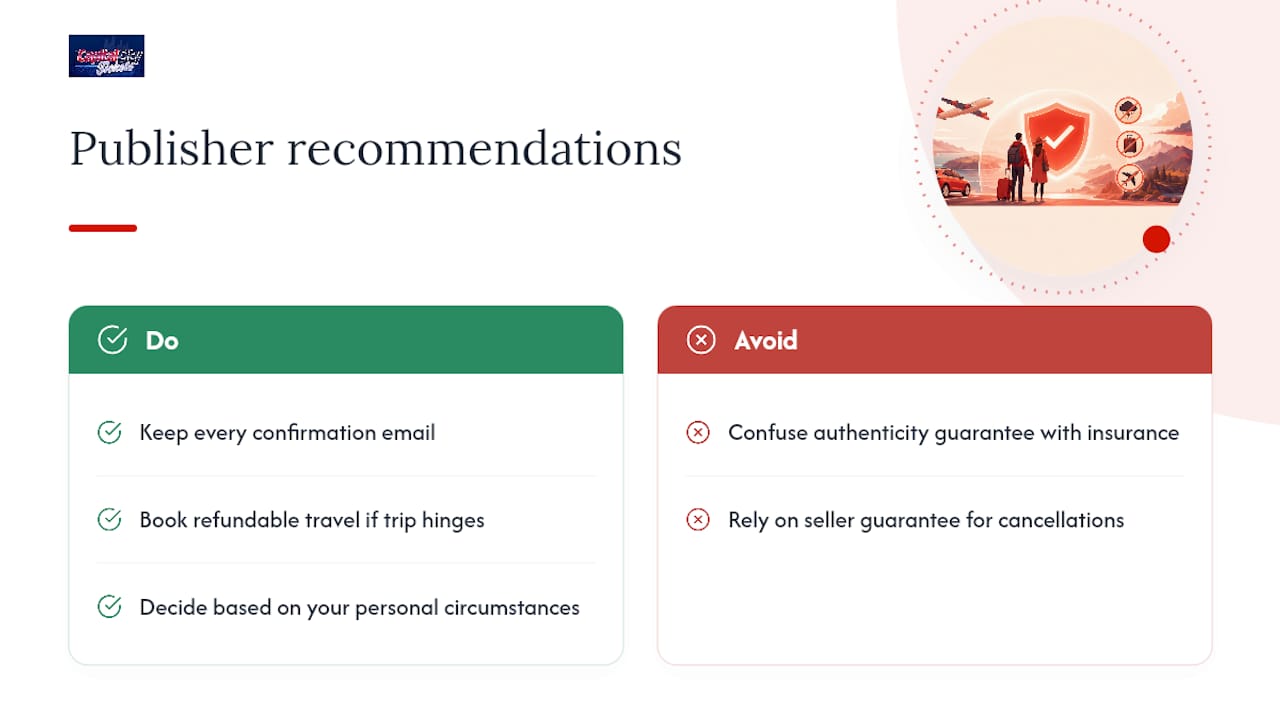
After 20-plus years connecting fans with live events, Capital City Tickets has watched the insurance question play out from the seller's side, not just the insurer's. A 100 percent ticket authenticity and delivery guarantee already solves a different risk than ticket insurance does: it protects you from a bad or fake ticket, not from missing the event yourself. The two protections don't overlap, and confusing them is a common mistake.
Our practical advice: keep every confirmation email, book refundable travel when the trip hinges on one event, and treat insurance as a decision about your own life circumstances, not about the seller.
— Capital City Tickets
Find Your Next Event Without the Guesswork on Coverage
The site exists to make finding fairly priced seats simple, backed by a guarantee on ticket authenticity and delivery, so the risk you're actually managing with insurance is about your own schedule, not whether the ticket is real.
Whether you're deciding on a Broadway run, a big game, or a stadium tour, browse concert tickets, check sports tickets, or look at theatre tickets before you buy, and compare the venue's own transfer or resale options alongside any insurance offer at checkout. That way you know exactly what each layer of protection actually covers before you pay for it.
Policy Documents Worth Reading Before You Buy
Read the full Event Ticket Protector plan details and the ticket insurance cost and exclusions breakdown before purchasing. Always open the actual policy certificate offered at your checkout screen, not just the marketing summary.
Sources
- What Does Event Ticket Insurance Cover? Costs and Exclusions - LegalClarity
- What Is Event Ticket Insurance and Is It Worth It? - CNBC
- Event Ticket Insurance Provides Peace of Mind for Missed Events | Allianz Partners
- Free look period travel insurance - InsureMyTrip
FAQ
Is It Worth It to Get Ticket Insurance?
It depends on the size of your total nonrefundable exposure, not just the ticket price. For a cheap, local, easily replaceable ticket, most buyers are better off self-insuring; for an expensive ticket bundled with travel, the premium can be worth the protection, especially since claims can be documentation heavy and coverage narrower than expected.
Can I Add Ticket Insurance After Purchase?
Usually not. Ticket insurance is typically purchased at the time of the original ticket transaction and most platforms don't offer a way to add it retroactively once checkout is complete.
How Do I Cancel or Get Rid of Ticket Insurance?
Most plans include a free look period, commonly around 15 days from purchase, during which you can cancel the policy and get your premium refunded, as long as you haven't filed a claim and the event hasn't happened yet. Contact the insurer directly, not the ticket seller, since they issued and control the policy.
How Does Insurance Work With Event Tickets?
You buy the policy as an add-on at checkout, then file a claim directly with the insurer, not the ticket seller, if you can't attend for a reason listed in your certificate. Approved claims reimburse some or all of the ticket price and related fees, but claims typically require documentation like a doctor's note or police report matching the specific reason you're claiming.