
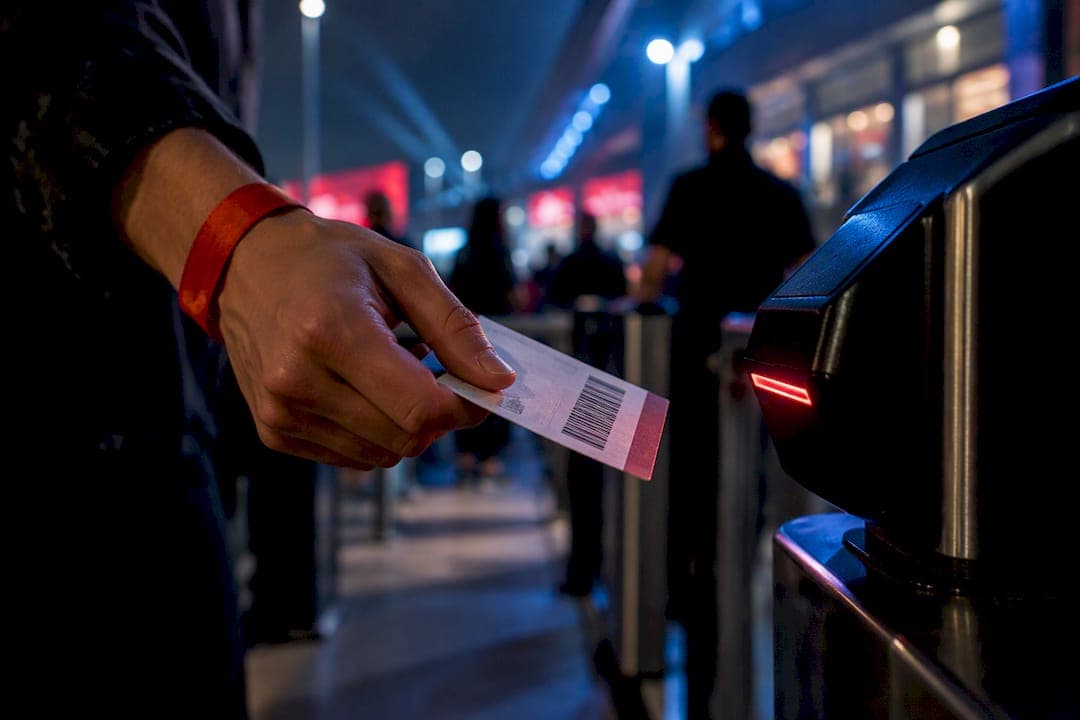
Ticket scams cover fake tickets, duplicate barcodes sold to multiple buyers, stolen or voided passes, and lookalike websites built to steal your card details. The single rule that protects you: buy only from verified sellers, or pay with a method that lets you dispute the charge, like a credit card or a marketplace guarantee. If you already paid a scammer, contact your card issuer right away and file a report with the IC3 or the FTC.
TL;DR:
- Buy tickets only from verified sellers and opt for payment methods that allow charge disputes, such as credit cards, to protect against scams.
- Authenticating tickets by calling the venue directly and verifying seat details against official floor charts can prevent falling for fake or forged tickets.
- Beware of red flags like pressure to pay immediately, untraceable payment requests, misspelled URLs, and multiple claims of the same seat in comments.
- Report fraud quickly by contacting your bank, filing with the FTC or IC3, and providing all transaction records if scammed.
- Choosing a marketplace like Capital City Tickets, which guarantees ticket authenticity, minimizes risks of counterfeit or invalid tickets.
Table of Contents
- 1. What ticket scams look like and common types
- 2. How scammers operate and resale red flags to watch for
- 3. How to verify tickets and sellers before you buy
- 4. Safe payment and transaction practices
- 5. If you were scammed: reporting, recovery steps, and timelines
- How Capital City Tickets protects buyers
- Publisher perspective: common pitfalls and one prioritized habit
- A short, honest option: how Capital City Tickets can help
- Official reporting and reference portals
- Sources
- FAQ
1. What ticket scams look like and common types
Scammers rely on a handful of formats that repeat across concerts, sports, and theater events. Fake or forged tickets mimic real ones closely enough to pass a glance but fail at the gate. Duplicate-ticket schemes sell the same barcode to several buyers, so only the first person through the door gets in. Stolen or voided tickets come from canceled orders or hacked accounts and stop working once the original owner reports them. Fabricated events and lookalike websites take your payment for something that either does not exist or never had tickets to sell.
Digital ticketing has made some of these easier to pull off. A screenshot of a mobile ticket looks convincing, but it is not a valid transfer, and a scammer can send the same screenshot to a dozen buyers before anyone notices. AARP has flagged this shift toward screenshots and forged mobile tickets as a growing risk precisely because the fake often looks identical to the real thing until you scan it at the venue.
Common scenarios buyers report include:
- A "seller" on social media offering last-minute tickets to a sold-out show at a suspiciously low price.
- A listing for a floor seat that turns out to be a general admission ticket once scanned.
- A buyer who receives a screenshot instead of an actual app transfer or mobile wallet pass.
2. How scammers operate and resale red flags to watch for
Fraud usually starts where you are already looking for tickets: a sponsored search result, a social media ad, or a direct message from an account claiming to have extras. The FTC has warned that scammers buy sponsored search placement to push shoppers toward lookalike sites that mimic legitimate ticket sellers down to the logo and layout. Fake profiles and hacked accounts add another layer, since a message from someone's compromised account can look like a trusted referral.
Watch for these behavioral signals:
- Pressure to pay immediately because "someone else wants it."
- A request for payment by wire transfer, cryptocurrency, or a prepaid gift card.
- Refusal to use the platform's built-in transfer tool, insisting on a screenshot instead.
- A URL that is almost right but misspelled, or a domain that does not match the venue or official reseller.
- Multiple people in the same comment thread claiming they were sold the same seat.
Any one of these alone is not automatically a scam, but two or more together are a strong signal to walk away. Scammers count on urgency to short-circuit the verification steps that would otherwise expose them.
3. How to verify tickets and sellers before you buy
A few minutes of checking before you pay can save you the cost of the ticket and the trip. Work through these steps in order:
- Call the venue box office and confirm whether the event uses mobile tickets, print-at-home tickets, or will-call, and ask if paper tickets are even accepted.
- Check the seat and section against the venue's official floor chart to confirm the seat exists and matches the price being asked.
- Insist on an official transfer through the ticketing platform's app or a mobile wallet token rather than a screenshot or PDF sent by e-mail.
- Ask for a transaction or transfer ID you can verify, and look up the seller's profile history if the marketplace shows one.
- If you are meeting someone in person, verify the ticket at will-call or the box office before handing over any payment.
Calling the box office directly is one of the most reliable ways to catch a fake before you pay, since venue staff can confirm ticket format and often flag known scam patterns for that specific show, a practice security researchers recommend for exactly this reason.
Pro Tip: Ask the seller to start the official transfer while you are on the phone with them, and watch for the confirmation to land in your own account before you send payment.
4. Safe payment and transaction practices
The payment method you choose matters almost as much as who you buy from. Credit cards give you a documented dispute process if something goes wrong, and most issuers will reverse a charge for goods that never arrived or were misrepresented. Peer-to-peer apps like Zelle or Venmo, wire transfers, prepaid cards, and cryptocurrency offer little to no recourse once the money leaves your account, which is exactly why scammers favor them.
Before you pay on any resale marketplace, confirm its buyer guarantee and how disputes are handled if a ticket turns out to be invalid.
- Pay by credit card whenever the option exists, never by wire, crypto, or prepaid card for a stranger's tickets.
- Save the confirmation e-mail, a screenshot of the listing, the seller's profile URL, and any chat messages.
- Read the platform's guarantee terms before you buy, not after a problem shows up.
- Treat a seller's refusal to accept a card payment as a red flag on its own.
Keeping records costs nothing and takes a minute, but it becomes the evidence that makes a dispute or fraud report actually work.
5. If you were scammed: reporting, recovery steps, and timelines
Act fast, and act in this order:
- Contact your bank or card issuer immediately to report the unauthorized or fraudulent charge. The CFPB notes that banks generally have about 10 business days to investigate and may issue temporary credit while they do, and you should follow up in writing within 60 days to preserve your rights.
- File a report with the FBI's Internet Crime Complaint Center and with the FTC at ReportFraud.ftc.gov, including transaction IDs, seller URLs, and any messages.
- File a police report if you met the seller in person or lost a significant amount, and notify your state attorney general's consumer protection office.
- Send investigators everything you saved: confirmation e-mails, screenshots, and payment records.
Between January 2025 and July 2026, the IC3 logged a large number of complaints tied to government or law enforcement impersonation scams, with losses topping $1.6 billion, a reminder of how much money moves through untraceable payment demands each year.
Money sent by wire, crypto, or prepaid card is the hardest to recover once it is gone, while credit card charges have the best odds of reversal if you report quickly and provide documentation.

How Capital City Tickets protects buyers
Capital City Tickets has operated in the live event marketplace for more than 20 years and backs every purchase with a 100% guarantee on ticket authenticity and delivery. That guarantee is meant to give buyers a fallback that a private seller or an unverified listing simply cannot offer.
- Every order runs through secure checkout with customer support available if a question comes up before or after purchase.
- Refund and guarantee terms are stated clearly rather than buried in fine print.
- Buyers can reach support directly with verification questions about a specific listing before completing a purchase.
Choosing a marketplace with a stated, verifiable guarantee is one of the simplest ways to shift risk away from yourself.
Publisher perspective: common pitfalls and one prioritized habit
The buyers who get burned are almost never careless people. They are people in a hurry, trusting a social media post or a friend's forwarded link, and paying by whatever method the seller demands in the moment. If there is one habit worth adopting above all others, it is this: verify with the venue or use a payment method that lets you dispute the charge. A buyer who spends two extra minutes on the phone with a box office rarely ends up telling the story of the seat that never existed.
— Capital City Tickets
A short, honest option: how Capital City Tickets can help
Capital City Tickets backs purchases with a 100% guarantee on authenticity and delivery, so you are not left holding a screenshot and a bad feeling.
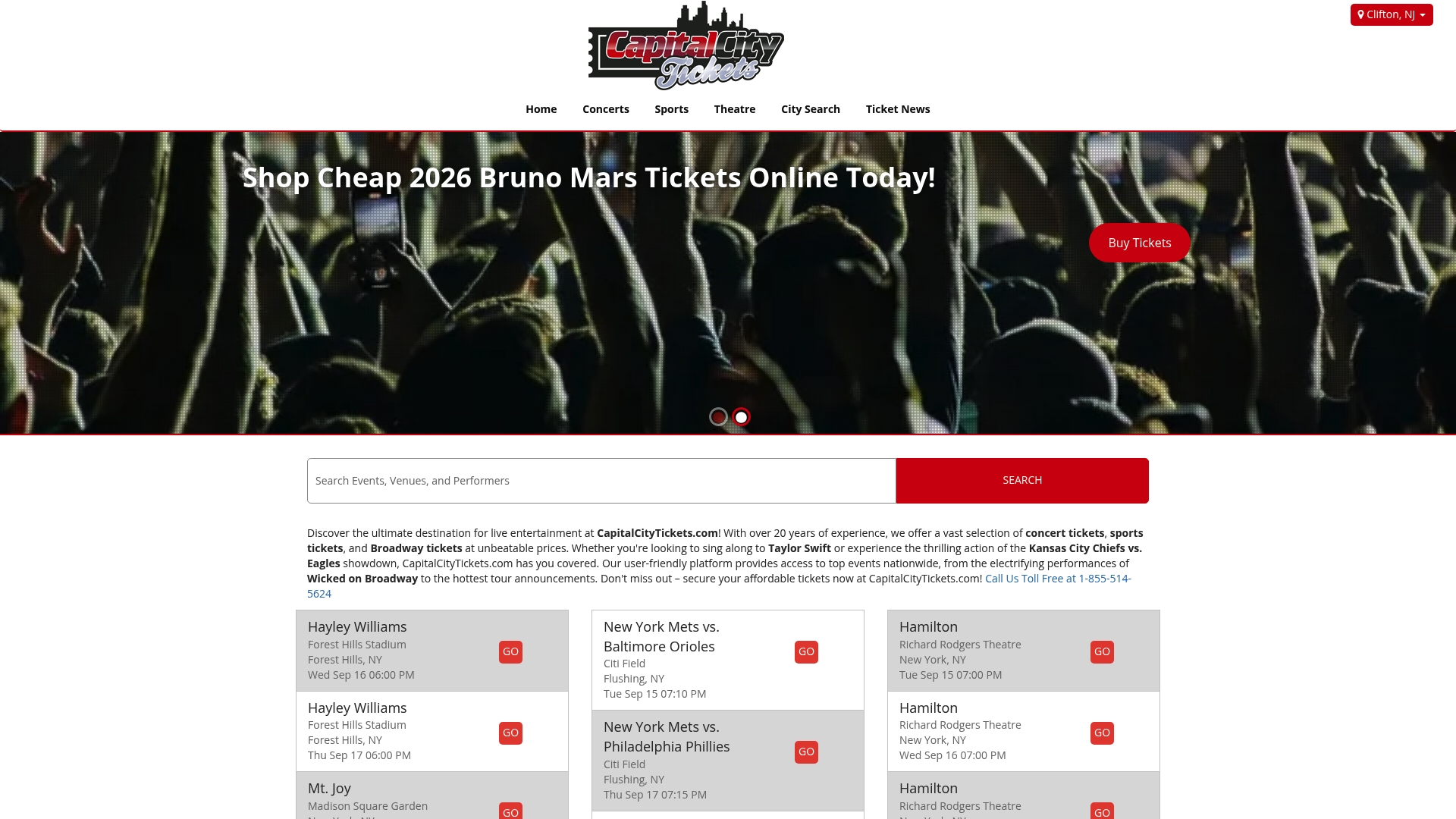
You can search and filter events by city, venue, date, and category, apply promo codes at checkout, and browse concert tickets, sports tickets, or theater tickets with that guarantee attached to every order.
Official reporting and reference portals
- The FTC's ReportFraud.ftc.gov portal takes consumer fraud reports of any kind.
- IC3 handles internet crime complaints for law enforcement follow-up.
- Your state attorney general's consumer protection office and local police handle in-person or high-value losses.
Sources
- Internet Crime Complaint Center (IC3) public service announcement
- Consumer Financial Protection Bureau — guidance on unauthorized transactions
- FTC consumer alert about online search results and scammy ads
- AARP — Protect Yourself Against Concert Ticket Scams
FAQ
What are some current ticket scam tactics to watch for?
Recent tactics include fake profiles on social media offering sold-out tickets, sponsored search ads that lead to lookalike sites, screenshots sent in place of official transfers, and sellers demanding payment by wire, crypto, or prepaid card. The FTC has flagged sponsored ads and social platforms as common entry points for these schemes.
How can I tell if someone is scamming me for tickets?
Warning signs include pressure to pay immediately, refusal to use the platform's official transfer tool, requests for untraceable payment, and a seller who cannot confirm the seat exists on the venue's floor chart. If several of these appear together, treat the listing as unsafe and walk away.
What are some examples of ticket scams?
Examples include duplicate tickets with the same barcode sold to multiple buyers, forged tickets that look real but fail at the gate, stolen tickets from hacked accounts, and fabricated event listings for shows that never had tickets to sell. Lookalike websites that mimic legitimate resellers are another common example.
How do I know if a ticket is fake before I use it?
Call the venue box office to confirm the ticket format and check the seat against the official floor chart before you pay. Insist on an official app or mobile wallet transfer rather than a screenshot, since security researchers note that validating seats and transfers directly with the venue catches most fakes before you ever reach the gate.
What should I do first if I already paid for a scam ticket?
Contact your bank or card issuer right away, since the CFPB notes banks typically have about 10 business days to investigate and may offer temporary credit. Follow up with a written notice within 60 days and file a report with the FTC or IC3 to support any dispute.
Recommended
- Ahab The Ticket Whaler Presents Safe Ticket Whaling Tickets at Webster Theater – Hartford, CT
- Scott Bradlee's Postmodern Jukebox Tickets at Troy Savings Bank Music Hall – Troy, NY
- Cars Tickets at Cheyenne Civic Center – Cheyenne, WY
- Neil Berg's 110 Years of Broadway Tickets at Kravis Center - Dreyfoos Concert Hall – West Palm Beach, FL