
Verified resale tickets are generally safer than unverified secondary listings, because a legitimate marketplace confirms the ticket exists, reissues it in your name, and backs the sale with a guarantee. That combination of verification, transfer, and recourse is what separates a real ticket from a screenshot. When you're choosing between listings, prioritize the ones labeled as verified resale with a clear transfer method and a stated buyer guarantee over anything cheaper but vague.
TL;DR:
- Verified resale tickets are backed by platforms matching listings to original purchases, ensuring they are real, reissued in your name, and come with a guarantee.
- Look for verified badges, clear transfer methods, seat details matching venue layouts, and a buyer guarantee to identify legitimate resale listings.
- Delivery methods usually include mobile transfers, app wallets, or barcode reissuance; ambiguous confirmation emails may signal issues.
- Total prices must include all fees upfront, as the FTC rules now require platforms to display clear, final costs at checkout.
- Despite verification, always keep proof of purchase, screenshots, and confirmation details to maximize protection if issues arise before the event.
Table of Contents
- What Makes a Ticket "Verified Resale," Anyway?
- How Ticket Verification and Transfer Actually Work
- How Can You Tell If a Resale Listing Is Legitimate?
- What Do Fees Actually Cost on a Resale Ticket?
- What Happens If Your Ticket Order Goes Wrong?
- How Capital City Tickets Protects Buyers at Checkout
- Why Verified Resale Matters More Than Ever
- Buy With a Guarantee, Not a Gamble
- Sources
- FAQ
What Makes a Ticket "Verified Resale," Anyway?
A verified resale ticket started life as a real, primary-market ticket that someone bought and later listed for resale through the same platform that issued it. The marketplace checks that listing against the original purchase record, then reissues or transfers the ticket into the new buyer's name before delivering it. That's a fundamentally different animal from a random listing on a classifieds site or a screenshot texted between strangers.
The distinction matters because unverified or speculative listings often don't correspond to a real, confirmed seat at all. A seller might list a ticket they don't yet own, hoping to buy one later if the listing sells, a practice regulators and consumer advocates have flagged as a common source of fraud. Verified resale closes that loophole because the platform won't process a transfer it can't match to real inventory, according to platform resale policy explanations.
When you're scanning listings, watch for these markers of legitimate verified resale:
- A "Verified Resale" badge or similar label directly on the listing
- A stated delivery method (mobile transfer, app wallet, reissued barcode) instead of vague language
- Seat, section, and row details that match the venue's actual layout
- A visible buyer guarantee or refund policy linked from the listing itself
How Ticket Verification and Transfer Actually Work
Behind that badge is a fairly mechanical process, and it's worth understanding because it explains why verified tickets can't simply be forged or duplicated.
- The seller's listing gets matched against original purchase data. The platform checks that the ticket being resold corresponds to a real, previously issued ticket tied to that seller's account.
- Mismatches get rejected. If the seller can't be linked to a legitimate original purchase, or if the same barcode has already been listed elsewhere, the platform blocks the sale before it ever reaches a buyer.
- The ticket gets reissued or transferred to the buyer. According to Live Nation's resale policy, verified resale tickets are reissued in the buyer's name and delivered upon purchase, not after some vague waiting period.
- Delivery lands in one of a few predictable formats. That's usually a new barcode pushed to your account, a transfer accepted inside a ticketing app, or in some cases, box office pickup with ID.
- Your order confirmation tells you what to expect next. A legitimate confirmation email or app notification will specify whether you need to accept a transfer, when the new barcode activates, and where the ticket will show up.
If any of those steps feel murky in a confirmation email, that's your cue to ask the platform directly before the event, not the night of.
How Can You Tell If a Resale Listing Is Legitimate?
Most ticket fraud isn't sophisticated. It's a seller banking on the buyer not asking basic questions. Before you pay for any resale ticket, run through this short checklist:
- Does the listing show a verified badge or explicit verification language?
- Is the delivery or transfer method stated clearly (not just "will send after purchase")?
- Is there a buyer guarantee you can read before checkout, not just promised in a chat?
- Are the seat, section, and row specific, rather than "similar seats" or "obstructed view, TBD"?
- Does the total price shown match what you'll actually pay, with no surprise add-ons at the final screen?
Red flags run the opposite direction. Be wary of sellers who only offer a screenshot of a ticket rather than a platform transfer, listings with no seller identity or transaction history, prices that require payment through a personal app or wire transfer instead of the marketplace's own checkout, and listings that vanish and reappear under slightly different details. Consumer guides consistently point to screenshot-only offers and speculative listings as the two most common patterns behind resale fraud, because both let a seller offer something they don't actually possess yet.
Pro Tip: Before you buy, screenshot the listing itself, save your order confirmation, and check exactly when the transfer is supposed to hit your account. If that timing slips past 24 hours before the event with no update, contact support immediately instead of waiting it out.
What Do Fees Actually Cost on a Resale Ticket?
Since May 12, 2025, the FTC's rule on unfair or deceptive fees has required ticket sellers to display the total price, mandatory fees included, far more prominently before you reach checkout. That single change makes comparison shopping between listings dramatically easier than it used to be.
Why this matters: Fee structures on resale listings have historically run higher than on primary tickets, according to figures cited in FTC rulemaking materials, which is part of why the seat-map price and the checkout total can look so different. Verification and buyer guarantees aren't free to run, and fees typically fund them.
The practical takeaway: never compare listings by their advertised seat-map price. Compare the final number at checkout, which is what the FTC rule now forces platforms to show you upfront rather than tacking on at the last screen.
What Happens If Your Ticket Order Goes Wrong?
Even with verification, things occasionally misfire, an event gets postponed, a transfer glitches, a barcode won't scan. What matters is what recourse you actually have.
- Cancellations typically trigger a full refund to your original payment method within a stated window.
- Reschedules more often result in a credit or automatic ticket validity for the new date, depending on the platform's specific policy.
- Non-delivery or invalid barcodes should be covered under the marketplace's buyer guarantee, which generally promises a replacement or refund if your ticket doesn't work at the gate.
- Guarantees have limits. Read the fine print on what's excluded, since some policies don't cover buyer error, like accepting a transfer to the wrong account.
If something does go sideways, contact the platform's support first, keep every order confirmation and email, and if the venue box office can verify your seat directly, that's a faster fix than waiting on a support queue. Verified-ticket consumer guides recommend saving confirmations specifically because that paperwork is what platforms and, if needed, regulators will ask for.
How Capital City Tickets Protects Buyers at Checkout
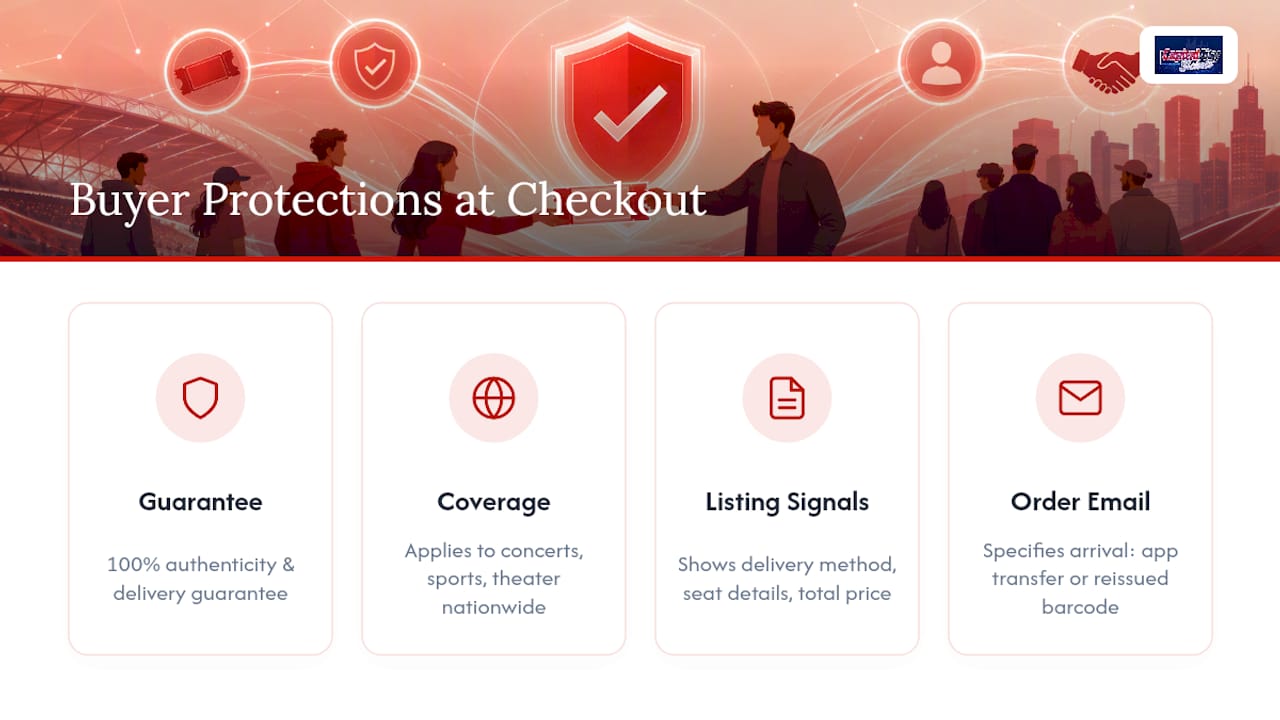
Capital City Tickets backs every purchase with a 100% guarantee on ticket authenticity and delivery, which covers exactly the two failure points buyers worry about most: getting a real ticket, and getting it in time. That guarantee applies across the platform's full lineup, from concert listings to sports and theater events nationwide.
On any product page, look for the same signals covered earlier in this guide: a clear delivery method, full seat details, and total pricing shown before you commit. A listing like the 40th Anniversary Concert at Herbst Theatre shows section, row, and delivery format right on the page, so there's no guessing between checkout and showtime. Your order confirmation email spells out exactly how your ticket arrives, whether that's an app transfer or a reissued barcode.
Why Verified Resale Matters More Than Ever
Verified resale isn't just a consumer safeguard. It gives event organizers visibility into who actually holds a seat, which helps fill venues and cuts down on the kind of risky, untraceable secondary-market transactions that fuel fraud complaints and, at scale, regulatory scrutiny like the Justice Department's antitrust action against major ticketing operators. For buyers, the payoff is simpler: less chance of a fake ticket, more predictable entry at the gate. Verified resale also gives venues cleaner data for managing attendance, a benefit detailed in analyses of fan database management for sports and entertainment organizers. When the stakes are a sold-out show you can't get back into, that predictability is worth paying for.
— Capital City Tickets
Buy With a Guarantee, Not a Gamble
Capital City Tickets sells discounted tickets to concerts, sports, and theater events across the country, and every purchase is covered by a 100% guarantee on authenticity and delivery. You may find a range of prices and protections when choosing tickets, with affordable options often available alongside safer verified listings.
Before you check out anywhere, confirm the delivery method and total price shown on the page, that's the same standard we just spent this whole article teaching you to demand. Browse concert tickets for upcoming shows, check the sports tickets lineup for your team's next home game, or explore theatre tickets for touring productions near you. Pick your event, confirm the details on the page, and check out knowing the guarantee has your back if anything goes wrong.
Sources
- Resale Purchase Policy – Live Nation Help
- Ticketmaster Resale Is the Secure Solution for Verified Secondary Ticket Sales
- What Does Verified Resale Mean for Ticket Buyers? - LegalClarity
- Verifiedtickets
FAQ
Is a Verified Resale Ticket Legit?
Yes, when it carries a real verification badge and a clear transfer method, a verified resale ticket is a legitimate ticket that's been matched against original purchase data and reissued to you. The risk drops further when the listing includes a buyer guarantee, since that gives you recourse if delivery fails.
What Is the Most Trusted Way to Buy Resale Tickets?
The safest route is buying through the platform that issued the original ticket, or a marketplace with a stated buyer guarantee, rather than a peer-to-peer listing with no verification. Capital City Tickets backs every purchase with a 100% guarantee on authenticity and delivery across its concert, sports, and theater listings.
What Is a Verified Ticketmaster Resale Ticket?
It's a resale ticket that Ticketmaster has matched to a real original purchase and reissued to the new buyer, keeping the ticket inside the same verified marketplace rather than letting it circulate as an unconfirmed screenshot. Ticketmaster uses "All In" pricing on these listings so buyers see the full cost, according to its own business materials.
Is a Verified Resale Ticket Better Than a Standard Listing?
Generally, yes, because a verified listing has already passed a check against real purchase records, while a standard or speculative listing may not. The tradeoff is usually price. Verified listings can run higher due to the fees that fund verification and the guarantee behind them, but that cost buys you a much lower chance of ending up with a worthless ticket.
How Do I Know What a Ticket Guarantee Actually Covers?
Read the listing's stated policy before you buy. Most buyer guarantees cover non-delivery and invalid tickets, but exclusions vary by platform, so check what's promised rather than assuming full coverage.
Recommended
- Ahab The Ticket Whaler Presents Safe Ticket Whaling Tickets at Webster Theater – Hartford, CT
- Neil Berg's 110 Years of Broadway Tickets at Kravis Center - Dreyfoos Concert Hall – West Palm Beach, FL
- 40th Anniversary Concert Tickets at Herbst Theatre – San Francisco, CA
- Sound of Music Sing-a-Long Tickets at Schermerhorn Symphony Center – Nashville, TN