
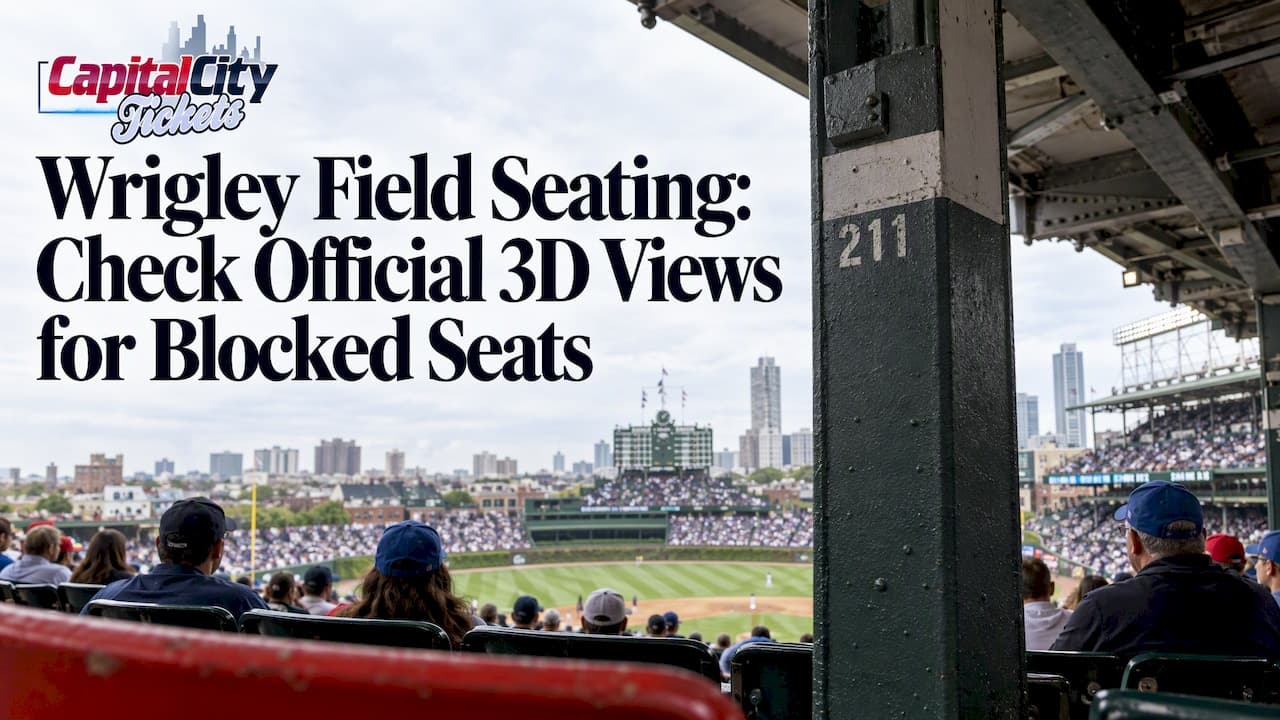
For the best mix of unobstructed view and value at Wrigley Field, aim for the infield 300-level. If you want to be closest to the action, choose 100-level field or club boxes, but expect concourse foot traffic near the aisles. For atmosphere, head to the bleachers, though general admission rules and sun exposure apply there. Before buying anything in the 200-level Terrace, preview the exact seat since support columns can block part of the field.
TL;DR:
- In the 200 level Terrace Reserved, rows 1 through 6 are generally clear; from row 7 onward, check the exact seat view for columns before buying.
- Bleacher tickets cover the 500 level section, not an assigned seat, so arrive early for a preferred spot and bring sun protection for day games.
- Day game seats on the third base side or beneath an upper deck overhang gain shade earlier, while bleachers face direct sun without cover.
- For 2026, tickets are mobile only through the MLB Ballpark app; download them before arrival because the gate does not issue physical tickets.
Table of Contents
- Quick map: what the 100s through 500s mean after the 2019 renumbering
- 100-level field and club boxes: proximity, pros, and tradeoffs
- 200-level Terrace Reserved: how to spot and avoid obstructed seats
- 300-level infield and 400-level upper reserved: best-value elevated views
- Bleachers (500s) and rooftops: atmosphere, rules, and important differences
- Premium clubs, suites, and group rentals: what you get
- How to confirm sightlines: step-by-step use of official 3D views and photo checks
- Sun, shade, and weather: pick seats based on game time and comfort needs
- Tickets and gameday logistics: mobile-ticketing, parking, gates, and cashless policies
- How Capital City Tickets helps you find and secure the right Wrigley seats
- Accessibility seating options and their locations for guests with disabilities
- Concessions and amenities accessibility from different seating areas
- Proximity and access to restrooms for various seating sections
- Suggestions on best seating areas for families or groups with children
- What our team has learned from booking Wrigley Field seats
- Find verified Wrigley Field tickets on Capital City Tickets
- FAQ
- Sources
Quick map: what the 100s through 500s mean after the 2019 renumbering
Wrigley Field's section numbers were reshuffled in 2019 so the numbers would better match what fans actually see from their seats. The Chicago Cubs renumbering page explains that the old 400-level became the 300-level and the old 500-level became the 400-level, while the lower bowl stayed the 100s. Bleacher seating now sits in the 500s.
Here's how the current layout breaks down:
- 100-level: Field and Club boxes, the lower bowl closest to the field.
- 200-level: Terrace Reserved and Terrace Box seating, the first upper tier.
- 300-level: Upper Box, mostly covering the infield at a moderate elevation.
- 400-level: Upper Reserved, the highest assigned seating in the main grandstand.
- 500-level: Bleachers, general admission seating beyond the outfield walls.
Wrigley Field holds 41,649 fans, a relatively compact number by modern ballpark standards, which is part of why even upper-level seats feel closer to the field than at many newer stadiums. If you're translating a printed ticket or an online listing into a spot on the map, our guide on reading stadium seat numbers walks through how section, row, and seat labels correspond to physical location.
Numbering ties directly to price. Lower numbers and lower levels generally cost more because they sit closer to the field, while higher-numbered upper sections and bleacher seats tend to cost less but trade away some proximity or require you to accept general admission rules.
100-level field and club boxes: proximity, pros, and tradeoffs
Field and Club boxes put you closer to the players than any other ticket type at Wrigley. From these seats, you can read facial expressions, hear the crack of the bat clearly, and get a sense of pitch speed and break that's hard to appreciate from higher up. For fans who want photos or simply want to feel part of the game, this is the level that delivers.
The tradeoff is foot traffic. Aisle seats and rows near the main concourse entrances see a steady stream of people walking past during innings, especially in sections near concession stands or restrooms. According to a seating guide from Stadium Insiders, Field Box seats sit closest to the action but can experience noticeable concourse traffic depending on the row.
A few things to keep in mind when weighing 100-level seats:
- Rows closer to the field generally see less walk-through traffic than rows near the top of each section.
- Seats near tunnel entrances have more foot traffic during innings as fans come and go.
- Club box access often includes separate concourses with shorter lines, which can offset some of the crowding.
Pro Tip: If photography or watching pitch mechanics is your priority, look for seats between home plate and first or third base; our guide to best seats for pitch detail breaks down exactly which rows offer the clearest angle.
These seats make the most sense for fans prioritizing proximity over value, people attending a special occasion, or anyone who wants the best possible view of defensive plays and batting mechanics up close.
200-level Terrace Reserved: how to spot and avoid obstructed seats
The Terrace Reserved level is where Wrigley's age as a ballpark shows up most directly in the seating experience. Unlike modern stadiums built with sightlines as a primary design goal, Wrigley's support structure creates an irregular pattern of columns that can block part of the field from certain seats. According to RateYourSeats' seating notes, rows 1 through 6 in the Terrace Reserved are generally clear, but from row 7 onward the risk of a column obstructing part of the view increases substantially in certain sections.

One in six or fewer rows in some Terrace Reserved sections stay fully clear once you move past the first six rows, based on RateYourSeats' seat-level analysis, which makes a seat-by-seat check worthwhile before you commit to a purchase.
Here's how to check a specific Terrace Reserved seat before buying:
- Pull up the official 3D seat view for Wrigley Field and enter the exact section, row, and seat number you're considering.
- Look for a support column in the panoramic image, paying attention to how much of the infield or outfield it blocks.
- Cross-check seat notes from independent seating guides, which often flag specific rows or seats with known obstruction issues.
- Compare the price to nearby unobstructed seats. A lower price in the Terrace Reserved often reflects a column obstruction rather than a genuine bargain.
That last point matters more than it might seem. A cheap Terrace Reserved ticket can end up costing you the view you came for, while a slightly pricier seat a few rows forward or in a different column bay might offer an unobstructed sightline for not much more money.
300-level infield and 400-level upper reserved: best-value elevated views
Many experienced Wrigley Field visitors consider the 300-level infield the best value seat in the ballpark. These seats sit high enough to avoid the Terrace level's column problems entirely while still offering a clear view across the infield. Stadium Insiders notes that seasoned fans recommend the 300-level infield for a perspective comparable to lower-level seats in newer ballparks, without the structural obstructions found one level down.
Because Wrigley is older and more compact than many modern stadiums, the usual rule that "higher means worse" doesn't apply quite the same way here. Upper-deck seats still provide solid player detail compared to the nosebleed sections of larger, newer ballparks.
A few things worth knowing before choosing between the 300s and 400s:
- 300-level infield sections offer the clearest combination of price and sightline, particularly between first and third base.
- 400-level sections along the first-base line tend to pick up afternoon shade earlier than third-base side seats during day games.
- Upper-deck seats behind home plate often provide a better skyline view of the surrounding Wrigleyville neighborhood and the rooftops beyond the outfield walls.
- Seats far down the outfield lines in either the 300s or 400s lose some ability to judge depth on fly balls, a tradeoff that comes with height and angle rather than level alone.
If pitch detail matters more to you than price, our breakdown of seats for watching pitch mechanics can help you decide how far back is too far for your priorities.
Bleachers (500s) and rooftops: atmosphere, rules, and important differences
Bleacher seats are a completely different experience from the rest of Wrigley Field, and understanding the differences before you buy will save you a surprise on game day. Under the 2019 renumbering, bleacher seating now falls in the 500s and operates as general admission during the regular season, meaning your ticket gets you into the bleacher section rather than a specific assigned seat.
A few things to know before choosing bleacher tickets:
- General admission means first-come, first-served seating within your ticketed section, so arriving early matters if you want a particular spot.
- Sun exposure is significant during day games, since the bleachers face away from any covered structure.
- The atmosphere tends to be louder and more social than the reserved seating bowl, popular with younger crowds and groups.
- Rooftop seating is a separate product entirely. Rooftop venues across the street from Wrigley sell their own tickets independent of stadium admission, so a rooftop ticket does not get you inside the ballpark.
If you want atmosphere but prefer a guaranteed seat rather than general admission, an upper-deck 400-level ticket near the outfield can offer a similar energy with an assigned spot and, depending on the section, a bit more shade protection than the open bleachers provide.
Premium clubs, suites, and group rentals: what you get
For special occasions or larger groups, Wrigley Field offers premium seating well beyond the standard bowl. According to the Cubs' official ticketing page, premium options include the Catalina Club, the W Club, and suite rentals designed for group experiences.
These premium tiers typically include perks not available in standard seating:
- Indoor or semi-enclosed club space that offers relief from sun, wind, or rain.
- Enhanced food and beverage service, often with dedicated menus or all-inclusive options.
- Private entrances and concourses, which mean shorter lines and less crowding.
- Suite rentals built for groups, offering a private space to watch the game together rather than individual seats scattered through the bowl.
Suites and club seats make the most sense for celebrations, corporate outings, or any group that values comfort and exclusivity over being able to see every pitch from the closest possible angle. If your priority is proximity to the field rather than lounge space, a premium lower-bowl seat in the 100-level will usually serve you better and cost less.
How to confirm sightlines: step-by-step use of official 3D views and photo checks
Previewing your exact seat before buying is the single best way to avoid a disappointing view at Wrigley Field, and it only takes a few minutes.
- Open the official 3D seat view map and enter the section, row, and seat number listed on the ticket you're considering.
- Pan around the 360-degree panorama from that seat, checking specifically for support columns, railing overhangs, or scoreboard structures that might cut off part of the field.
- Check the price against similar seats nearby. A noticeably lower price for a seat in the same section often signals a known view issue.
Here's a quick red-flag checklist to run through before you finalize a purchase:
- A visible column or post in the 3D panorama, even partially in frame.
- Seat notes mentioning "obstructed" or "partial view."
- A seat located directly behind a railing or overhang in the upper deck.
- A price that's unusually low compared to seats a few rows away in the same section.
Pro Tip: Spend the extra two minutes checking the 3D view even for seats that look fine on a printed seating chart. Flat diagrams can't show you where a pillar actually sits relative to your exact row.
Sun, shade, and weather: pick seats based on game time and comfort needs
Wrigley Field's orientation means sun exposure varies a lot depending on game time and which side of the stadium you're sitting on. Afternoon games tend to hit the first-base side and bleachers hardest, while seats along the third-base line and under the upper deck's overhang pick up shade earlier in the afternoon.
A few practical tips for comfort:
- Day games: Favor seats under the overhang of the upper deck or on the third-base side if you want to avoid direct sun for most of the game.
- Bring sunscreen, a hat, and sunglasses for any day game, especially bleacher or outfield seats.
- Evening games: Pack a light layer, since wind off Lake Michigan can drop the temperature noticeably after sunset, even in summer.
- Upper-deck seats with overhangs stay shaded longer than open bleacher sections, a useful tradeoff if you're sensitive to heat.
Pro Tip: If you're choosing between two similarly priced seats for a day game, pick the one on the third-base side. It typically stays cooler longer than the first-base side as the afternoon wears on.
Tickets and gameday logistics: mobile-ticketing, parking, gates, and cashless policies
A few logistics details can make or break your day at Wrigley Field, and they're worth checking before you leave home. For the 2026 season, tickets are issued exclusively through the MLB Ballpark app as mobile tickets. Physical tickets are not issued at the gate, so having the app set up correctly before you arrive matters.
A few steps to avoid entry delays:
- Log out and back into the Ballpark app the night before or morning of the game to make sure your tickets sync properly.
- Reset your password in advance if you haven't used the app recently, since login issues are a common cause of delays at the gate.
- Download tickets while you still have reliable WiFi or cell service, rather than waiting until you're outside the stadium.
Gates typically open 90 minutes before first pitch, giving you time to find your seat and grab concessions before the game starts. For 2026, the Cubs' "Know Before You Go" page also outlines a remote parking option at 4650 N. Clarendon Ave with free shuttle service to the ballpark, which can be a simpler alternative to searching for street parking near Wrigleyville. Services like SpotHero let you book remote parking spots in advance if you'd rather lock in a spot before game day.
Wrigley Field operates as a cashless venue, so bring a credit or debit card, or load a mobile payment method onto your phone, for concessions and merchandise purchases.
How Capital City Tickets helps you find and secure the right Wrigley seats
With more than 20 years of experience helping fans find tickets to live events, we built our platform to make seat selection at ballparks like Wrigley Field faster and less stressful.
Here's how we recommend using our site to lock in Wrigley Field seats:
- Filter by venue, date, and section to compare available Cubs games and seating options side by side.
- Confirm the seat view using the official 3D seat map before adding tickets to your cart.
- Check mobile-ticket delivery details on your order confirmation so you know exactly what to expect in the Ballpark app.
- Complete your purchase through our Sports Tickets page once you've settled on a section and row.
We also publish ongoing guides on seat numbering and ticket pricing trends to help you shop with more context, whether you're headed to Wrigley Field or another ballpark on our platform.
Accessibility seating options and their locations for guests with disabilities
Wrigley Field offers accessible seating positions throughout the ballpark, including in the lower-bowl 100-level, the Terrace Reserved 200-level, and the bleacher sections. These positions are designed to accommodate wheelchairs and companion seating, and they're typically located at the back of each seating section or along accessible aisles to avoid stairs.
When buying tickets, look for sections explicitly marked as accessible seating on the seat map, since these positions are limited in number and tend to sell out for popular matchups. If you need accessible seating, it's worth purchasing earlier rather than waiting until close to game day.
Companion seats are generally available next to accessible positions so that guests can attend with a friend or family member in the same row. Elevator access connects the main concourses to upper levels, reducing the need to navigate stairs between the 100-level and the upper deck.
If you have specific mobility needs beyond standard accessible seating, such as service animal accommodations or additional space requirements, checking directly with the ballpark's accessibility services before your visit can help confirm that your exact seat location meets your needs. Planning this step ahead of time, rather than discovering an issue at the gate, makes for a much smoother gameday experience.
Concessions and amenities accessibility from different seating areas
How easily you can reach food, drinks, and restrooms during the game depends a lot on which level you're sitting on. The 100-level benefits from close proximity to main concourse concessions, though popular stands near high-traffic sections can draw long lines during peak innings.
Club-level and premium seating areas typically include dedicated concession stands with shorter lines and sometimes expanded menu options, one of the practical perks that comes with paying for a premium ticket. The 200-level Terrace and 300-level Upper Box sections rely on their own concourse loops, which are generally less crowded than the lower-bowl concourse during a typical game.
Bleacher sections have their own separate concession areas, since the bleachers are physically separated from the main grandstand concourse. If you're in the bleachers and want food from a different part of the ballpark, you'll need to exit through a dedicated bleacher gate and re-enter, which isn't always permitted depending on your ticket type.
For fans who prioritize easy access to food and drinks without long walks, 100-level and club seating generally offer the shortest distance between your seat and a concession stand, while upper-deck sections trade off a bit more walking for lower prices.
Proximity and access to restrooms for various seating sections
Restroom access at Wrigley Field varies by level, and it's a practical detail worth considering, especially for longer games or if you're attending with kids. The 100-level and club sections generally have the shortest walks to restrooms, often located just off the main concourse within easy reach of most seats.
The 200-level Terrace and 300-level Upper Box sections have their own restroom facilities on their respective concourses, so you typically don't need to change levels during the game. These facilities can see longer lines during busy innings, particularly the seventh-inning stretch, simply because so many fans move at once.
Bleacher sections have dedicated restroom facilities within the bleacher concourse, separate from the main grandstand. Because the bleachers operate as a somewhat self-contained area, restroom lines there can vary significantly based on attendance and the specific game.
If minimizing walking distance and wait times matters to you, seats closer to the main concourse entrances on the 100-level tend to offer the most convenient restroom access throughout the game.
Suggestions on best seating areas for families or groups with children
Families attending a game with younger kids generally do best in sections that balance a good view with easy access to concessions, restrooms, and a quick exit if needed. The 300-level infield works well for this, offering a clear view of the game without the premium price tag of lower-bowl seats, and it's close enough to concourse amenities for quick bathroom or snack breaks.
For families who want a more relaxed, social atmosphere, the bleachers can work well too, though the general admission format and lack of assigned seats means you'll want to arrive early to stay together as a group. Sun exposure is also a bigger factor in the bleachers, so plan accordingly if you're bringing young children for a day game.
Aisle seats in any section make it easier to get kids in and out for bathroom trips or concession runs without disturbing an entire row of other fans. If your group includes both younger kids and adults who want a closer view, splitting the difference with 100-level seats slightly off the infield, rather than directly behind home plate, can offer a good view at a lower price point than the most premium sections.
What our team has learned from booking Wrigley Field seats
Many fans find that the 300-level seat often offers better value than a cheaper Terrace Reserved seat once you factor in the view. One recurring theme in the questions we get is that people assume a lower price automatically means a worse seat, when at Wrigley it often just means a seat behind a pillar.
One good step before finalizing a purchase is to pull up the exact seat in the official 3D view and double check that your mobile ticket is accessible in the Ballpark app. A few minutes of prep avoids most of the common headaches fans run into on game day.
— Capital City Tickets
Find verified Wrigley Field tickets on Capital City Tickets
Search by date and opponent to compare available Cubs games, then filter by section to find seats in your target price range.
A few ways to make your purchase go smoothly:
- Search Wrigley Field or Chicago Cubs directly on our site to pull up current game listings.
- Filter by section to compare 100-level, 300-level, or bleacher options side by side.
- Confirm mobile-ticket delivery details on your order before heading to the ballpark.
Ready to lock in your seats? Visit our Sports Tickets page to browse upcoming Cubs games and complete your purchase.
FAQ
How does bleacher seating work at Wrigley Field?
Bleacher tickets at Wrigley Field are general admission during the regular season, meaning your ticket gets you into the bleacher section but not a specific assigned seat. Under the 2019 renumbering, bleacher seating sits in the 500s, and arriving early gives you a better chance at a preferred spot.
What are the dimensions and capacity of Wrigley Field?
Wrigley Field seats 41,649 fans, making it a relatively compact ballpark compared to many modern stadiums. That smaller footprint means even upper-deck seats tend to feel closer to the field than similar sections at larger venues.
Can you buy Chicago Cubs tickets at the stadium on game day?
Tickets for the 2026 season are issued exclusively through the MLB Ballpark app as mobile tickets, so physical ticket windows are not the way to secure entry. It's best to purchase tickets online in advance and confirm your mobile ticket is loaded before arriving at the ballpark.
Which rows and sections should I avoid to prevent column obstructions?
Obstruction risk is highest in the 200-level Terrace Reserved, particularly from row 7 and further back in certain sections, according to RateYourSeats' seating notes. Checking the official 3D seat view for your exact section, row, and seat before buying is the most reliable way to confirm whether a column will block your view.
Where can I find the best value seats at Wrigley Field?
Many experienced fans point to the 300-level infield as the best combination of price and unobstructed sightlines, since it avoids the pillar issues found in the Terrace Reserved while costing less than lower-bowl seats. For live game odds and additional MLB coverage while you plan your trip, Manny's Variety Picks offers daily reports and analysis across the league.
Sources
- Renumbering | Ballpark | Chicago Cubs
- Wrigley Field Seating Chart – 3D Seat Views | Cubs
- Wrigley Field — Stadium Insiders seating guide